Educational

Bitcoin continues to push forward and change public perceptions towards money and value. Despite experiencing a sharp increase in media attention over the last year, many people are still unsure as to what Bitcoin actually is. Here’s a short article that makes Bitcoin easy to understand.

Bitcoin continues to grow in importance and a variety of factors are pushing the digital currency further into the public’s consciousness. As a result of the continued growth in interest, it has become necessary to scale the Bitcoin network in order to allow it to handle a much greater quantity of transactions. A number of scaling solutions have presented themselves, and we take a look at the Lightning Network, which has emerged as one of the most viable options.

For many of us in the cryptocurrency space the future of cryptocurrencies seems secure with the main question being when rather than if mainstream adoption will occur. Currencies such as Bitcoin, Ethereum, and Dash have grown exponentially and are now worth amounts that were difficult to imagine at their inception. With Bitcoin recently setting a number of all-time highs, it’s time to look back at the factors that led to the emergence of cryptocurrencies.

The increasing regularity of Bitcoin forks has led to new token creation as the Bitfinex exchange has come up with a way to provide trading on forked coins via its Chain Split Tokens (CSTs). These CSTs allow Bitfinex customers to speculate on the value of potentially incompatible ledger units related to the forking events on cryptocurrency blockchains.

Any person or group with 51% of more control is able to manipulate the consensus agreement process and begin to act as a central, network authority. If desired, this ‘authority’ could act nefariously and prevent new transactions from gaining confirmations, reverse completed transactions, as well as impose a new version of the network transaction history.
Blockchain technology is silently revolutionizing the world around us and forward thinking organizations are integrating the technology into their daily operations. The system was originally created to bring forward a network of digital property free from centralized control that accurately kept track of ownership.

When dealing with cryptocurrencies, storing your digital assets safely is just as important as choosing the correct coins to invest in. The first step to storing your coins is to obtain a cryptocurrency wallet, which is a digital wallet used to store and transfer cryptocurrencies. Here’s a quick guide to help you navigate the topic.

Initial Coin Offerings or ICOs are another disruptive aspect of the cryptocurrency ecosystem. ICOs enable blockchain-based projects to raise capital while avoiding the more traditional methods of funding. They also enable enthusiasts to become investors and for keen cryptocurrency investors, there are a number of factors that must combine in order for an ICO to become attractive. These factors include a solid idea, strong team, alongside a reasonable hard cap. Just how the ICO intends to collect its funds also contributes to its attractiveness. Here we take a look at the different auction methods ICOs employ to raise capital.

The Ethereum network is arguably the most important in the crypto ecosystem today and the network continues to create a connected system where everything seamlessly works together. Around a year after the launch of Ethereum in 2014, Vitalik Buterin, the founder of Ethereum, introduced the initial standards token and with the help of Fabian Vogelsteller this later became the ERC-20 standard.

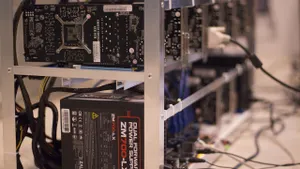
Bitcoin, the most famous cryptocurrency is digital money that generates new units of currency via the process of mining. Mining is a computationally intensive task that requires a lot of processing power. Essentially, computers are rewarded for solving difficult mathematical problems. These calculations help secure the network and anyone taking part in this process can receive a financial payout.