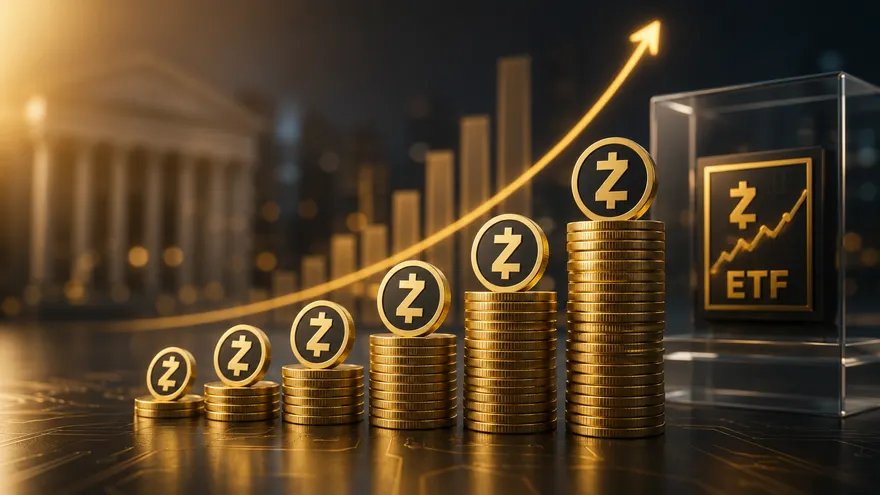
On August 25, 2026, Grayscale's Zcash ETF began trading under ticker ZCSH. For investors who want exposure to ZEC crypto without opening a crypto exchange account or protecting private keys, that changes the buying process.
The fund puts a privacy-focused cryptocurrency in a familiar brokerage account. Zcash uses zero-knowledge proofs, while the launch broadens institutional access and strengthens the privacy coin narrative.
As a regulated spot exchange-traded product, it uses an exchange-traded fund structure for retail brokerage accounts and offers another path for digital asset investment.
Here's how the fund works and how it compares with owning ZEC yourself.
Key highlights:
- ZCSH gives brokerage-account investors spot exposure to ZEC through shares listed on NYSE Arca
- The trust holds ZEC, but shareholders don't receive coins in a personal wallet
- Grayscale lists a 2.50% total expense ratio, which can weigh on long-term returns
- Direct ZEC offers wallet control and network access, but requires more security responsibility
What the Zcash ETF Is and How It Works
The Zcash ETF began as the Grayscale Zcash Trust, a Delaware statutory trust that holds ZEC crypto.
Its 2026 listing converted the trust into an exchange-traded fund. It now operates as a spot exchange-traded product, with shares representing fractional beneficial interests in the trust.
Put simply, buying ZCSH means buying a share tied to a pool of ZEC. It doesn't mean ZEC arrives in your wallet.
Zcash is a privacy-focused cryptocurrency designed for secure, decentralized value transfer. Its network supports optional shielded transactions through zero-knowledge proofs powered by ZK-SNARKs.
The protocol's design emphasizes digital gold with privacy. Recent developments include the Ironwood upgrade, while Zcash Labs resolved the Orchard vulnerability in previous pool iterations.
Zcash tokenomics include a 21 million supply cap and Proof-of-Work consensus. Investors may also track metrics such as the shielded pool supply when evaluating network activity.
The fund's goal is to reflect the value of its ZEC holdings, less fees and expenses. That sounds straightforward. In practice, the market price can differ from its net asset value, or NAV.
Grayscale Zcash ETF facts investors should know
Here are the most important details before placing an order:
| Fund detail | Current information |
| Issuer | Grayscale Investments Sponsors, LLC |
| Ticker | ZCSH |
| Listing venue | NYSE Arca |
| Holdings | ZEC held by the trust |
| Total expense ratio | 2.50% |
| Distributions | No stated distribution frequency |
| Staking or yield | No stated staking or yield program |
Grayscale lists an earlier trust inception date of October 24, 2017, plus a public inception date of October 18, 2021. The 2026 listing changed access and structure, but it didn't create a new Zcash asset.
The trust's SEC registration statement describes shares as fractional beneficial interests in a Delaware statutory trust. Figures such as assets under management, shares outstanding, and ZEC per share can change daily.
How ZEC exposure reaches your brokerage account
Grayscale and its service providers manage the trust's ZEC holdings. The trust issues shares, and those shares trade through brokerage firms during normal market hours.
You buy or sell the shares like you would buy or sell a stock. Your broker records the position. You don't manage blockchain addresses, seed phrases, or wallet software.
The Biggest Advantages and Disadvantages of Investing in ZEC Through an ETF
A Zcash ETF makes access easier. It doesn't make ZEC less risky.
The right choice comes down to what you value more: brokerage simplicity or direct control of the asset.
Why investors may prefer the ETF route
ZCSH lets you seek ZEC exposure inside a standard brokerage account. That can be useful if you already manage stocks, retirement accounts, and ETFs in one place.
There’s no crypto wallet setup or private keys to lose. The fund handles custody, administration, and other trust operations.
This structure can also provide institutional access without the custody overhead of holding tokens directly. You can still use familiar tools, including market orders, limit orders, account statements, and tax documents.
For someone who doesn't want to use a crypto exchange, the Zcash ETF can be the simpler path. A listed fund makes buying easier, but it does not make ZEC a low-risk investment.
This structure may also help investors whose brokerages or account policies limit direct crypto purchases.
The costs and risks that can reduce returns
The 2.50% annual expense ratio is the first cost to understand. It comes out of the fund over time, which can create meaningful drag for long-term holders.
Share-price tracking is another issue. ZCSH may move with ZEC but still underperform because of fees, cash balances, trust expenses, or a premium or discount to NAV.
There are other risks too:
- ZEC is a concentrated, volatile crypto asset, not a diversified portfolio
- Thin trading can make spreads wider, especially soon after a new listing
- The trust relies on custody and operating providers
- Regulatory risks include changing frameworks and international pressures, such as debate around an EU privacy coin ban
- Shareholders receive no stated distributions, staking rewards, or income payments
- Market conditions, including expectations for a crypto recovery 2026, can affect prices but remain impossible to predict
ETF shares also don't provide direct token ownership. You can't send shares to another wallet, use Zcash's on-chain features, or make private ZEC transactions.
Holding physical tokens gives you direct exposure to ZEC crypto, while brokerage shares provide price exposure without token control.
Fund holders also don't directly interact with zero-knowledge proofs or execute shielded transactions. Those network features remain separate from brokerage ownership.
How to Buy the Zcash ETF and Compare It With Buying ZEC Directly
A simple checklist for purchasing the Zcash ETF
Before you place an order, work through these steps:
- Confirm that the ticker is ZCSH and the listing is NYSE Arca
- Read the latest prospectus and fund disclosures through your broker or the fund website
- Confirm the current 2.50% expense ratio and look for updated fee language
- Compare the current market price with the reported NAV
- Review Zcash tokenomics, then check trading volume and the bid-ask spread
- Use a limit order when the spread is wide or the market is moving quickly
ETF shares versus buying ZEC crypto on an exchange
The comparison is less about which option is "better." It's about what you need from the investment.

| Factor | ETF shares | Direct ZEC |
| Access | Traditional brokerage account | Crypto exchange and wallet |
| Custody | Managed by the trust | Managed by you or a platform |
| Ongoing fee | 2.50% fund expense ratio | Exchange, withdrawal, and network fees may apply |
| Token control | No direct coins | You can hold and transfer ZEC |
| Trading hours | Stock-market hours | Crypto markets generally run 24/7 |
| Records | Brokerage statements | You keep exchange and wallet records |
| Asset features | Exposure through fund shares | 21 million supply cap and Proof-of-Work consensus |
Direct ZEC requires careful exchange selection, wallet management, and security habits. Running a full node supported by Zcash Labs can provide more control, including direct generation of zero-knowledge proofs. It also lets users benefit from the Ironwood upgrade and historical fixes related to the Orchard vulnerability.
Our guide on Monero vs Zcash also highlights different privacy and compliance tradeoffs. Monero emphasizes default privacy, while Zcash supports transparent and shielded mechanics.
The ETF avoids those technical tasks, but you give up access to the coins themselves.
Frequently Asked Questions
What is the ticker for Grayscale's Zcash ETF?
The ticker is ZCSH. The shares are intended to trade on NYSE Arca.
Confirm the live trading status and availability through your brokerage or official exchange information before placing an order.
Does the Zcash ETF own real ZEC?
The trust is designed to hold ZEC directly. That makes it a spot exposure product rather than a futures-only fund.
Still, buying a share means you own an interest in the trust. You don't receive ZEC in a personal wallet.
How much does the Grayscale Zcash ETF charge?
Grayscale's published total expense ratio is 2.50%. This ongoing fund expense can lower returns over time.
It's separate from brokerage commissions, bid-ask spreads, and taxes.
Does ZCSH pay dividends or ZEC staking rewards?
The fund information lists no distribution frequency. Available materials also don't describe a staking, yield, or income program.
Don't expect regular cash payments or ZEC rewards from holding ZCSH shares.
Is buying ZCSH better than buying ZEC directly?
It depends on your goal. ZCSH may be easier if you want brokerage-based exposure and professional custody.
Direct ZEC gives you coin control and network access, including its zero-knowledge proofs. Zcash Labs also reviews network security issues, including the Orchard vulnerability.
Neither option removes ZEC's volatility, fees, or regulatory uncertainty.
The Bottom Line
Grayscale's Zcash ETF gives investors a familiar way to seek exposure to ZEC crypto through a brokerage account. That access comes with a 2.50% fee, no stated income program, possible NAV differences, and no direct ownership of coins.
Remember: access is not the same as lower risk. Whether you view Zcash as digital gold with privacy or a speculative crypto asset, position sizing and risk management remain essential.
Compare ZCSH with direct ZEC ownership, review the latest documents, check liquidity and costs, and invest only what you’re comfortable losing.