


Aaron Watts, Publisher at CoinCodex

Aaron is passionate about technology and finance. Aaron first discovered blockchain technology in 2016. After learning about the transformative power of crypto, which he primarily credits to Alex Tapscott's Blockchain Revolution, he sought to expand his knowledge by becoming more intimately involved with the blockchain space. He joined CoinCodex in 2018 and has since been covering a variety of topics, ranging from Bitcoin and Ethereum to NFTs and the metaverse.
Aaron Watts Latest Articles
Pharos incorporates CertiK’s Skill Scanner into its AI Agent Hackathon as part of a broader focus on secure AI development.
Casper unveils an AI toolkit with autonomous payments, smart contract deployment, and a $150,000 developer buildathon.

Can Japan's integrated Web3 ecosystem finally drive mainstream adoption? Explore how Sony, SBI, and Startale are building a unified blockchain stack.

AI agents can analyze markets, but trading in DeFi requires execution infrastructure. Here’s how Orbs connects autonomous agents with advanced on-chain orders, routing, and gasless execution.

AI agents are becoming active participants in financial markets. Explore how crypto infrastructure is evolving to support autonomous trading systems built for machines, not humans.

Crypto without KYC is still possible in 2026 — but only if you choose the right model. Here's the honest breakdown of custodial vs non-custodial exchanges and what each really costs you.

Explore NEYRO, Aurum’s non-custodial AI trading platform using on-chain AI agents, live analytics, and transparent execution on BNB Smart Chain.

Monarq, Flare and Upshift launch MXRPY, a managed XRP yield vault using FXRP across multiple return strategies.

DeFi’s next wave is shifting from fragmented protocols to consumer-grade onchain apps that unify trading, staking, lending, yield, and cross-chain workflows in one interface.
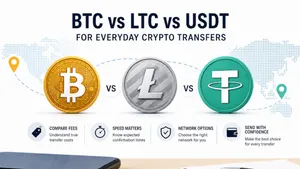
Compare BTC, LTC, and USDT transfer costs in 2025. Learn which crypto works best for fast, low-fee payments and why network choice matters.


