Key highlights:
- XRP whale inflows to Binance have dropped 34.4% since late June, reaching their lowest level in two months
- Open interest has climbed to $819 million, the highest level recorded this week, signaling growing trader participation
- XRP has reclaimed its 20-day Simple Moving Average (SMA), while widening Bollinger Bands point to increasing volatility ahead of the next resistance at $1.30
XRP has returned to investors' watchlists after fresh on-chain data revealed that whale transfers to Binance have fallen sharply over the past month. The decline comes as derivatives activity continues to strengthen, suggesting that large investors may be reducing exchange deposits while traders increasingly position themselves for the token's next major move.
According to a recent CryptoQuant report, whales transferred approximately 947.4 million XRP to Binance over the last 30 days. The figure marks the network's lowest whale inflow to the exchange in two months and represents a significant slowdown from the 1.445 billion XRP deposited toward the end of June.
The changing behavior among large holders arrives as XRP's technical structure continues improving, raising questions over whether reduced exchange selling pressure could support another attempt toward the psychologically resistance level at $1.30.
Whale inflows to Binance continue to shrink
Exchange inflow metrics remain one of the most closely watched indicators for evaluating potential selling pressure from large investors.
Historically, rising whale deposits onto centralized exchanges often signal that investors may be preparing to sell or take profits.
Conversely, declining exchange inflows suggest that large holders are becoming less willing to move their assets onto trading platforms.
The latest reading points toward the latter scenario.
Data from the XRP Whale Inflow to Binance 30-Day Sum indicator shows deposits have declined to 947.4 million XRP, down 34.4% from the late June peak of 1.445 billion XRP.
While lower exchange inflows do not automatically guarantee higher prices, they reduce the immediate supply available for sale on exchanges.
If the trend persists alongside improving spot demand, it could help ease downward pressure on XRP in the near term.
The slowdown may also indicate that whales are opting to hold assets in private wallets rather than positioning for short-term distribution.
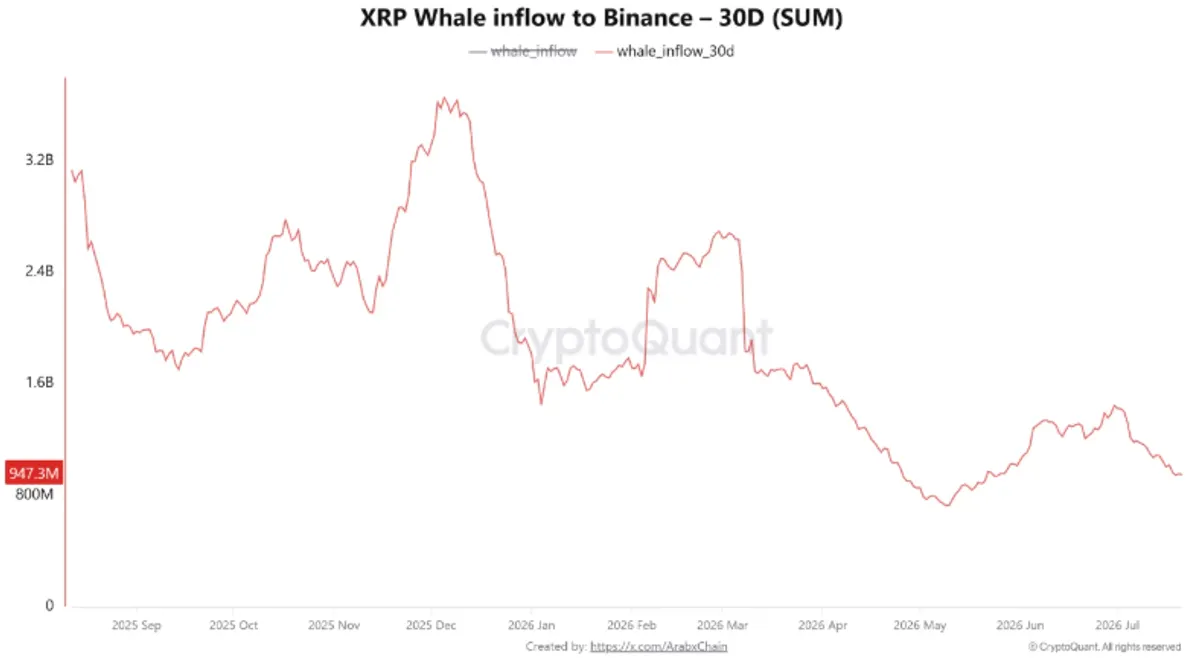
Source: ArabxChain via CryptoQuant
Open interest reaches weekly high
At the same time, activity across the derivatives market continues gaining momentum.
The network’s open interest has surged to approximately $819 million, marking the highest level recorded this week. Rising open interest generally indicates that new capital is entering futures markets as traders open fresh positions.
In most cases, when increasing open interest accompanies improving price action, it often reflects growing conviction among market participants rather than traders simply closing existing contracts.
However, elevated open interest can also increase the likelihood of short-term volatility if heavily leveraged positions begin to unwind. The steady rise suggests traders are positioning ahead of XRP's next major directional move.
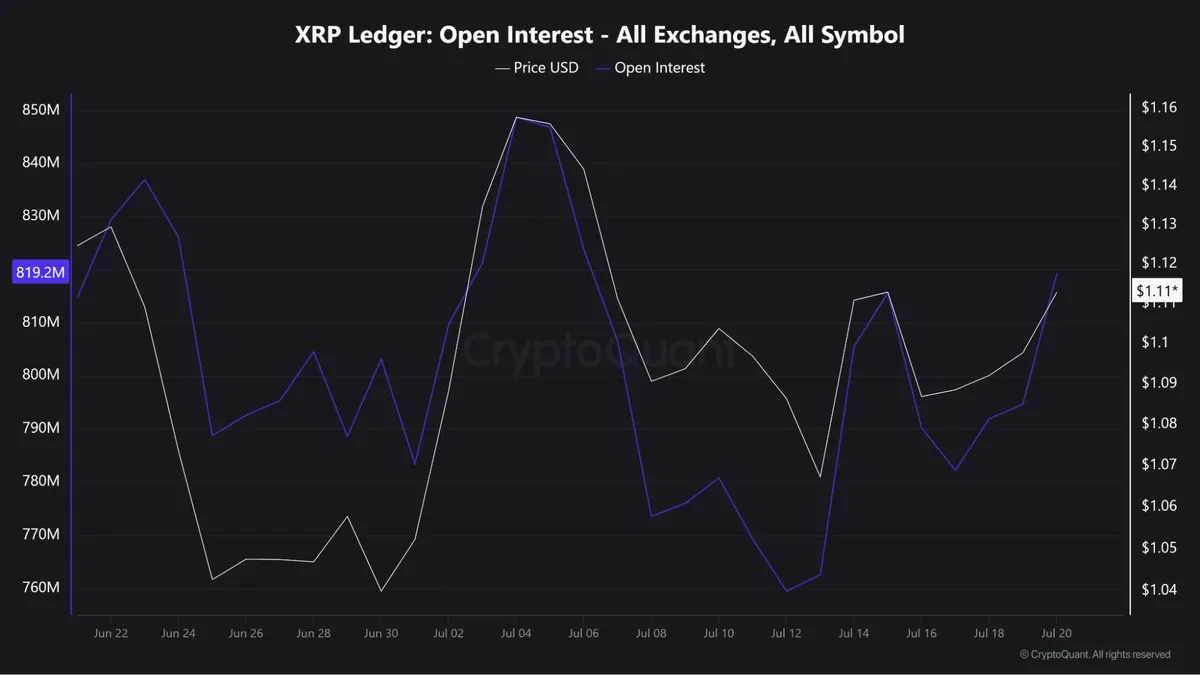
Source: CryptoQuant
Technical indicators favor another push toward $1.30
XRP's technical outlook has strengthened following the latest breakout.
On the daily chart, the token has successfully reclaimed its 20-day Simple Moving Average (SMA), a level often viewed as an important indicator of short-term trend direction.
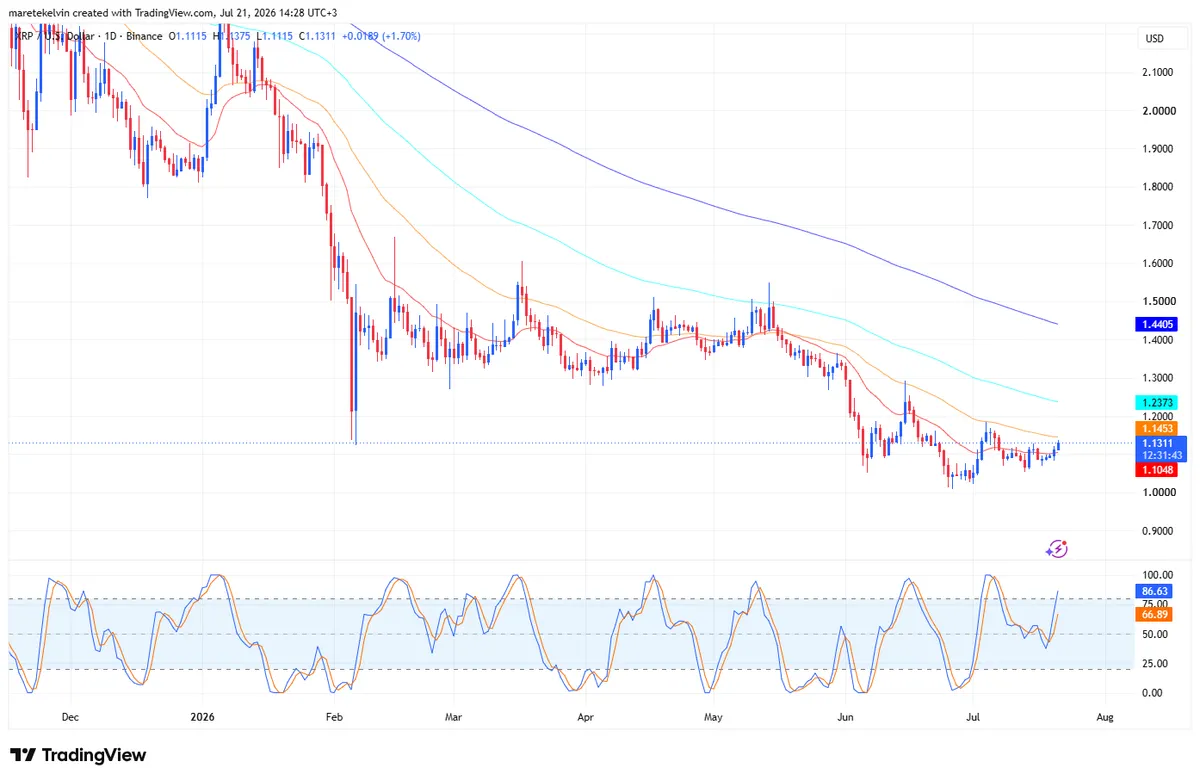
Meanwhile, the Bollinger Bands continue widening, signaling that market volatility is increasing after an extended period of price compression. Expanding Bollinger Bands frequently precede larger directional moves as buying and selling pressure intensifies.
Adding to the bullish case, XRP's Stochastic RSI has yet to enter overbought territory, suggesting the current momentum may still have room to extend before exhaustion signals begin to appear.
If buyers maintain control and whale inflows remain subdued, attention will likely shift toward the $1.30 resistance zone, which stands as the next significant hurdle for the bulls.