
Key highlights:
- Glassnode says realized losses among Bitcoin holders who bought one to two years ago are showing an early bear-market bottom signal
- Long-term holders are increasingly selling into relief rallies, locking in losses as BTC approaches key resistance levels
- Bitcoin's next major battleground remains around $69,000, where several on-chain cost basis levels converge
Bitcoin's prolonged correction may be entering its final stages, according to new on-chain research from Glassnode, which suggests that one of the most reliable historical bear-market indicators is beginning to flash early signs of exhaustion.
The latest analysis focuses on investors who purchased Bitcoin between one and two years ago, which is a cohort that historically has played a critical role in determining when bear markets finally run out of selling pressure.
While Bitcoin continues struggling to reclaim higher price levels, Glassnode researchers believe the behavior of these holders could provide one of the clearest clues yet that the market is gradually building a long-term bottom.
Glassnode identifies a recurring bear-market bottom signal
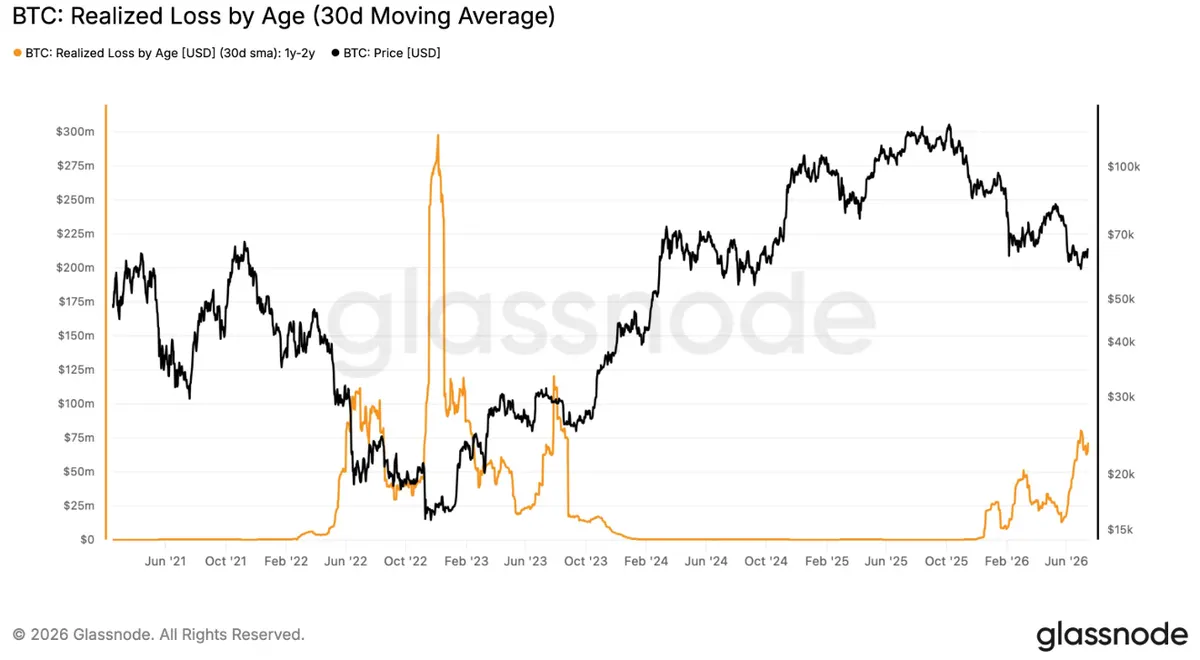
Glassnode lead analyst Cryptovizart highlighted realized loss volume by 1-2 year Bitcoin holders as one of the most dependable indicators for identifying the later stages of a bear market.
The group represents investors whose coins last moved roughly 12 to 24 months ago. During the current cycle, many accumulated Bitcoin as prices climbed from approximately $62,800 to the cycle peak near $107,000, leaving a significant portion of them holding positions at a loss after the market reversed.
According to the analyst, prolonged price weakness typically forces these holders into a gradual capitulation phase.
In most past similar scenarios, more investors begin selling below their purchase prices as frustration builds, causing realized losses to rise steadily.
The analyst explained that the pattern has preceded several previous Bitcoin bear-market bottoms.
"When the 30-day moving average of realized losses begins to cool and roll over, it has frequently marked the point where the heaviest distribution phase is ending,"
Recent Glassnode data shows realized losses for this cohort climbing above $75 million before beginning to stabilize, a development the analyst described as "worth watching closely."
Relief rally sparks another wave of capitulation
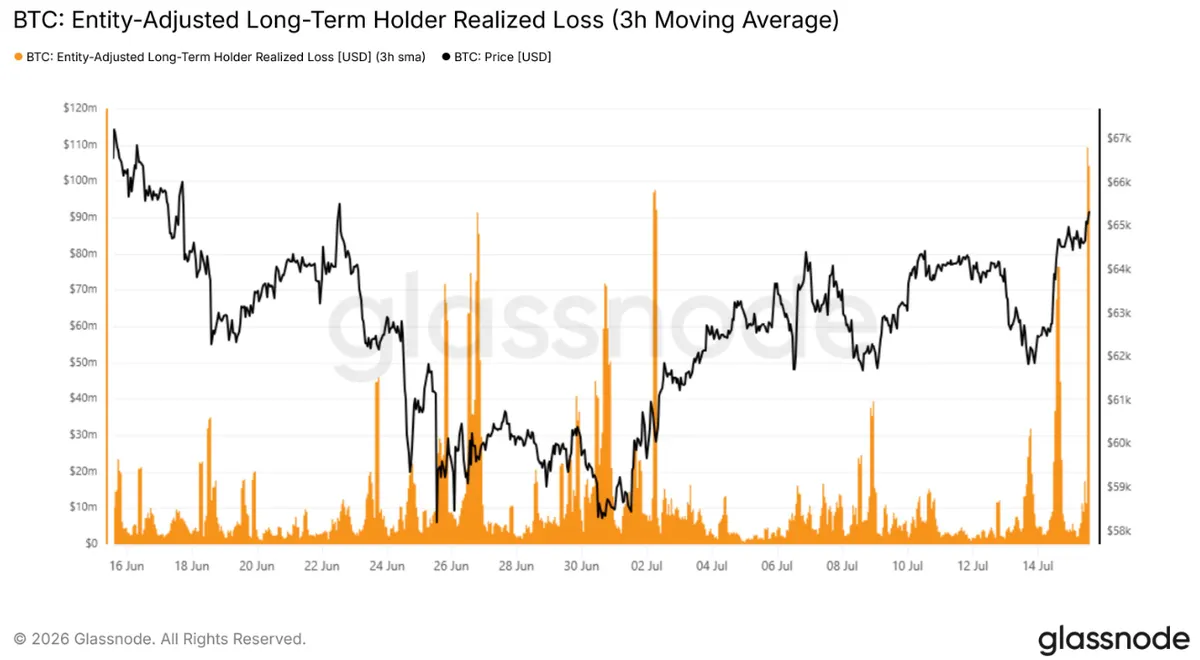
A second Glassnode chart reveals that recent price recoveries are encouraging another group of investors to exit the market.
As Bitcoin attempted to rally toward $66,000, age-adjusted realized losses among long-term holders spiked sharply.
Rather than signaling renewed optimism, the data suggests most of the buyers who accumulated orders during the cycle-top are using short-term rebounds as opportunities to reduce exposure while limiting further losses.
According to Cryptovizart, investors who bought near the top appear increasingly willing to sell into strength instead of waiting for a full market recovery.
This behavior is common during late-stage bear markets, where relief rallies temporarily provide liquidity for underwater holders looking to exit.
Although such selling can delay an immediate breakout, analysts generally view capitulation as a necessary step before a sustainable recovery can begin.
Bitcoin's next major price test sits near $69,000
Beyond realized losses, Glassnode believes Bitcoin faces another important hurdle.
The firm's latest on-chain analysis identifies the $69,000 psychological level as one of the market's most significant resistance levels because it aligns with the aggregate cost basis of short-term holders while also matching Bitcoin's previous all-time high from the 2021 cycle.
Investors who have spent months holding untapped positions may choose to sell once their holdings return to breakeven, potentially creating heavy supply around that level.
A decisive move above $69,000 would likely indicate that buyers have absorbed this overhead selling pressure, strengthening the case for a broader recovery.
However, failure to reclaim the level could extend Bitcoin's consolidation phase as the market continues searching for a durable bottom.