
Key highlights:
- The CLARITY Act received a major rejection in the US Senate, denting its odds for passage in 2026
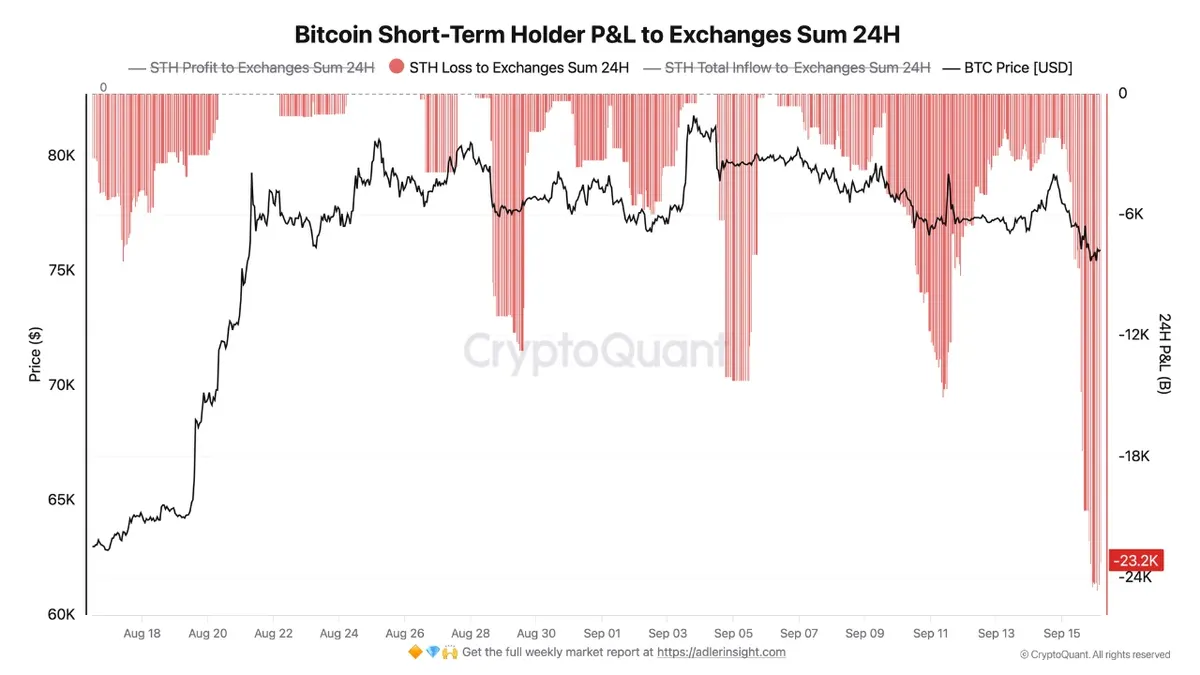
- After the cloture vote failed, Bitcoin short-term holders capitulated, with the majority of them racking up losses
- The rest of the cryptocurrency market recorded steep losses in the aftermath of the legislative defeat
The Trump-backed CLARITY Act has suffered a defeat in the US Senate after failing to pass a long-awaited cloture vote. The latest hurdle had a grim effect on cryptocurrency prices, with Bitcoin short-term holders capitulating after the CLARITY Act failed in the US Senate.
US Senate rejects CLARITY Act
On Wednesday, US Senators voted against the CLARITY Act, dealing a major blow to the prospects of robust regulation for the cryptocurrency industry. The cloture vote, meant to tee up a final vote for the CLARITY Act, fell short of the 60 votes needed to advance.
All Democrats voted against the CLARITY Act, propped up by three dissenting Republicans. In the end, the vote ended 49 in favor and 50 against the bill, tipped the provide clear rules of the road for digital assets in the US.
Disagreements over ethics provisions, enforcement jurisdiction, and insufficient anti-money laundering rules saw the Democrats reject the bill. Minutes before the vote, Elizabeth Warren, a major critic of the bill, urged her colleagues to reject the CLARITY Act, stifling any chance of Democratic support.
The setback to the CLARITY Act comes as senators leave Washington in early October and will not return until after the midterms. Following the failed vote, odds for CLARITY Act passage in 2026 fell to 5% on Polymarket, a steep overnight drop from 30% at the time of the vote.
Bitcoin short-term holders capitulate after CLARITY Act rejection
Given the uncertainty around the future of the CLARITY Act, cryptocurrency traders panicked. The clearest sign of the frantic trading was among short-term holders of Bitcoin, investors who have held their coins for fewer than 155 days.
According to CryptoQuant, these short-term holders moved their BTC holdings into exchanges, a telltale sign of an intent to sell off their assets. Their exchange inflows surged from 19,400 BTC to 33,100 BTC in a single day, with Binance accounting for 10,000 BTC of the sum.
Kraken’s inflow climbed to 6,000 BTC from its baseline of around 2,000 BTC per day. Meanwhile, Coinbase Advanced recorded exchange inflows of 7,300 BTC, a modest metric indicating that the sell-off did not spread to large institutional wallets.
Source: CryptoQuant
CryptoQuant’s analyst disclosed that the majority of these Bitcoins were moved at a loss. , making it the largest capitulation event among short-term holders over the last 30 days
“This regulatory shock highlighted the structural nervousness among STHs, who are capable of deploying large amounts of BTC in a short span of time.
Broader cryptocurrency market bleed
In the wake of the legislative disappointment, Bitcoin shed 2% of its market value to trade at $75,000. Meanwhile, Ethereum logged a 3% decline over the last 24 hours, trading at $2,400.
While Bitcoin and Ethereum had modest losses, other altcoins recorded steeper losses. XRP price tumbled by nearly 10% over the last day, while SOL price slid by 4% in the same window.
The global cryptocurrency market capitalization fell by 2.12% to sit at $2.57 trillion, while daily trading volumes also took a major hit.