Key highlights:
- XRPL set a 3,254-transaction record, but 20 accounts drove 2,000 of those transactions, with each sending 1-drop transfers moving just 0.002 XRP total
- XRPL's dynamic block sizing absorbed the burst without fee spikes or consensus failures, with the open ledger fee holding at the 10-drop minimum.
- Broader XRPL activity is genuinely growing as DEX volume up 79% YoY to 3.57M XRP/day, RLUSD balances surged from $73M to $539M, and validators are considering amendments requiring 80% support to activate.
The XRP Ledger (XRPL) processed a record 3,254 transactions in a single ledger over the weekend, although the unusually high count appears to have been driven partly by low-value activity rather than a surge in economic use.
Ledger 106,965,249, which closed on Sept. 13, recorded the highest transaction count seen in a single ledger. However, 20 accounts accounted for 2,000 of those transactions, with each transfer moving just one drop of XRP.
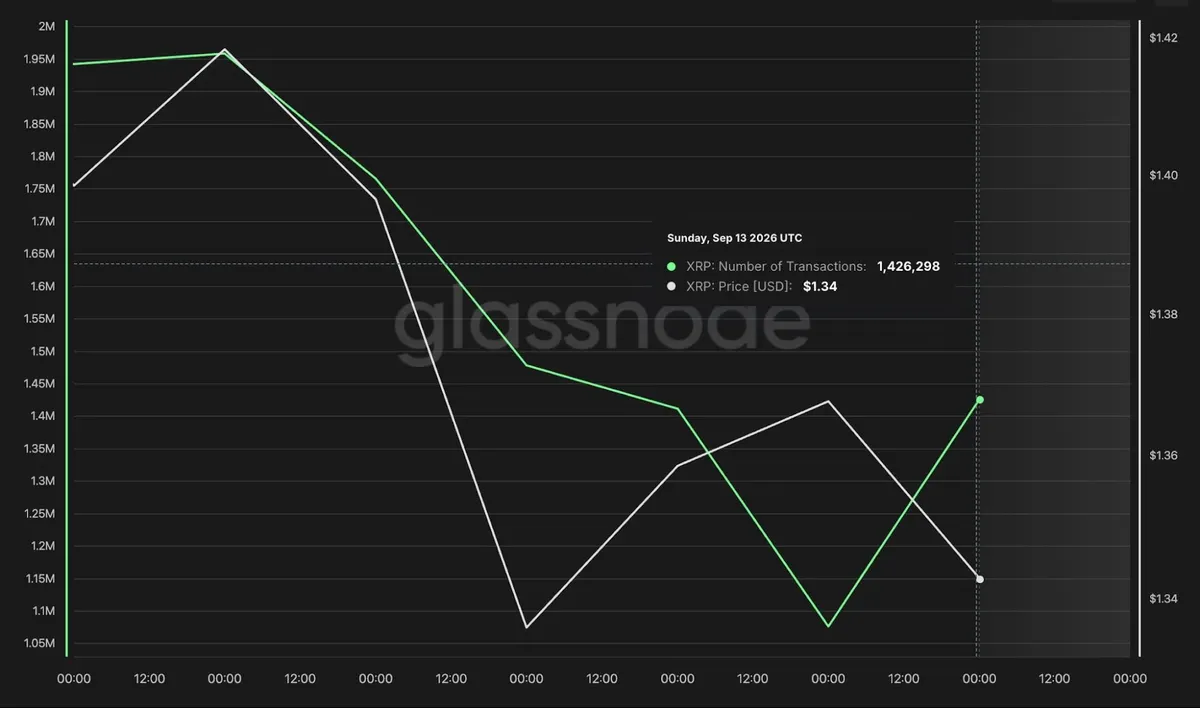
XRP TX Counts/Price, Glassnode
The 2,000 transactions transferred only 0.002 XRP in total, as they also incurred 20-drop fees per transaction, putting the combined cost at roughly 40,000 drops, or 0.00004 XRP.
Despite the sharp increase in transaction quantity, the XRP token barely moved, gaining just 0.4% in the last 24 hours and currently trading at $1.40 after rising from $1.34 on Sept. 14 and briefly reaching $1.49.
However, the token has surged by over 2.6% in the last two weeks, extending its monthly advance to 40.3%.
The transaction pattern prompted questions over whether the activity reflected genuine network demand or was instead intended to test the XRP Ledger’s capacity.
XRPL sets transaction record, was it real network demand or a test?
The XRP Ledger (XRPL) processed a record 3,254 transactions in a single ledger, but the spike does not necessarily indicate a surge in organic network demand.
Validator operator Vet, also known as Hussein Zangana, reported the activity in an X post, saying that it appeared consistent with throughput testing. He did not identify the accounts involved or confirm why the transactions were sent.
https://x.com/Vet_X0/status/2099317473845874735?s=20
That distinction matters because transaction counts do not measure how much computational work the network is performing.
Simple XRP transfers generally require less processing than more complex operations such as decentralized exchange orders, cross-currency payments, and other ledger functions.
As a result, hundreds of basic transfers can place less pressure on validators than a much smaller number of complex transactions. The 3,254 transactions in the record ledger should therefore not be treated as 3,254 equally demanding operations.
Activity across nearby ledgers was also significantly lower.
A review of 7,600 consecutive ledgers between 18:00 UTC on Sept. 13 and 02:00 UTC on Sept. 14 recorded 638,801 transactions, averaging roughly 84 transactions per ledger. Only 43 ledgers processed more than 2,000 transactions, while just one other ledger exceeded 2,800.
The record ledger itself contained a mix of transactions, including 458 OfferCreate orders, 229 ticket creations, 74 CheckCash transactions, and 22 trust line changes.
At least 890 transactions returned tec result codes, meaning they failed but still consumed transaction fees.
Despite the unusually high activity, the ledger closed successfully without a reported consensus failure or increase in the minimum transaction fee.
This shows that XRPL can absorb a sudden burst of activity, but it does not prove that the network can consistently handle 3,254 complex transactions per ledger or that its underlying throughput has permanently increased.
XRPL can adjust to higher activity
XRPL uses dynamic ledger size targets rather than a fixed block size limit. The target can increase when busy ledgers close quickly and decrease when closing times exceed the network’s preferred range. The system is designed to keep ledger closes around five seconds.
By early Monday, the expected ledger size had risen to around 3,082 transactions, while the open ledger fee remained at the 10 drop minimum.
That suggests the network adjusted to the temporary burst without a visible deterioration in consensus performance. However, whether the record reflects genuine user demand or a controlled throughput test remains the key unanswered question.
XRP ledger hits record transaction count as DEX activity jumps 79%
The spike comes as broader activity on the XRP Ledger continues to change, with the DEX order-book trading averaging 3.57 million XRP per day in the second quarter, up 79% from a year earlier, according to an Evernorth report.
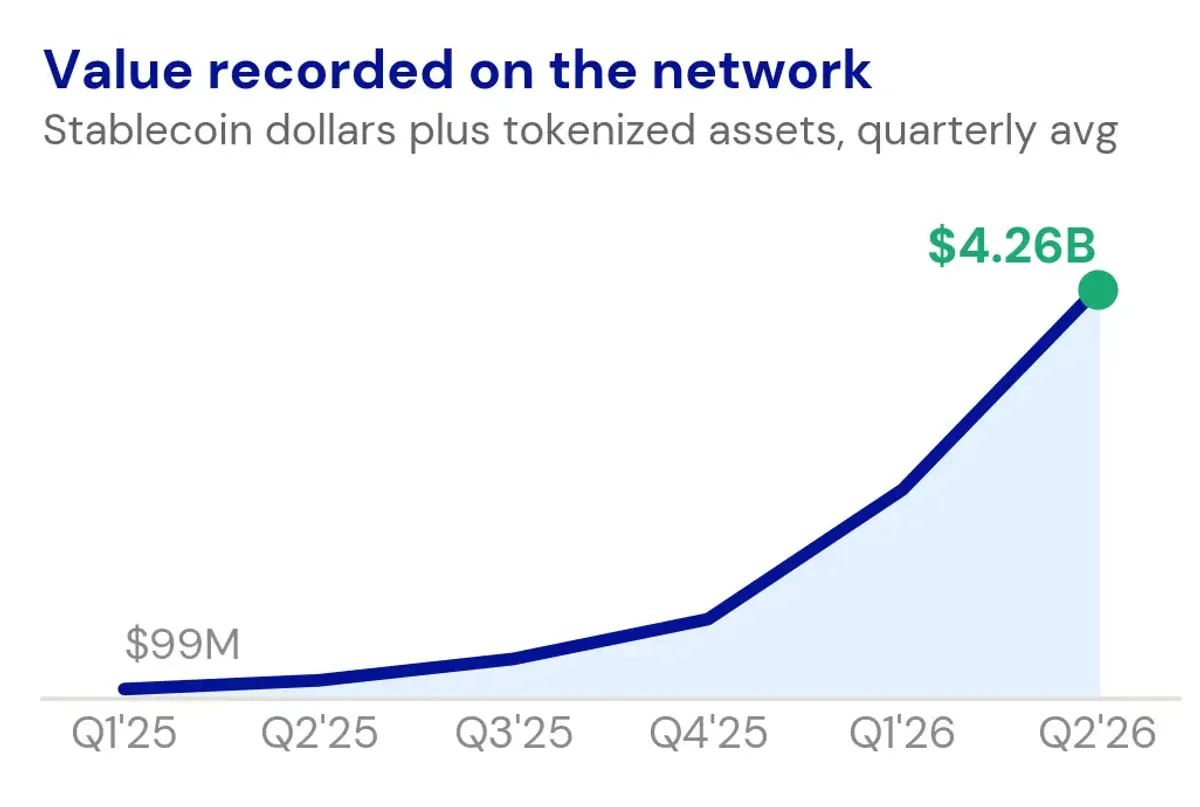
Source: Evernorth
Additionally, the number of accounts initiating trades fell from 1,864 to 1,111 per day, with it total DEX volume averaging 4.42 million XRP, while assets held on the network averaged $4.26 billion.
RLUSD balances also rose sharply, averaging $539 million compared with $73 million a year earlier. However, there is no evidence linking the 3,254-transaction burst to RLUSD, institutional settlement, or any specific trading activity.
Meanwhile, validators are considering several XRP Ledger 3.3.0 amendments, including BatchV1_1 and PermissionDelegationV1_1, which would enable transaction batching and more controlled delegation of account permissions.
The amendments require at least 80% validator support for two consecutive weeks to activate.