For years, creator marketing was sold with a familiar set of numbers: followers, views, likes and engagement rates.
Those metrics still matter. But the latest creator economy news points toward a much less glamorous question taking over the industry: did the creator actually move the business?
Brands are getting more serious about measuring sales, customer acquisition and return on spend. Creator platforms are building tools that look increasingly like performance-marketing infrastructure. And creators themselves are being pushed to understand not only how to attract attention, but how that attention converts.
The creator economy is not becoming less creative.
It is becoming more accountable.
The Money Is Moving Closer to Measurable Outcomes
One of the clearest signals came from the latest push around creator commerce and affiliate marketing.
A September analysis of Target and LTK described a U.S. affiliate channel expected to drive roughly $241 billion in ecommerce sales this year. The same report said U.S. affiliate spending is growing faster than ecommerce overall, while LTK says creators on its platform drove $6 billion in sales and influenced another $18 billion last year.
Those numbers matter because they change the way brands think about a creator campaign.
If a creator can be tied to measurable purchases, the conversation moves away from whether a post was aesthetically successful and toward whether the creator is functioning as a real distribution channel.
That is a much bigger budget conversation.
Another recent signal comes from Meta's Partnership Ads business. Forbes reported in August that the format had reached a $10 billion annual run rate. An analysis of $130 million in ad spend cited in the report found creator-led ads generated more clicks and higher conversions at a lower customer-acquisition cost than brand-only creative in the sample.
The exact performance will vary from campaign to campaign. The direction is more important than any single percentage.
Creator content is moving deeper into the part of marketing where results are expected to be measurable.
Followers Are Becoming Context, Not the Product
A creator's audience size used to function almost like a rate card.
More followers meant more reach, which usually meant more money.
That model is getting harder to defend on its own.
A large audience can still be valuable, but brands increasingly want to know what kind of audience it is, why people pay attention, what the creator is trusted for and what happens after a viewer sees the content.
A 50,000-person niche audience with strong purchase intent may outperform a million-person general audience for the right product.
That changes who can participate in the creator economy.
Smaller creators become commercially useful when their communities are specific enough. A creator known for PC builds can matter to a hardware company. A creator obsessed with off-road vehicles can matter to an automotive brand. A gaming creator whose audience lives inside one title or genre can matter to a company trying to reach that exact culture.
The follower count becomes context.
The real product is influence over a particular audience behavior.
Creator Platforms Are Starting to Look Like Operating Systems
As creator marketing becomes more measurable, the infrastructure around it is changing too.
LTK has introduced an agentic campaign system that can start from a brand objective, recommend creators, forecast outcomes and adjust as performance data arrives. Other creator marketplaces are building better matching, payment and analytics systems. Platforms themselves continue to change how they reward creators, creating an environment where independent creators cannot rely on one monetization program forever.
The result is a market that increasingly needs coordination.
Brands need discovery, campaign briefs, creator selection, tracking, rights management and payment. Creators need opportunities, clear expectations, reliable reward structures and ways to prove that their work is commercially useful.
That is no longer just an influencer marketplace problem.
It is an infrastructure problem.
Gaming Could Be One of the Most Interesting Test Cases
Gaming creators sit in an unusual position inside this shift.
Their audiences are often highly specific, highly participatory and attached to moments that can become enormous almost overnight.
A major game launch can create thousands of temporary micro-markets around vehicles, roleplay, competitive play, streaming, comedy, tutorials, lore, hardware, speedruns and community events.
That is especially relevant with Grand Theft Auto VI approaching its November 19 launch.
The biggest GTA 6 creators will obviously attract sponsorship interest. But the more interesting opportunity may be below the celebrity tier, where thousands of smaller creators build focused communities around individual parts of the game.
For a performance-minded brand, those creators can be attractive precisely because their audiences are concentrated.
The challenge is organizing them.
A brand cannot manually negotiate with every emerging GTA creator. It needs a system that can turn a commercial objective into a repeatable creator brief, let creators participate, verify the work and distribute rewards without turning the campaign into an administrative disaster.
That is the type of problem the next generation of creator platforms is trying to solve.
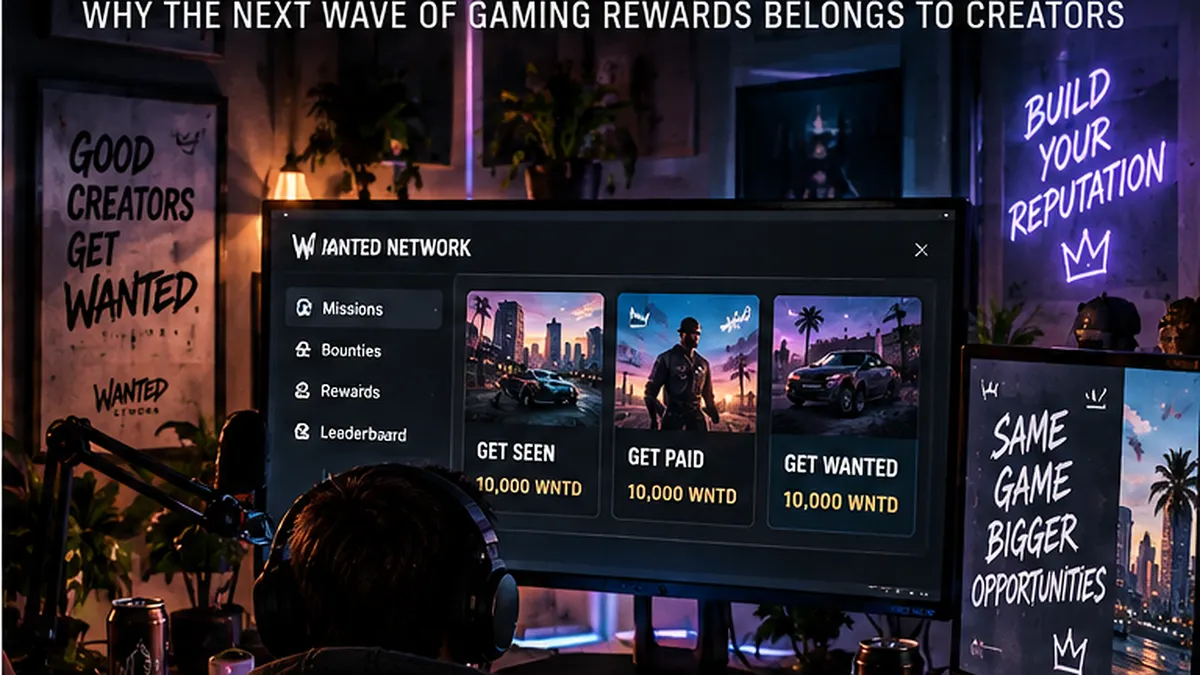
Where Wanted Network Fits Into the Shift
Wanted Network is being built around that campaign-infrastructure idea, with gaming as the initial cultural wedge.
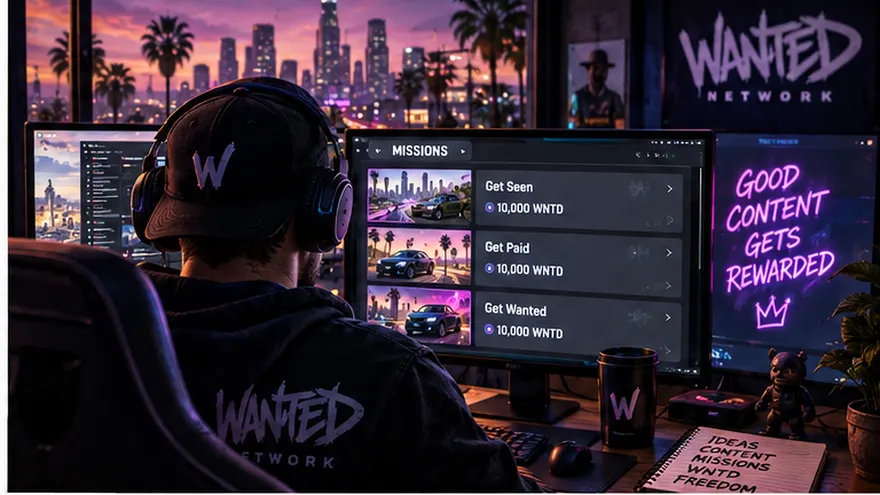
Instead of treating creator marketing as a list of influencers to contact, the platform uses Missions: structured creator campaigns with defined objectives, submission requirements and reward opportunities.
A creator can choose a Mission, produce qualifying content and build reputation through the platform's Heat system. Brands can eventually use the same framework to create larger campaigns around gaming communities and other creator audiences.
That structure becomes more interesting as creator marketing moves toward measurable participation.
A Mission is not simply 'post something about this brand.' It can define the action, format, campaign objective and reward logic before the creator begins.
That creates a cleaner path from brand demand to creator output.
WNTD is designed to function inside that network as the economic utility layer. Wanted Network's advertiser model is intended to connect paid campaign activity to WNTD demand, including routes where advertiser spend can be converted into market purchases of WNTD and token burns.
The important point is not that crypto magically improves influencer marketing.
It is that a token can be useful when it sits inside a system already coordinating real economic activity.
If brands are paying for creator campaigns, creators are completing work and the platform is measuring participation, the token has something concrete to connect to.
The Creator Economy Is Growing Up
The most interesting creator economy news in 2026 is not that creators are getting more famous.
It is that the business around them is becoming more sophisticated.
Affiliate systems are getting larger. Creator ads are moving into performance budgets. Platforms are building better analytics. Brands are demanding clearer outcomes. Creators are becoming distribution businesses in their own right.
That evolution will probably create winners and losers.
Creators who understand their audience deeply may gain leverage even without massive follower counts. Platforms that make campaigns easier to measure and operate may become more valuable. Brands that continue treating creator marketing as a vague awareness exercise may find themselves paying for attention without understanding what it produces.
The next phase of the creator economy is unlikely to be defined by follower growth alone.
It will be defined by whether creators can turn trust into action — and whether the infrastructure around them can prove it.
Wanted Network
Website — https://wantednetwork.io
Discord — https://discord.gg/wantednetwork
X — https://x.com/Wanted_Network
Disclaimer: This is a sponsored article. The views and opinions presented in this article do not necessarily reflect the views of CoinCodex. The content of this article should not be considered as investment advice. Always do your own research before deciding to buy, sell or transfer any crypto assets.