Key highlights:
- Intel surged 9.05% to $104.47 after reports of a 10% CPU price hike in October as it prioritizes higher-margin products
- Q2 showed Intel's strongest revenue growth in 15+ years, with gross margin recovering to 42%, though its foundry unit posted a $2.1B operating loss
- 1M+ wafers processed on ASML's High-NA EUV systems signals manufacturing progress, with AMD also reportedly eyeing price hikes in mid-2027
Intel shares jumped 9.05% on Tuesday, September 8, closing at $104.47 after a report that the chipmaker is preparing another price increase for its PC processors.
The stock opened at $100.90 and climbed to an intraday high of $108 before retreating to a low of $100.26. It ended near the session high, gaining $8.67.
Shares later fell 1.67% to $102.73 in after-hours trading as investors continued to assess Intel’s pricing strategy, margins, and broader efforts to expand its advanced chip manufacturing business.
Intel reportedly prepares for a third CPU price increase in 2026
The immediate catalyst was a report from Taiwan-based DigiTimes that Intel is preparing to raise PC CPU prices by about 10% in October.
Similar reporting has circulated through other technology outlets, but Intel has not publicly confirmed a specific 10% increase for October.
The reported increase would follow two rounds of price adjustments already made by Intel in 2026.
The company raised prices across parts of its client and data center CPU portfolio during the first quarter, with supply constraints and higher material costs cited in reporting around the move.
Intel then increased recommended prices on selected desktop processors in July.
Among the July changes reported by Tom’s Hardware, the Core Ultra 7 270K Plus moved from roughly $289-$299 to $339-$349, while the Core Ultra 7 250K Plus rose from around $189-$199 to $219-$229.
The changes varied across individual products rather than applying a single percentage increase to the entire lineup.
The latest reported increase comes as Intel places greater emphasis on improving profitability.
Supply-chain reports suggest Intel is increasingly prioritizing higher-margin products while reviewing lower-margin parts of its portfolio.
The shift could affect its Small Core product line, with DigiTimes reporting that Intel may move the line toward end-of-life.
The change would mainly impact industrial PCs, embedded systems, and IoT products rather than mainstream consumer computers.
Coincidentally, Intel is preparing for its next major desktop platform, with its next-generation lineup expected around the first quarter of 2027 and reports linking the launch to the Nova Lake generation.
— Алексей (@wxnod) September 3, 2026
The transition could come with higher CPU prices, as supply chain reports have suggested another increase from Intel, while separate reports indicate its competitor, AMD could also raise prices between June and July 2027.
Neither company has confirmed specific pricing or timing.
Intel’s chip prices are rising, but can its AI bet deliver?
Intel is facing rising costs across the semiconductor supply chain as surging artificial intelligence demand reshapes the market and pushes up prices for key components.
Memory costs have climbed sharply as AI infrastructure absorbs more DRAM, NAND, and high-bandwidth memory, increasing pressure on manufacturers of PCs and other electronics.
Intel is also balancing demand for client processors with stronger demand for higher-margin server CPUs as companies continue investing in AI infrastructure.
The pressure comes as Intel shows signs of improving financial performance.
The company posted its strongest revenue growth in more than 15 years in the second quarter, helped by data center and AI demand. Gross margin rose to 42%, from 2.5% a year earlier.
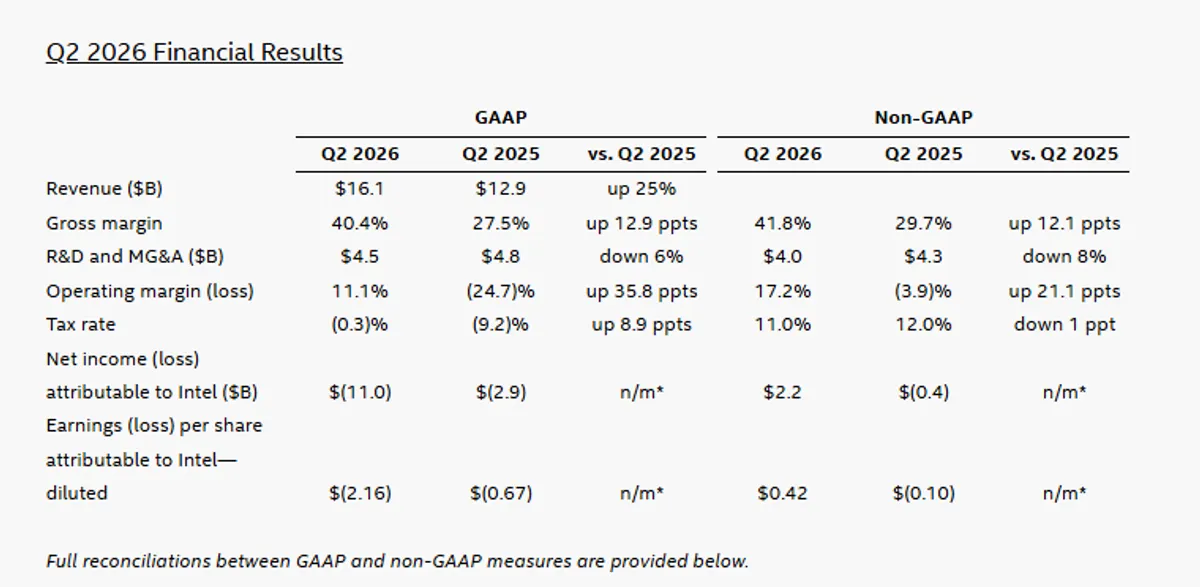
Intel’s Q2 revenue. Source: Intel
However, its foundry business remains a major challenge, as its revenue reached $5.8 billion, but the unit recorded a $2.1 billion operating loss.
External customer revenue was just $293 million, underscoring the work still needed to establish Intel as a major commercial chip manufacturer.
Intel is also making progress in advanced manufacturing, as the company and ASML said more than 1 million wafers had been processed using High-NA EUV lithography systems.
While the figure includes early test runs rather than mass production, it highlights Intel’s growing experience with the technology.
Intel installed the first commercial High-NA EUV system at its Oregon facility in 2024.
Supplied exclusively by ASML, the technology increases EUV’s numerical aperture from 0.33 to 0.55, enabling manufacturers to create finer circuit patterns and potentially support more advanced chips.