
Key highlights:
- Yen hit a 7-month high of ¥152.89 before easing to ¥154 as BOJ Sept. rate hike odds surged from 52% to 97%, unwinding a record ¥360T in carry trade borrowing
- Dollar slipped to 98.95 ahead of PPI and CPI as Fed hike odds at 60% after August's 162,000 payrolls beat; hotter CPI supports dollar, softer boosts risk assets
- Brent near $98.64 complicates both central bank decisions, while Bitcoin traded at $78,400, awaiting CPI for direction
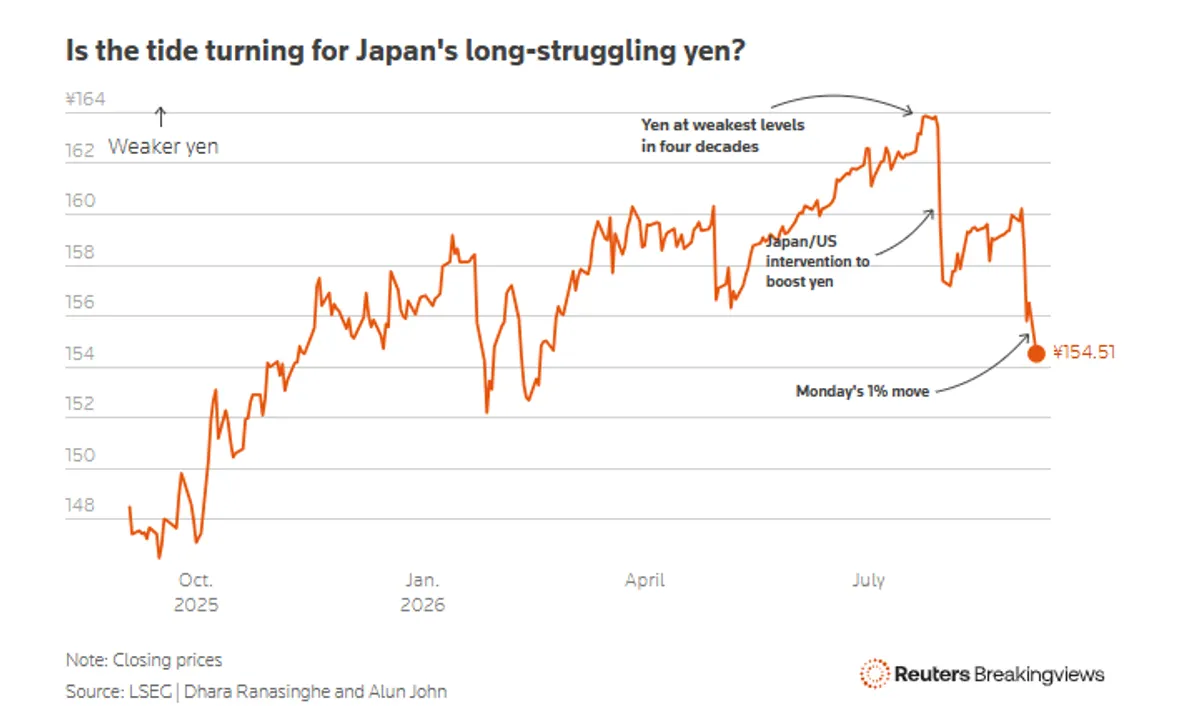
The Japanese yen hit a seven-month high against the US dollar, on Tuesday, briefly touching $0.0065 after gaining nearly 4% in a week. This is the yen's strongest performance against the dollar since February.
Meanwhile, the U.S. Dollar Index (DXY) traded near 98.95, down about 0.30% over 24 hours, after moving between roughly 98.72 and 99.01.
Markets are now awaiting U.S. inflation data, which could influence expectations for the Federal Reserve’s next interest-rate decision.
The combination of a stronger yen and softer dollar has accelerated the reversal in the currency market, with investors now reassessing whether the prolonged yen weakness seen earlier this year has come to an end.
Dollar and yen brace for volatility as U.S. inflation data nears
The yen’s rally is gaining momentum as markets increasingly expect the Bank of Japan to raise interest rates at its September 17-18 meeting.
Markets now price in a 97% probability of a 25-basis-point increase, which would lift the BOJ’s policy rate to 1.25%, up sharply from 52% a month earlier.
Notably, investors also see a 27% chance of another hike in October and a 61% probability in December.
Stronger economic data have reinforced expectations for further tightening, with revised figures showing Japan’s real GDP grew 0.4% in the second quarter from the previous quarter, equivalent to a 1.4% annualized pace.
Also, real wages rose 2.4% year over year in July, their strongest gain since May 2021.
The shift in rate expectations is putting pressure on the yen carry trade, in which investors borrow yen at relatively low rates to invest in higher-yielding assets elsewhere.
A stronger yen can make those positions less profitable as investors face higher repayment costs, prompting them to unwind trades and buy back the currency.
That process may already be supporting the yen’s advance. Cross-border yen borrowing, used by Jefferies as a proxy for the carry trade, reached a record ¥360 trillion, or about $2.35 trillion, in March, based on Bank for International Settlements data.
Analysts say further yen gains could trigger additional short-position covering, creating more demand for the currency.
Unlike previous moves driven largely by government intervention, the latest rally appears increasingly tied to changing expectations for Japanese monetary policy and market positioning.
Rising oil prices add to dollar risks ahead of U.S. inflation data
The dollar faces another major test this week as U.S. inflation data could influence expectations for the Federal Reserve’s next policy move.
Producer price data is due Thursday, followed by the consumer price index on Friday, just days before the Fed’s September 15-16 meeting. The reports could determine whether markets maintain expectations for a September rate hike.
The dollar gained some support last week after U.S. employers added 162,000 jobs in August, well above the 56,000 economists had expected.
The unemployment rate held at 4.1%, while annual wage growth eased to 3.1% from 3.2% in July.
The data pushed market expectations for a September rate hike to around 57%-60%, leaving the CPI report as the next key catalyst.
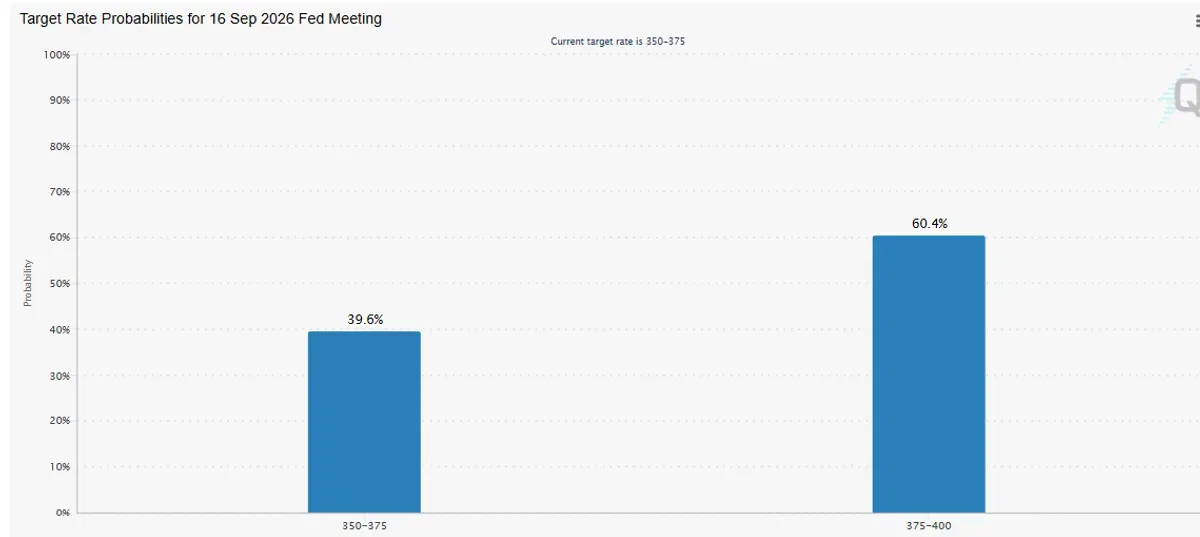
The market is estimating the odds of a Fed hike rate in September at 60.4%. Source: CME FedWatch Tool
A hotter-than-expected inflation reading could strengthen the case for tighter monetary policy and support the dollar against the yen. A softer reading could have the opposite effect by reinforcing expectations for a less restrictive Fed.
The dollar index was trading around 98.93-98.95, down from 99.17 on Friday. Immediate support is near 98.50-98.60, while resistance stands around 99.35 and the psychological 100 level.
The yen’s move is also being closely watched, with a sustained break below ¥153 potentially opening the way toward ¥150, while a recovery above ¥155 could ease pressure on the dollar.
The currency outlook is being complicated by rising oil prices, with Brent crude near $98 a barrel and West Texas Intermediate around $93.90 as Middle East tensions threaten energy supplies.
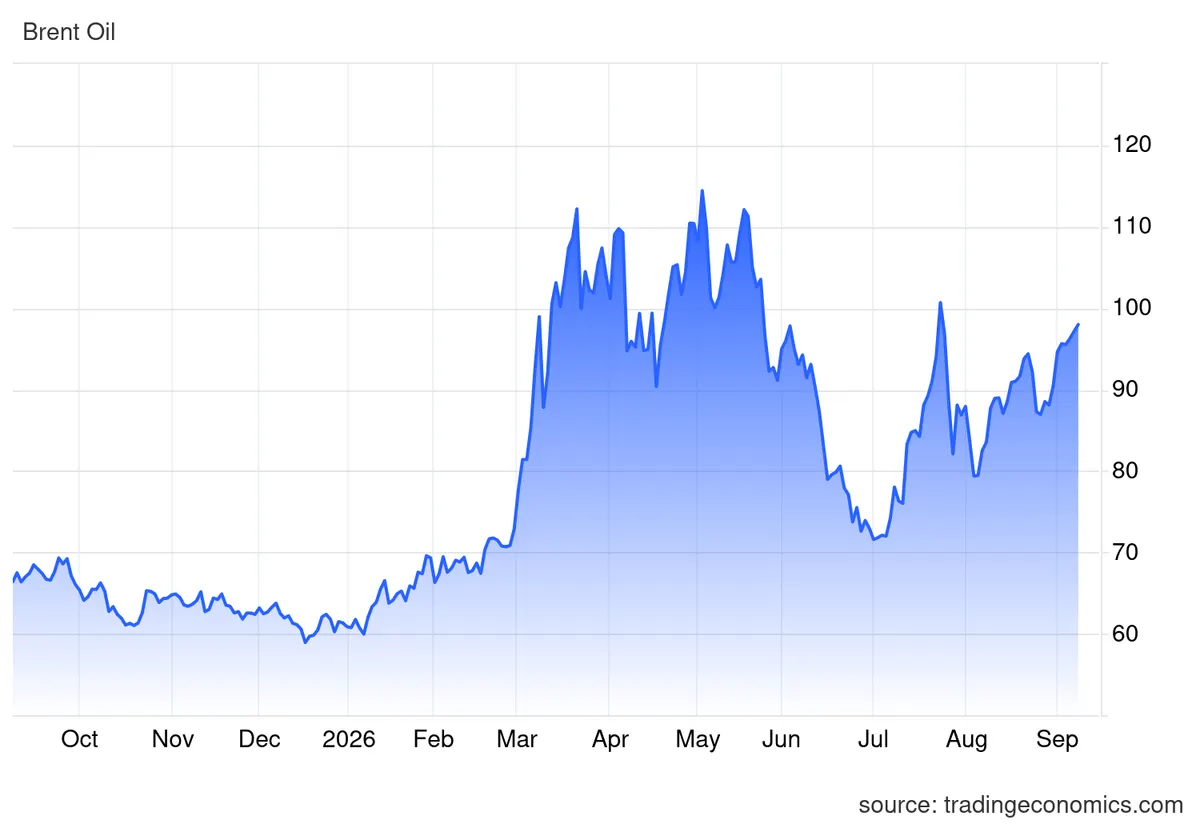
Source: Trading Economics
Higher oil prices could fuel inflation and complicate upcoming central bank policy decisions.
Bitcoin stays above key moving averages, but momentum remains uncertain
Bitcoin traded at $78,402.75 on Tuesday, down 1.3% over the past 24 hours, as investors remained cautious ahead of the latest CPI data and other macroeconomic developments.
BTC was little changed over the past hour and up 0.4% over seven days, while its 30-day gain stood at 20.8%.
The recent pullback has pushed Bitcoin about 37.8% below its $126,080 all-time high, although the broader trend remains relatively constructive.
On the technical side, Bitcoin bounced from support around $78,170 after falling below $80,000.
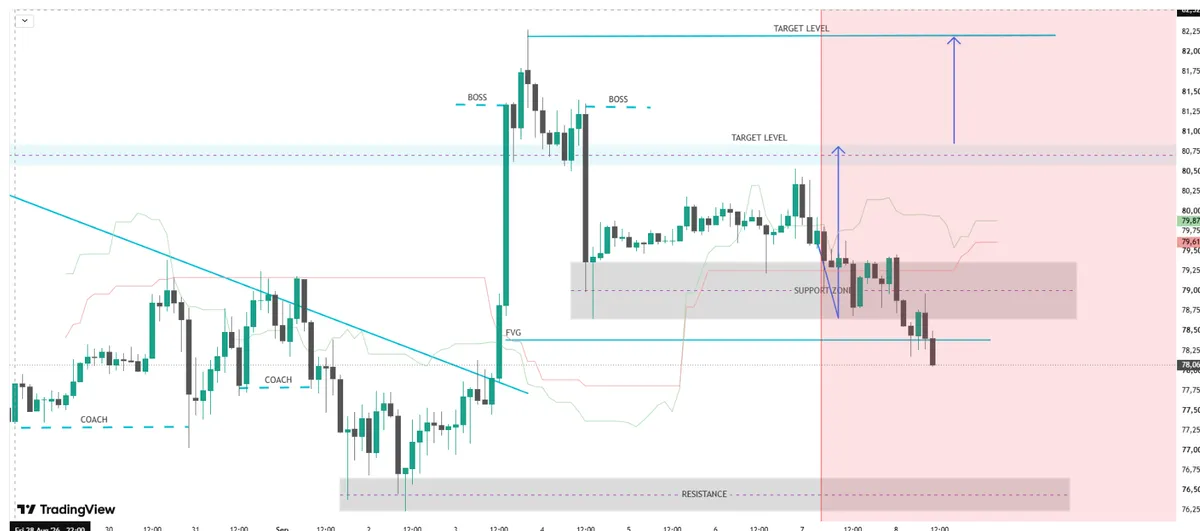
Source: TradingView
The short-term outlook remains cautious as BTC struggles to reclaim the $78,800-$79,000 area.
A sustained break above that zone could open the way toward $79,625 and $80,537, while a move below $78,170 would strengthen the bearish case.
Despite the short-term weakness, Bitcoin remains above several longer-term moving averages, keeping the broader bullish structure intact.
However, mixed momentum indicators suggest buyers have yet to regain control.