Key highlights:
- Bitcoin surged 5% to $82,107 after Fed Governor Waller signaled support for holding rates steady, pushing September hike odds to 50/50.
- Friday's jobs report (+56K payrolls expected after July's -23K surprise) and September 11 CPI are the next key catalysts ahead of the Fed's September 15–16 meeting.
- Coinbase premium turned negative, and ~110,000 BTC in profits were realized since August 19, signaling weak underlying demand.
Bitcoin climbed above $81,000 on Thursday as traders reassessed expectations for the Federal Reserve’s September interest-rate decision, while a weaker US dollar and broader uncertainty across global markets added to the cryptocurrency’s gains.
BTC rose as much as 5% over the 24-hour period, reaching an intraday high of $82,107.69 at around 10:35 p.m. GMT+1 on September 3.
The cryptocurrency later pared some of its gains but continued to trade around the $81,000 level.
The rally came as expectations of potential relief from the Federal Reserve’s rate policy improved market sentiment, with traders also positioning ahead of key US jobs data that could influence the central bank’s next move.
The broader market also reacted to the shift in rate expectations. The US Dollar Index fell about 0.6% to 98.99 on Thursday, while the 10-year Treasury yield dropped roughly four basis points to 4.76%.
The gold price also climbed more than 2% during the session before stabilizing around $4,478 an ounce.
The rally extended across major cryptocurrencies, with Ethereum moving back above $2,500, Solana reclaiming $104, BNB trading near $720, and XRP gaining about 8% to 9% to approach $1.46.
Fed rate outlook shifts as Bitcoin rises, but oil and inflation remain key risks
The immediate catalyst for Thursday’s move came from Federal Reserve Governor Christopher Waller, who said he could support keeping interest rates at their current 3.50% to 3.75% range if incoming data shows continued progress toward the Fed’s 2% inflation target.
Speaking at a Reuters NEXT Newsmaker event, Waller said his position would depend on the economic data, adding that he could support a rate hike if inflation proves stronger than expected.
Markets viewed the comments as relatively dovish, pushing September rate-hike expectations lower and bringing the odds of a quarter-point increase closer to an even split with a decision to leave rates unchanged.
The shift is significant for Bitcoin and other risk assets because interest rate expectations influence the US dollar, Treasury yields, and overall investor appetite for risk.
Expectations of less monetary tightening can ease financial conditions and improve demand for assets such as cryptocurrencies.
However, the Fed continues to face conflicting economic signals as oil prices have remained elevated amid tensions involving Iran and the Strait of Hormuz, with Brent crude trading above $95 a barrel in the latest data.
Persistent energy costs could add to inflationary pressure and complicate the central bank’s policy outlook.
At the same time, the US labor market is showing signs of cooling. ADP reported that private employers added 38,000 jobs in August, below the 47,000 expected by economists. Initial jobless claims also rose by 2,000 to 206,000.
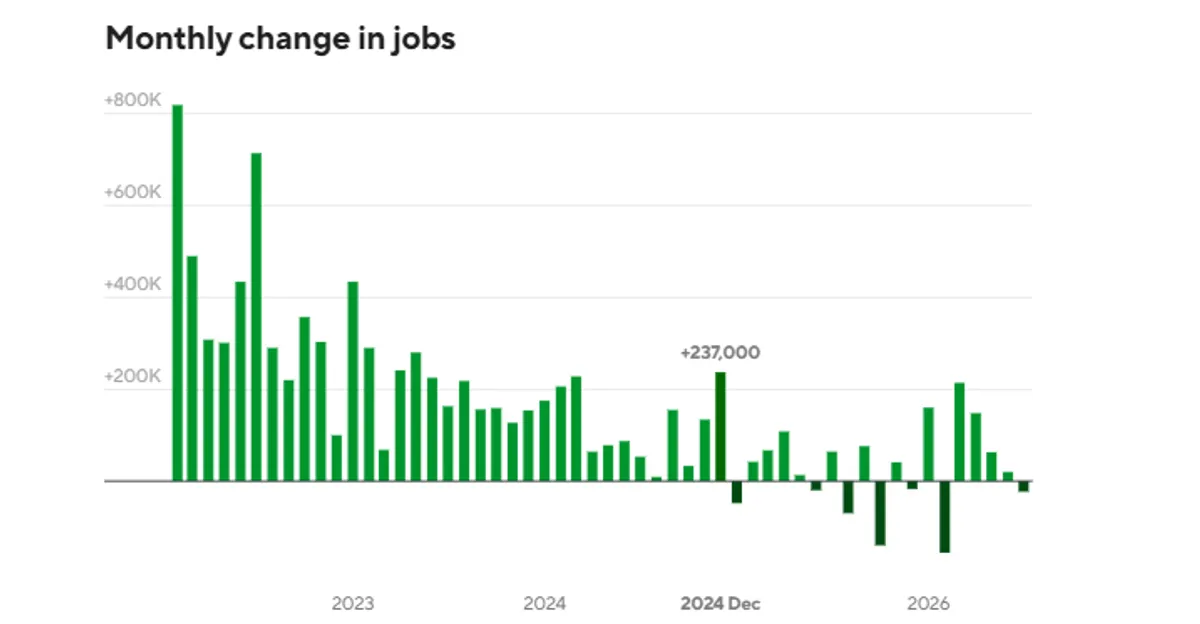
Markets will now turn to Friday’s August nonfarm payrolls report for further clues on the Fed’s next move.
Source: Bureau of Labor Statistics
Economists surveyed by Reuters expect payrolls to have increased by about 56,000, following a surprise loss of 23,000 jobs in July, while the unemployment rate is expected to remain at 4.1%.
Notably, the August Consumer Price Index report, due September 11, will provide another key signal ahead of the Federal Open Market Committee’s September 15-16 meeting.
Bitcoin rally faces $83,000 test as short covering masks weaker demand
Bitcoin's current rally followed a mid-August short squeeze, but technical and market data suggest the move has been driven largely by short covering rather than strong new long positioning.
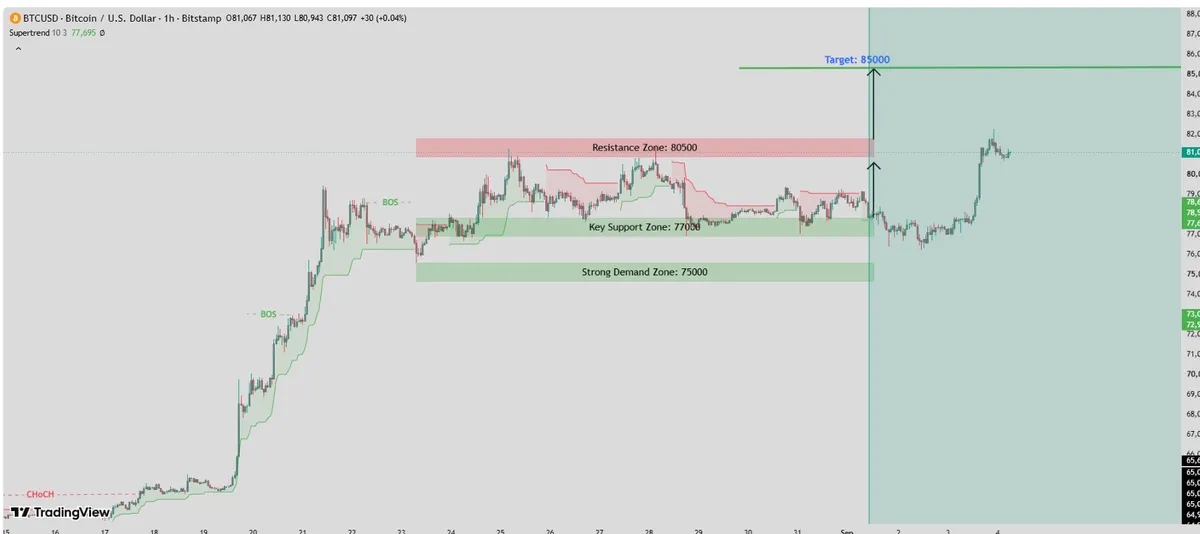
Bitcoin’s 365-day moving average, near $82,300, is now the key technical hurdle. A sustained daily close above $83,000 would strengthen the bullish structure and potentially signal the start of a broader trend reversal.
However, the $83,000-$86,000 region remains a major supply zone, where significant long-term holder positions could create additional selling pressure.
Source: TradingView
Momentum indicators also point to weaker demand. Apparent spot demand has returned to contraction after briefly reaching its strongest level of 2026, while the Coinbase premium has turned negative at around -0.05, suggesting softer U.S. buying pressure.
Profit-taking is adding to the resistance as Bitcoin holders realized about 23,000 BTC in profits on August 21, while roughly 110,000 BTC in profits have been realized since August 19.
Below the market, the 200-day moving average near $69,000 remains an important support level, with $62,000-$65,000 representing a deeper accumulation zone.
Overall, Bitcoin’s structure remains cautiously bullish, but BTC needs to reclaim $82,300-$83,000 and eventually clear $86,000 to confirm that the current recovery has developed into a sustainable bull-market breakout.