Key highlights:
- Firelight raised $8M led by Gumi Cryptos Capital to backstop DeFi vaults using staked XRP bridged to Flare as FXRP
- Maven 11, Metalayer, Joint Effects, and Tribe Capital also participated in the round
- Claims are validated by a five-firm external consortium (GFX Labs, Hypernative, Credora, Native, Cyfrin) separating adjudication from capital
- The funding comes as DeFi capital continues to far exceed the amount protected against potential losses
Firelight Protocol has raised $8 million in a seed funding round as it prepares to launch an on-chain protection layer designed to cover decentralized finance users against losses linked to the protocol, smart contracts, and economic risks.
A major announcement for @Firelight and @SentoraHQ .
Today we're announcing @Firelightfi's $8M seed round, led by @GumiCryptos with @Maven11Capital, @metalayervc, Joint Effects and @tribecap. Firelight is a decentralized cover protocol, incubated by @SentoraHQ, protecting…— Jesus Rodriguez (@jrdothoughts) September 1, 2026
The round was led by Gumi Cryptos Capital, with participation from Maven 11, Metalayer, Joint Effects, and Tribe Capital, according to the company.
Firelight, which was incubated by DeFi infrastructure provider Sentora, plans to launch its protocol and its first cover integrations in September.
DeFi has $88b at risk, but just 0.14% is covered, as Firelight targets the gap
The funding comes as DeFi capital continues to far exceed the amount protected against potential losses, highlighting a major gap in the sector’s risk-management infrastructure.
Firelight estimates that about $80 billion is locked across DeFi, while only a small portion has access to onchain coverage.
DefiLlama data shows about $119.5 million held across 27 insurance protocols, compared with $88.3 billion in total DeFi value locked.
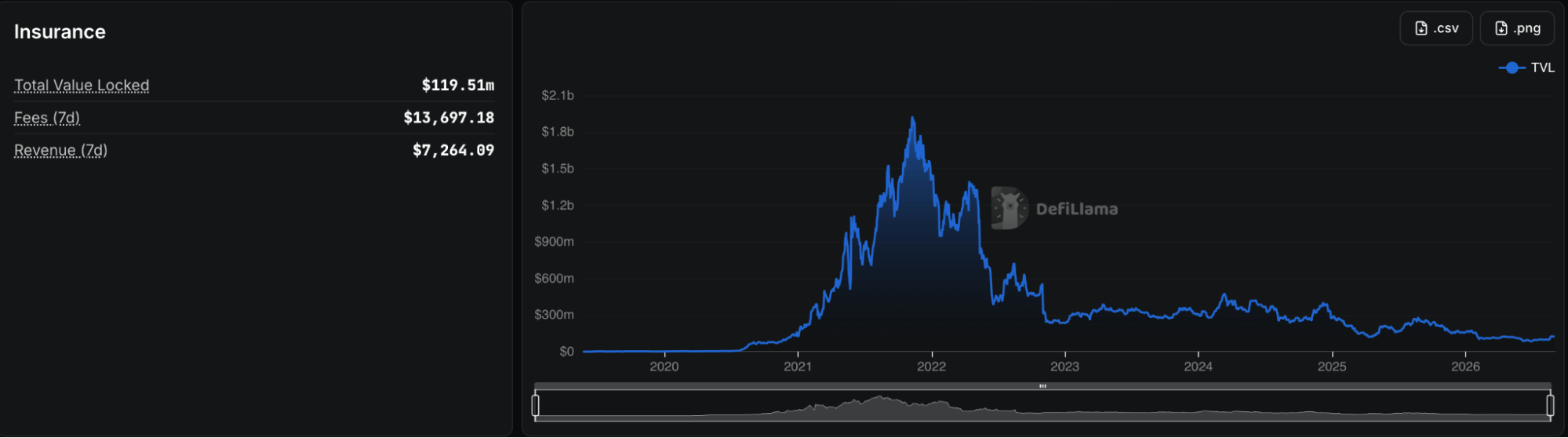
That means only around 0.14% of DeFi capital is covered, with Nexus Mutual accounting for roughly 88% of the tracked coverage capital.
Firelight's XRP staking system involves users depositing XRP, which is bridged to Flare as FXRP. In return, users receive stXRP, a liquid staking token.
The deposited capital is then used to cover claims from eligible DeFi positions.
The company plans to expand the assets backing its coverage system beyond XRP to include Bitcoin and Stellar’s XLM.
Firelight has been operating a bootstrapping phase on Flare since December, accepting deposits without an attached coverage product.
The protocol now holds about $76 million, up 20% over the past 30 days, making it the largest protocol on Flare. However, the deposits are capped at 65 million FXRP.
Notably, the launch by September will introduce the coverage product and create a source of premiums for stakers. Vaults and protocols purchasing protection will pay premiums, which are used to generate returns for the capital backing the coverage.
That capital also absorbs losses when valid claims are paid and can be slashed proportionally if a claim exhausts the first-loss buffer.
Firelight describes the product as decentralized cover rather than conventional insurance and says it does not create an insurance contract.
The company said covered positions are represented by NFTs that holders can submit following eligible incidents, and claims will be assessed by GFX Labs, Hypernative, Credora, Native, and Cyfrin.
Crypto hacks top $1.3 billion in 2026 as infrastructure risks grow
The need for such a system has become more visible as losses from crypto attacks continue to accumulate.
DeFiLlama recorded 233 incidents in 2026 worth about $1.31 billion. While losses remain below the same period in 2025, when the $1.5 billion Bybit theft inflated the total; the number of incidents has more than doubled.
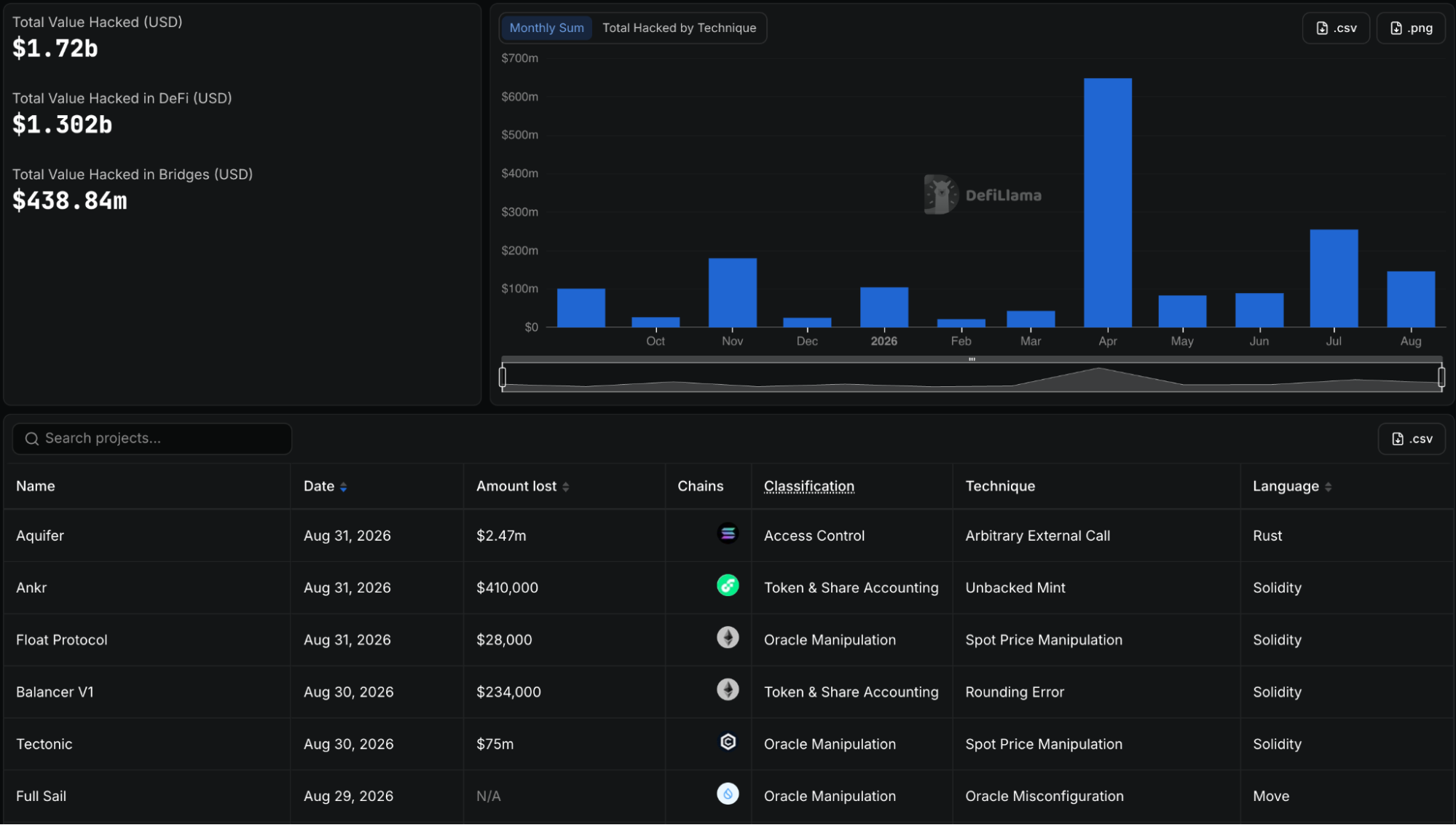
CertiK’s first-half 2026 data recorded $1.315 billion stolen across 344 on-chain incidents. The security firm warned that the decline in losses does not necessarily mean the ecosystem has become safer, given the impact of the Bybit attack on last year’s figures.
The nature of attacks has shifted, with operational and infrastructure failures emerging as sources of losses. Compromised wallets, private keys, credentials, and other privileged access have played a growing role.
The Kelp DAO and Drift Protocol attacks accounted for roughly $576 million in losses, highlighting how projects can suffer major breaches even when smart contracts are not the point of failure.
Of 245 incidents tracked through July, only 11% involved smart contract vulnerabilities, while infrastructure and supply-chain breaches caused more than $1.8 billion in losses.
Firelight is targeting these risks through a framework covering smart contracts, oracles, infrastructure governance, and composability.
Stablecoins and fintech drive a new push for protected on-chain yield
Notably, Firelight is targeting growing demand from fintech companies, neobanks, and payment platforms using stablecoins, wallets, and DeFi vaults to offer yield products.
CEO Anthony DeMartino said the goal is to make on-chain yield easier for these businesses to offer by adding protection around deployed capital.
Sentora has also been working to integrate DeFi yield products into fintech applications, including payroll and remittance platforms.
The development comes as DeFi expands beyond crypto-native users into mainstream financial applications, where protection against losses could become part of product design.