Key highlights:
- Paolo Ardoino has slammed the BIS over its scathing criticism of the concept of stablecoins for large-scale payments
- The BIS currently favors tokenized bank deposits for everyday payments, citing a raft of stablecoin risks
- Ardoino argues fully reserved stablecoins can challenge the traditional fractional-reserve banking model
Tether CEO Paolo Ardoino has pushed back against the Bank for International Settlements’ (BIS) criticism of stablecoins, arguing that fully reserved stablecoins can offer consumers a safer alternative to tokenized bank deposits. Ardoino’s comments came after BIS General Manager Pablo Hernandez de Cos warned that stablecoins cannot function as a means of payment at scale.
BIS favors tokenized deposits over stablecoins
De Cos gave the warning at the Federal Reserve’s Jackson Hole Economic Policy Symposium, poking holes at the concept of stablecoins for large-scale payments. The BIS Chief highlighted a raft of concerns surrounding stablecoins including interoperability challenges and money laundering controls.
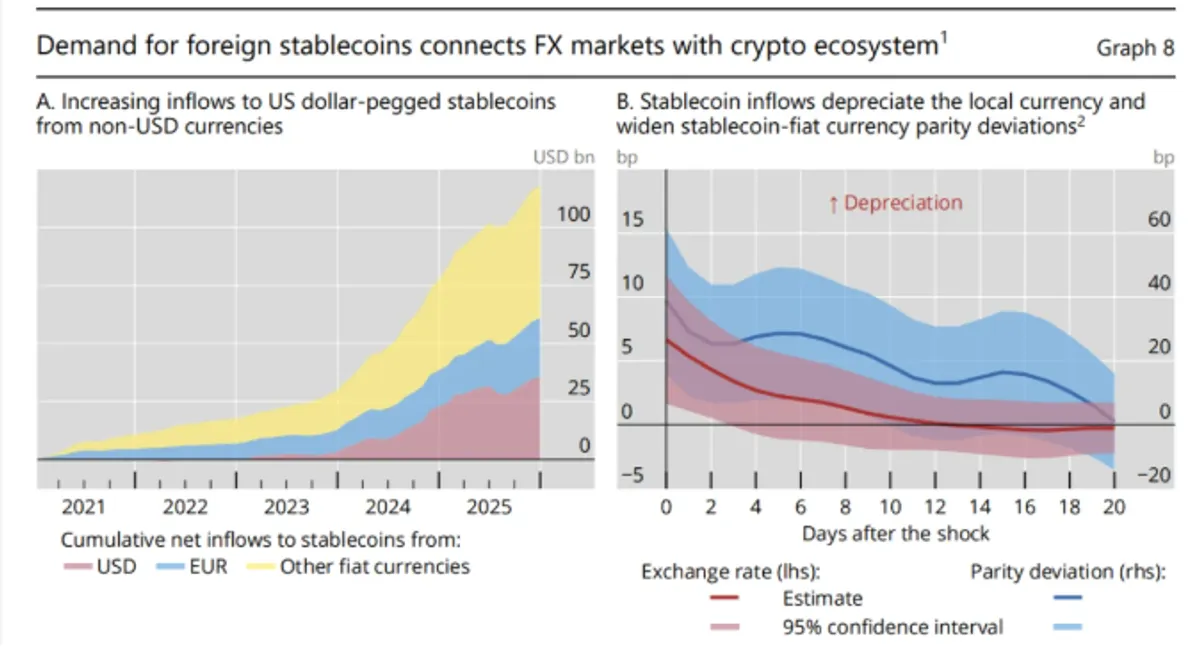
According to de Cos, as dollar-pegged tokens become widely used outside the US, the potential erosion of monetary sovereignty remains a key risk. He also warned that stablecoin can pull deposits away from banks, increasing their funding costs while raising borrowing costs for US households and businesses.
“The growing adoption of dollar-pegged stablecoins has also raised concerns in some jurisdictions about monetary sovereignty and the potential for digital dollarization,” said de Cos.
Source: BIS
Despite his fierce criticism, de Cos pointed to a number of upsides tied to stablecoins. De Cos acknowledged that stablecoins can lower sovereign borrowing costs, an argument also made by the US Treasury Secretary Scott Bessent.
While stablecoins and tokenized deposits can coexist, the BIS Chief argued that tokenized deposits should handle most everyday payments. For context, tokenized deposits are regular bank deposits represented on a blockchain, a concept that is garnering significant steam from traditional finance players.
Tether CEO fires back at the BIS
In an X post, Tether CEO Paolo Ardoino challenged the assumption that tokenized bank deposits are the safer model over stablecoins. His argument centered on the difference between the assets backing the two instruments.
According to Ardoino, stablecoins maintain their peg through reserves, with a Tether KPMG audit showing USD is fully backed by reserves including US Treasury securities and other liquid assets. Tokenized deposits, by contrast, remain liabilities of commercial banks and therefore sit within the traditional banking system.
“BIS is rightfully worried about the fact that stablecoins are exposing the emperor without clothes. Why should someone choose to put his savings into a fractional reserve product while stablecoins are fully reserved.”
Rather than viewing stablecoins as a threat to the banking system, Ardoino views their growth as a market test of whether consumers will continue to favor fractional-reserve bank money when fully reserved digital alternatives are available. Stablecoins have grown by leaps and bounds over the last year, surging to a combined market capitalization of $313.3 billion.
In a separate interview, Ardoino argued that Tether’s stablecoin technology has made the US treasury safer than ever. He argued that Tether created decentralized ownership of the US debt, a solution that traditional finance failed to rollout.