Key highlights:
- Bitcoin near $79K after Warsh's hawkish Jackson Hole speech pushed September rate hike odds from ~35% to ~60%
- The September 4 jobs report is the next key catalyst, with +58K payrolls expected; a strong print pressures BTC further, and a weak one eases rate fears
- BTC has gained each of the past three Septembers despite historical "Rektember" weakness
Bitcoin is holding near $79,000 as traders reassess the outlook for U.S. interest rates following a hawkish message from Federal Reserve Chair Kevin Warsh, with the upcoming August jobs report now emerging as the next major test for markets.
Bitcoin (BTC) climbed above $79,000 over the weekend, reaching $79,316 before pulling back. The cryptocurrency was trading around $78,796.58 in the latest market snapshot, leaving it up about 1.7% over the past seven days.
Earlier selling had pushed BTC toward $77,544, highlighting the volatility that has returned as traders weigh the prospect of tighter monetary policy.
The move comes after Warsh's speech at the Jackson Hole Economic Symposium sharply changed expectations around the Federal Reserve's next policy decision.
Following Warsh’s speech, crypto markets faced heavy liquidations, with CoinGlass recording nearly $488 million in liquidations over 24 hours, affecting more than 97,000 traders, with over $200 million wiped out within an hour of the remarks.
Higher yields, stronger dollar: Why Bitcoin is suddenly under pressure
The sell-off came as expectations for a 25-basis-point Federal Reserve rate hike at the September 15–16 meeting increased sharply. Market pricing rose from about 35% before Warsh’s speech to roughly 60% afterward, with other estimates placing the probability near 57%.
The shift pushed U.S. Treasury yields higher, with the two-year yield rising 11 basis points to 4.34%, its highest level in a month, while the 10-year yield climbed to 4.72%. The dollar also strengthened as traders increased bets that interest rates could remain higher.
The change in rate expectations has weighed on Bitcoin. Although Warsh did not explicitly call for a September rate hike, he stressed that inflation remains above the Fed’s 2% target.
He cited a 3.7% annual inflation rate and a six-month annualized rate of 4.1%, arguing that policymakers need clearer evidence that price pressures are moving toward the central bank’s goal, thereby suggesting there may be less urgency for the Fed to ease monetary policy.
What will the jobs report mean for Bitcoin and the Fed?
Attention has shifted to the upcoming U.S. nonfarm payrolls, unemployment, and wage growth data due September 4, which could dictate the Federal Reserve's next policy decision.
The report follows a cooling labor market, marked by July's loss of 23,000 jobs and downward revisions to previous figures.
Economists expect August payrolls to show a gain of 58,000 jobs, while unemployment is forecast to remain at 4.1%.
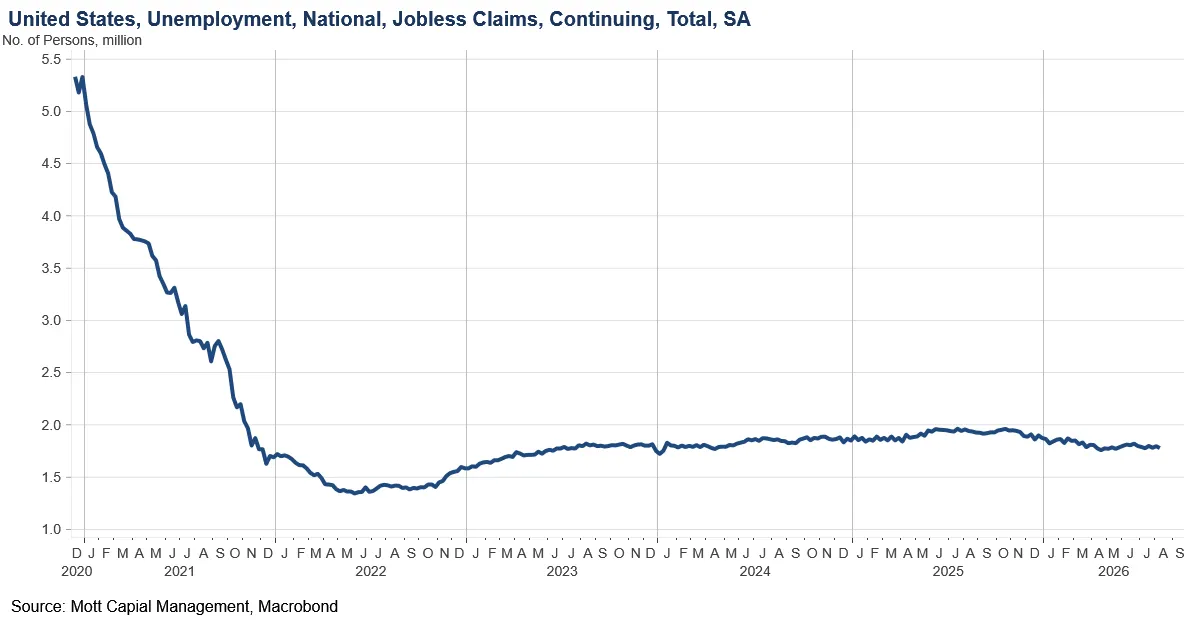
Warsh has argued that slower job growth is not necessarily a sign of weakness when labor supply is barely expanding.
He has also pointed to the low unemployment rate and subdued jobless claims as evidence that the labor market remains close to full employment.
That makes the September report particularly important. A stronger-than-expected reading could reinforce expectations for tighter monetary policy, pushing the dollar and Treasury yields higher while pressuring Bitcoin and other risk assets. A weaker report could ease rate concerns and support a market rebound.
BTC targets $80,000 despite overbought signals and September risks
Despite the macroeconomic pressure, Bitcoin’s market structure continues to show signs of strong demand.
Large holders reportedly accumulated more than 39,154 BTC over the past week, worth about $3 billion at recent prices, even as smaller investors reduced their exposure.
Bitcoin has also maintained strong short-term gains, rising roughly 22.7% over the past 14 days and 23.4% over 30 days.
Technically, Bitcoin faces immediate resistance around $78,250-$78,350. A sustained break above that range could push BTC toward $79,000 and then $80,000, with the recent $81,000-$81,400 high remaining the key upside target.
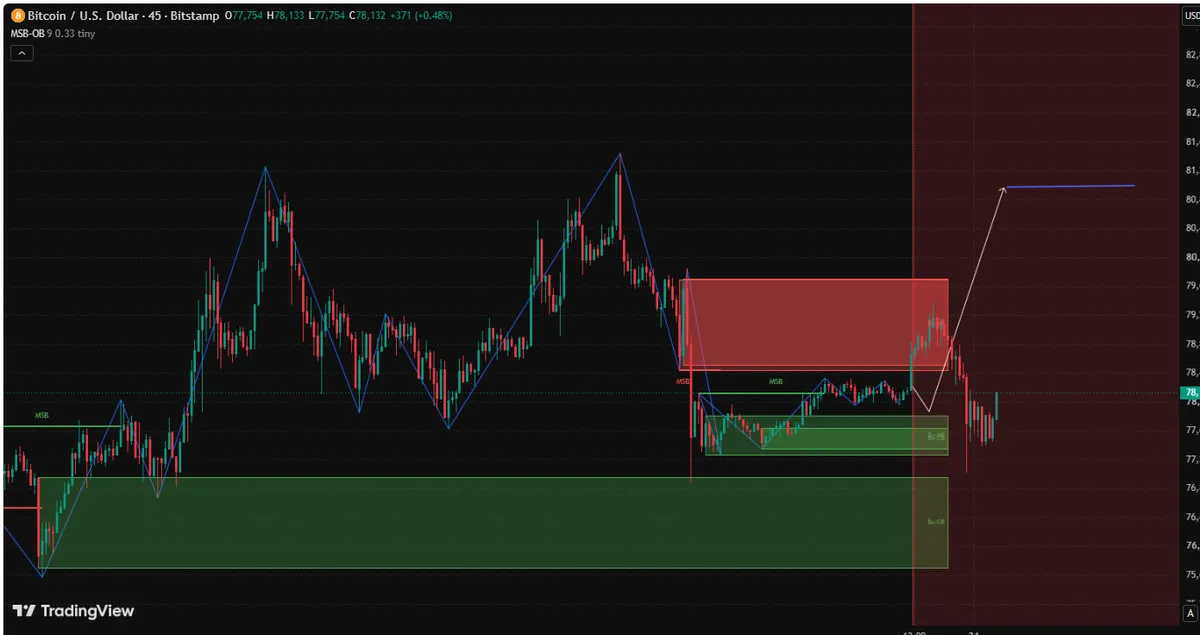
The $75.7K–$77K demand zone Source: TradingView
On the downside, support is forming around $77,200-$77,400. A break below that range could send BTC toward $76,000-$77,000, while $75,700 remains a key structural level. A deeper decline could bring $72,800 into focus, with a sustained break below that level potentially exposing $67,500.
Momentum indicators also suggest that Bitcoin’s short-term rally may be stretched. The 14-period RSI was around 72, above the widely watched 70 threshold, while MACD remained on a buy signal.
The outlook could become even more challenging as Bitcoin enters September, historically its weakest month. BTC has averaged a September decline of roughly 3.3% to 4.9% over its trading history, earning the month the nickname “Rektember.”
However, Bitcoin has defied that trend in recent years, posting gains in each of the past three Septembers. BTC rose 4.3% in September 2025, 7.2% in 2024 and 3.9% in 2023, following six consecutive September losses from 2017 through 2022.