Key highlights:
- Binance founder CZ says there is a possibility for Bitcoin to leapfrog gold in market capitalization
- CZ opined that the biggest trigger for a larger market cap will be governments adopting BTC as reserve currency
- Flowing from a forecasted higher market capitalization, CZ tips Bitcoin to reach $1 million per coin
Bitcoin could overtake gold in market value during the next bull market, according to Binance founder Changpeng Zhao, as the cryptocurrency gains ground as a potential reserve asset. Zhao argued that Bitcoin's growing adoption by investors and governments could eventually close the 10-fold market-cap gap between the two assets.
Bitcoin still trails gold by a wide margin
Speaking at the Bitcoin Asia 2026 conference in Hong Kong on Thursday, CZ conceded that while gold's market capitalization remains about 10 times larger than Bitcoin, the cryptocurrency can leapfrog the yellow metal. He argued that the gap could narrow in the near future as attitudes toward reserve assets change.
Bitcoin’s market capitalization sits at around $1.5 trillion while gold has a total valuation of $32 trillion based on the current gold price. Already, Bitcoin has emerged as the fastest growing asset over the last 10 years, reducing the yawning gap between it and gold by surging by 13,380%.
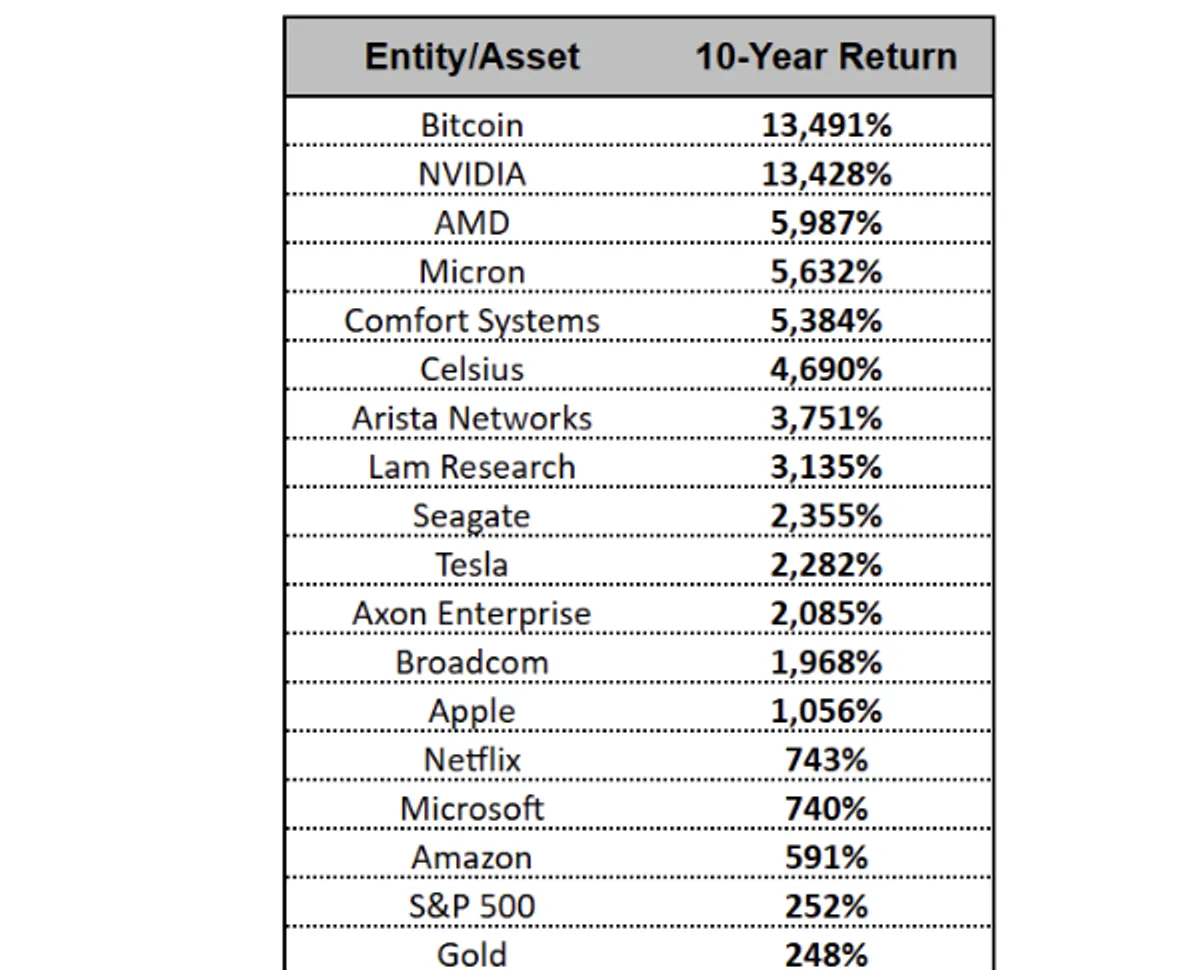
Source: Mark Harvey via X
“I think bitcoin will overtake gold pretty soon,” Zhao said to attendees at the conference.
Zhao's argument goes beyond Bitcoin's price performance. He pointed to the growing role of digital assets in investment portfolios and government reserves as factors that could shift capital away from traditional stores of value.
Bitcoin has also gained significant momentum in recent days. The cryptocurrency rose more than 25% last week to top $80,000 , while gold had moved above $4,600.
Governments could accelerate Bitcoin adoption
Despite the upbeat projections, CZ acknowledged that replacing gold will not happen overnight. He noted that while gold has several years of being embedded in the global financial system, Bitcoin is only finding its footing since its launch in 2009.
Governments have spent decades building systems around gold, including infrastructure for valuation, storage and trading. Bitcoin would need to overcome that established framework before becoming a comparable reserve asset, says CZ.
Still, Zhao expects sovereign adoption to increase. He suggested countries should build crypto reserves based on the market capitalization of the leading cryptocurrencies, excluding stablecoins.
Under his proposed approach, Bitcoin would account for more than 50% of such reserves, while Ethereum could represent between 10% and 20%, with other major cryptocurrencies making up the remainder.
Zhao also maintained a bullish long-term outlook for Bitcoin's price. He said Bitcoin reaching $1 million is inevitable and argued that it could happen sooner than the 25-year timeframe some forecasts have suggested.
However, he emphasized that Bitcoin's expanding utility matters more than its price. Zhao expects payments, artificial intelligence, stablecoins and tokenization to expand substantially over the next decade.