Solar stocks are back getting attention in 2026 because utility-scale demand, grid investment, energy storage, tariffs, and shifting interest rates can all move the group fast. The best solar stocks to buy won't all react the same way when policy or borrowing costs change.
Some sell modules. Others supply solar-farm equipment, build projects, own power assets, or install systems on homes.
In this guide, I’m picking the 7 best solar stocks to invest in in 2026. I’ll share the pros and cons of each, as well as what they’re best for.
Let’s get started!
How I Picked the Top Solar Stocks
I started by looking for solar companies with a clear role in the industry and a realistic reason to outperform. That meant comparing businesses across different parts of the market, including module manufacturing, solar tracking, residential systems, project development, and renewable-energy ownership.
I paid attention to revenue growth, margins, cash flow, debt, backlog, project pipelines, and competitive position. I also considered how exposed each company is to major industry drivers such as interest rates, tariffs, government policy, utility-scale construction, and residential solar demand.
Finally, I wanted the list to include different risk profiles rather than seven companies that depend on the same catalyst. Some picks offer more established utility-scale exposure, while others are higher-risk recovery plays or diversified renewable-energy investments.
7 Best Solar Stocks in 2026: Quick Overview:
- First Solar (FSLR) – A leading U.S. solar manufacturer with strong utility-scale exposure and a large contracted backlog
- Nextpower (NXT) – A major solar tracker and infrastructure company benefiting from continued growth in utility-scale projects
- Enphase Energy (ENPH) – A higher-risk residential solar play focused on microinverters, batteries, and home-energy systems
- Canadian Solar (CSIQ) – A globally diversified solar company involved in module manufacturing, storage, and project development
- Array Technologies (ARRY) – A smaller utility-scale solar tracker specialist with greater upside potential but higher execution risk
- Brookfield Renewable (BEPC) – A diversified renewable-energy company offering exposure to solar alongside hydro, wind, and storage
- Sunrun (RUN) – A residential solar and battery company that could benefit from a recovery in U.S. rooftop demand
The best solar stocks to buy now: Examining top solar investment picks
If you are wondering what the best solar stocks to buy right now are and why these companies stand out, read on. We’ll break down some of the leading solar stocks, their recent performance and developments, and the factors that could shape their outlook in the coming months.
1. First Solar (NASDAQ: FSLR)
- FSLR Stock Price (1-year change): $206.1 (+3.27%)
- FSLR 1-Year Prediction: $295.49 (+42.96%)
First Solar is a U.S.-based maker of thin-film solar modules built mainly for utility-scale projects. It doesn't compete with every conventional silicon-panel supplier in the same way, which gives the company a more differentiated position.
Domestic manufacturing, long-term contracts, and U.S. clean-energy support are the main reasons investors watch FSLR. At the end of the second quarter of 2026, First Solar reported roughly 45.1 GW of contracted backlog through 2030. That gives the business more visibility than many solar peers.
Large solar-farm demand, domestic-content rules, and tariffs on Chinese inputs could help. But expectations are already high. Delayed projects, factory execution problems, module pricing pressure, and policy changes can still hurt results.
Pros:
- Differentiated thin-film module technology
- Large contracted utility-scale backlog
- Domestic manufacturing can benefit from favorable policy
Cons:
- The stock can price in good news early
- Project delays can shift revenue between quarters
- Policy changes may affect margins and demand
2. Nextpower (NASDAQ: NXT)
- NXT Stock Price (1-year change): $87.24 (+29.02%)
- NXT 1-Year Prediction: $73.70 (-15.49%)
Nextpower is the current name of the company formerly known as Nextracker. Its core product is the single-axis solar tracker, which moves panels to follow the sun during the day.
That movement can increase output from a large solar farm. For developers, even a modest production gain matters when a project covers thousands of acres.
Nextpower is pushing beyond trackers into structural, electrical, and digital energy technology. It also plans utility-scale power conversion products. Fiscal 2026 revenue reached $3.559 billion, and the company finished the year with more than $5 billion in backlog.
The opportunity is clear. So is the execution risk. New products, international projects, supply-chain issues, and delayed customer projects can all affect order timing.
Pros:
- Strong position in single-axis tracking systems
- Large backlog and growing international reach
- New product categories could widen its market
Cons:
- Backlog can be delayed, reduced, or canceled
- Competition remains intense in utility-scale equipment
- Expansion beyond trackers adds execution risk
3. Enphase Energy (NASDAQ: ENPH)
- ENPH Stock Price (1-year change): $38.45 (+0.51%)
- ENPH 1-Year Prediction: $27.92 (-24.92%)

Enphase sells microinverters, home batteries, and energy-management systems. Its customers are homeowners and solar installers, so its results depend heavily on rooftop demand, installer activity, battery adoption, and consumer financing.
The investment case improves if residential installations recover, channel inventory normalizes, and more homeowners add batteries. Enphase's ecosystem also helps. Microinverters, storage, monitoring software, and installer relationships can make switching less convenient.
But this is a volatile stock. High interest rates can reduce the number of homeowners willing to finance a system. Quarterly guidance can move the share price sharply. The company's own annual filing also lays out the competitive and demand risks in rooftop solar.
A lower share price or smaller market value doesn't automatically mean ENPH is cheap. Valuation still needs to match the recovery you expect.
Pros:
- Recognized microinverter and home-energy brand
- Battery growth can raise revenue per household
- Software and hardware work together in one ecosystem
Cons:
- Sensitive to loan rates and homeowner confidence
- Competitive pricing can pressure margins
- Guidance changes often cause large price moves
4. Canadian Solar (NASDAQ: CSIQ)
- CSIQ Stock Price (1-year change): $13.29 (+21.69%)
- CSIQ 1-Year Prediction: $8.88 (-38.03%)

Canadian Solar has two major pieces. It manufactures solar modules, and it develops or operates clean-energy projects through its broader platform.
That mix gives investors more than simple panel exposure. Module sales can produce volume, while project sales and storage development can create another source of value. It also makes the company harder to value than a pure-play manufacturer.
Global solar deployment, battery storage, project sales, and demand outside the United States are possible catalysts. The flip side is significant. Module margins can be thin, inventory can swing, and trade restrictions or currency movements can change results quickly.
Don't rely only on revenue. Review the latest debt levels, operating cash flow, project backlog, and financing needs before buying CSIQ.
Pros:
- Exposure to modules, storage, and project development
- Geographic diversification beyond the U.S.
- Project sales can add value beyond manufacturing
Cons:
- Module pricing is often volatile
- Debt and project financing need close attention
- Trade and geopolitical risks can affect operations
5. Array Technologies (NASDAQ: ARRY)
- ARRY Stock Price (1-year change): $4.72 (-49.36%)
- ARRY 1-Year Prediction: $5.04 (+5.04%)
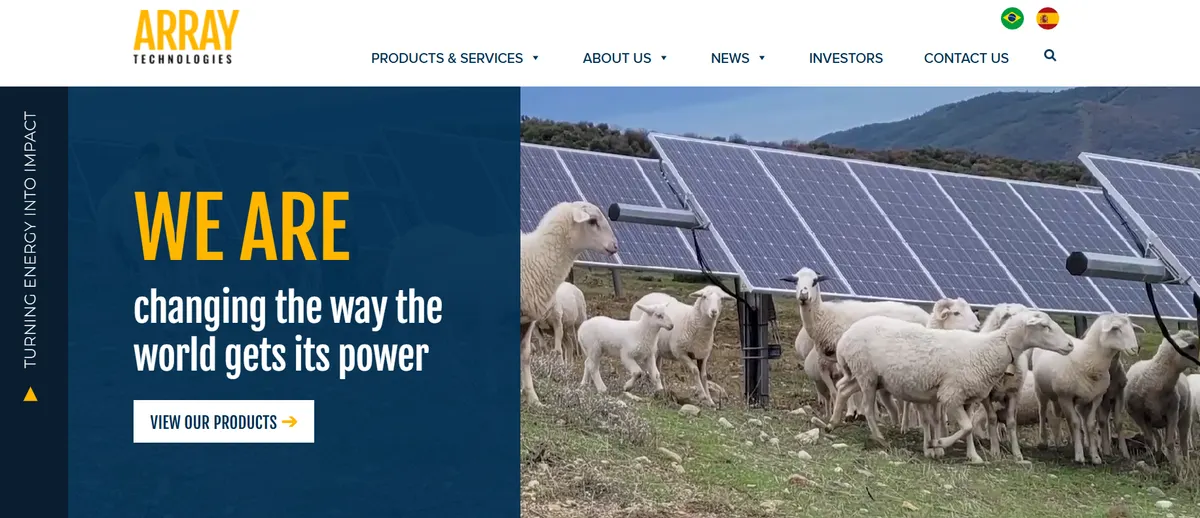
Array Technologies is another utility-scale tracker specialist. Its systems help ground-mounted panels follow the sun, which can improve solar-farm output without adding more land.
The bullish case depends on continued large-scale solar construction, healthy customer backlogs, international growth, and improving gross margins. Its smaller size means a strong order cycle could create meaningful upside.
But tracker orders are lumpy. A few delayed projects can make one quarter look weak, even when longer-term demand remains intact. Array also faces competition from larger equipment providers and needs to manage its balance sheet carefully.
Recent weaker share performance may attract bargain hunters. It also signals higher financial and execution risk.
Pros:
- Direct exposure to utility-scale construction
- Tracking systems can improve project economics
- Smaller size leaves room for upside
Cons:
- Quarterly orders can be uneven
- Project financing delays affect demand
- Competition can limit margin improvement
6. Brookfield Renewable (BEPC)
- BEPC Stock Price (1-year change): $33.03 (-1.52%)
- BEPC 1-Year Prediction: $24.95 (-24.44%)

Brookfield Renewable isn't a pure-play solar company. It owns and operates a wider mix of hydro, wind, solar, storage, and development assets.
That makes it a different kind of holding. Instead of betting mostly on panel pricing or rooftop installations, investors get exposure to long-term power contracts, recurring cash flow, asset sales, and global renewable infrastructure.
Lower financing costs, new projects, acquisitions, and rising clean-power demand could support 2026 results. This is often the steadier option in a volatile group, though "steadier" doesn't mean risk-free.
Debt, interest rates, currency swings, power-price changes, development delays, and distribution sustainability all matter. It belongs in the same conversation as solar company stocks, but it shouldn't be analyzed like a module maker.
Pros:
- Diversified portfolio across renewable technologies
- Contracted cash flow can reduce volatility
- Global scale and development pipeline
Cons:
- Debt remains important when rates stay high
- Currency exposure can affect reported results
- It's less direct solar exposure than other names here
7. Sunrun (NASDAQ: RUN)
- RUN Stock Price (1-year change): $9.13 (-1.83%)
- RUN 1-Year Prediction: $4.29 (-52.96%)
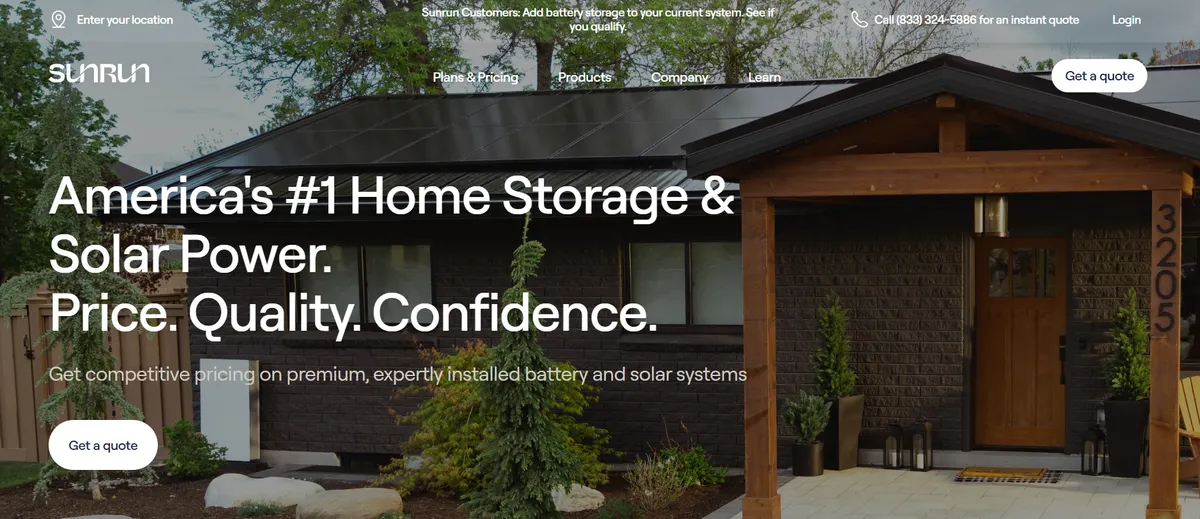
Sunrun gives this list direct exposure to U.S. household solar and battery demand. Its model often involves installing a system, arranging financing, and earning recurring customer payments through leases or power-purchase agreements.
That can build a large customer base over time. It also means Sunrun depends on installation volume, customer-acquisition costs, loan rates, battery adoption, state solar rules, and access to financing.
Falling rates, stronger rooftop demand, better installation efficiency, and more battery sales could help in 2026. Still, this is a much different investment than First Solar or Brookfield Renewable.
Sunrun has higher debt and more cash-flow pressure than many utility-scale names. Policy shifts, customer defaults, competition, and sharp share-price swings are part of the package.
Pros:
- Direct exposure to household solar demand.
- Battery attachment can improve customer economics.
- Recurring customer payments can build over time.
Cons:
- Financing costs can quickly weaken demand.
- Debt and cash flow require close monitoring.
- State-level policy changes can affect sales.
How to Choose the Best Solar Energy Stocks to Buy
The best solar stock depends on what kind of exposure you want.
First Solar is the strongest fit for established U.S. utility-scale exposure, while Nextpower offers a broader bet on solar infrastructure. Array Technologies is a smaller, higher-risk option in the same utility-scale market.
For a residential solar recovery, look at Enphase for home-energy hardware and batteries or Sunrun for direct exposure to rooftop installations.
Canadian Solar offers more global diversification across manufacturing, storage, and project development, while Brookfield Renewable is better suited to investors who want diversified renewable-energy exposure rather than a pure solar play.
Whichever you choose, compare debt, cash flow, margins, backlog, valuation, and policy exposure. Tariffs can also move the sector quickly, as shown by the recent solar stock surge due to tariffs.
What Could Move Solar Stocks for the Rest of 2026?
There are four most important forces.
Interest rates and project financing
Lower rates can make solar farms easier to finance. They can also reduce monthly payments for homeowners. That helps Sunrun and Enphase more directly, while First Solar, Nextpower, and Array benefit when developers approve more projects.
Policy, tariffs, and tax rules
Domestic-content incentives and import restrictions can support U.S. manufacturers such as First Solar. But tariffs can also raise costs for companies that depend on imported cells, modules, or components. Policy is rarely a simple win for every stock.
Supply chains and hardware costs
Modules, cells, glass, inverters, trackers, and power electronics all affect project economics. A shortage or price spike in one area can delay a project even when solar demand looks strong.
Utility-scale demand versus rooftop demand
Grid expansion and large power contracts drive utility-scale activity. Consumer financing and local rules drive rooftop demand. That split is why FSLR, NXT, and ARRY can move differently from ENPH and RUN.
A strong solar-demand headline doesn't guarantee every solar stock will rise. The part of the market a company sells into matters more.
The Bottom Line
The seven best solar stocks to buy in 2026 fit different investor profiles. First Solar and Nextpower offer utility-scale exposure. Enphase and Sunrun need a residential recovery. Canadian Solar mixes manufacturing with development, Array is a smaller tracker bet, and Brookfield Renewable adds broader clean-energy assets.
Before buying, compare valuation, debt, cash flow, backlog, policy exposure, and your own risk tolerance. Solar demand can grow for years, but that doesn't stop individual stocks from falling sharply.
Next, feel free to check out our guide on the best semiconductor stocks to buy.
FAQ
Are solar stocks good long-term investments?
They can be, but the group isn't one trade. Long-term electricity demand and storage growth may support the industry, while individual companies can still struggle with debt, margins, policy, or competition.
Is it better to buy one solar stock or a solar ETF?
A single stock gives you focused exposure to one business model. An ETF spreads company-specific risk, but it may also hold weaker names and reduce the upside from a clear winner.
Why do solar stocks react so strongly to interest rates?
Solar projects use a lot of upfront capital. Higher borrowing costs can lower project returns and make residential loans less attractive, which can reduce demand.
What financial metric matters most for a solar company?
There isn't one universal answer. For manufacturers, watch margins and contracted backlog. For project owners, focus on cash flow and debt. For residential installers, financing access and customer-acquisition costs matter more.