
The 10-year Treasury yield returned toward 4.7% this week, while the 30-year climbed above 5.3% before easing. Stocks felt the pressure on Thursday: the S&P 500 fell 0.9%, the Nasdaq lost 1%, and the Dow dropped 1.3%.
The important question now is whether this becomes a multi-session trade. If long-term yields remain elevated next week, I expect the market to become more selective rather than simply move broadly higher or lower.
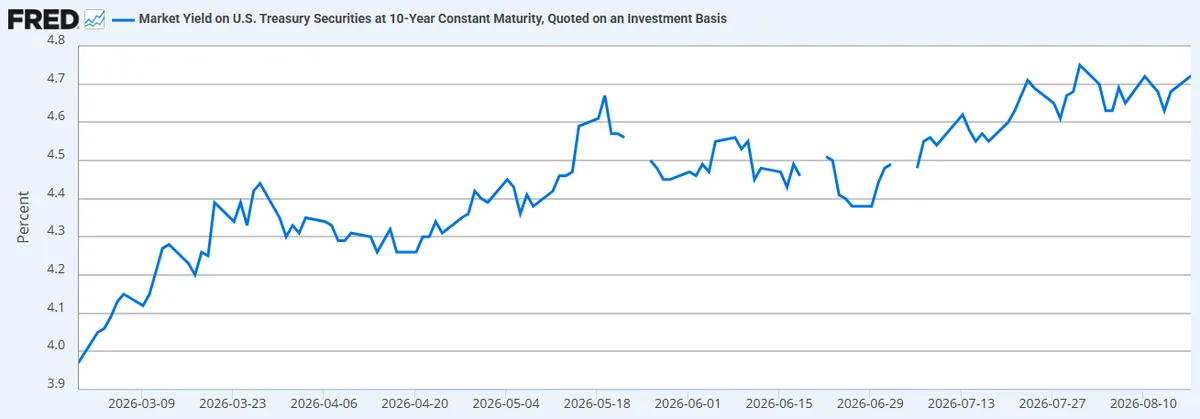
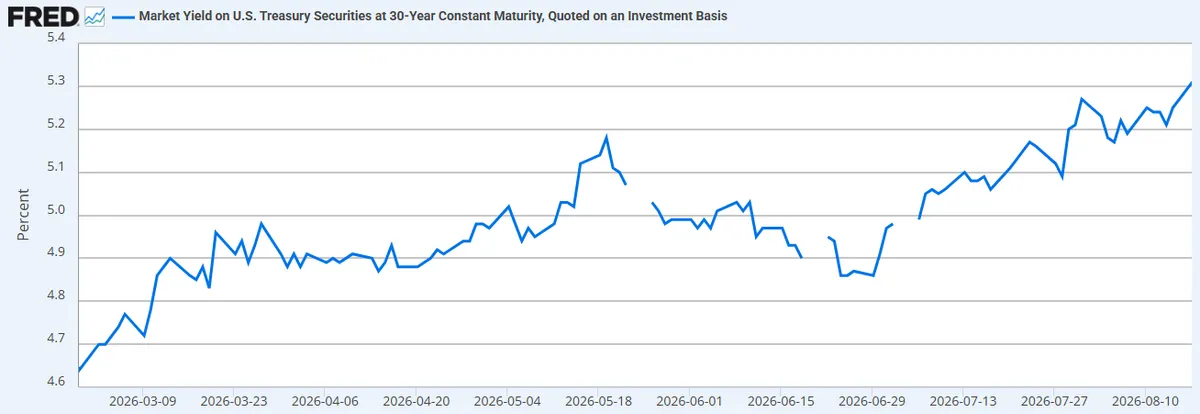
The 10-year Treasury yield moved back toward 4.7% this week (image 1), while the 30-year briefly climbed above 5.3% (image 2), renewing pressure on rate-sensitive stocks.
Energy looks best positioned if yields keep rising
Energy is one of the clearest beneficiaries of the current setup.
CNBC recently screened stocks based on how they have performed when long-duration Treasury prices fall, which corresponds with yields rising. Energy companies dominated the list.
ConocoPhillips showed a -0.65 60-day correlation with the iShares 20+ Year Treasury Bond ETF (TLT). Permian Resources and Exxon Mobil were at -0.61, while Chevron and Chord Energy came in at -0.59.
That is not just a statistical relationship.
Oil prices have been supported by geopolitical risk, while higher energy costs also increase inflation concerns and can push bond yields upward. Producers therefore get an earnings tailwind from the same force creating problems for much of the broader equity market.
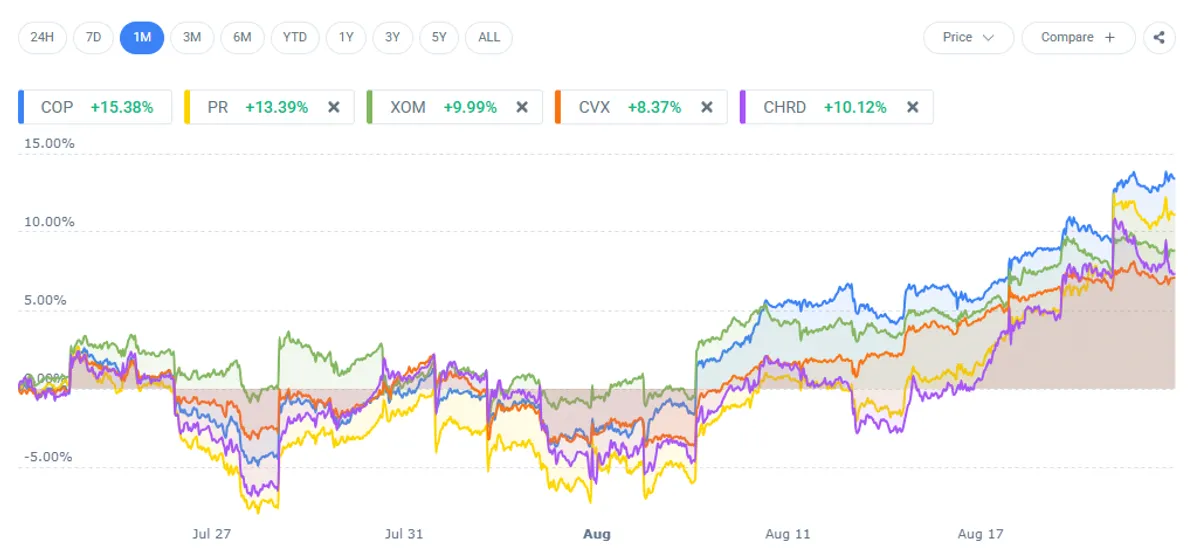
Energy stocks showed some of the strongest negative 30-day correlations with long-duration Treasuries, meaning they tended to perform better as bond prices fell and yields rose.
If oil and Treasury yields rise together again next week, energy remains my preferred sector in this rotation.
Banks and insurers are more selective winners
Financial stocks can also benefit from higher rates, but the trade is less straightforward.
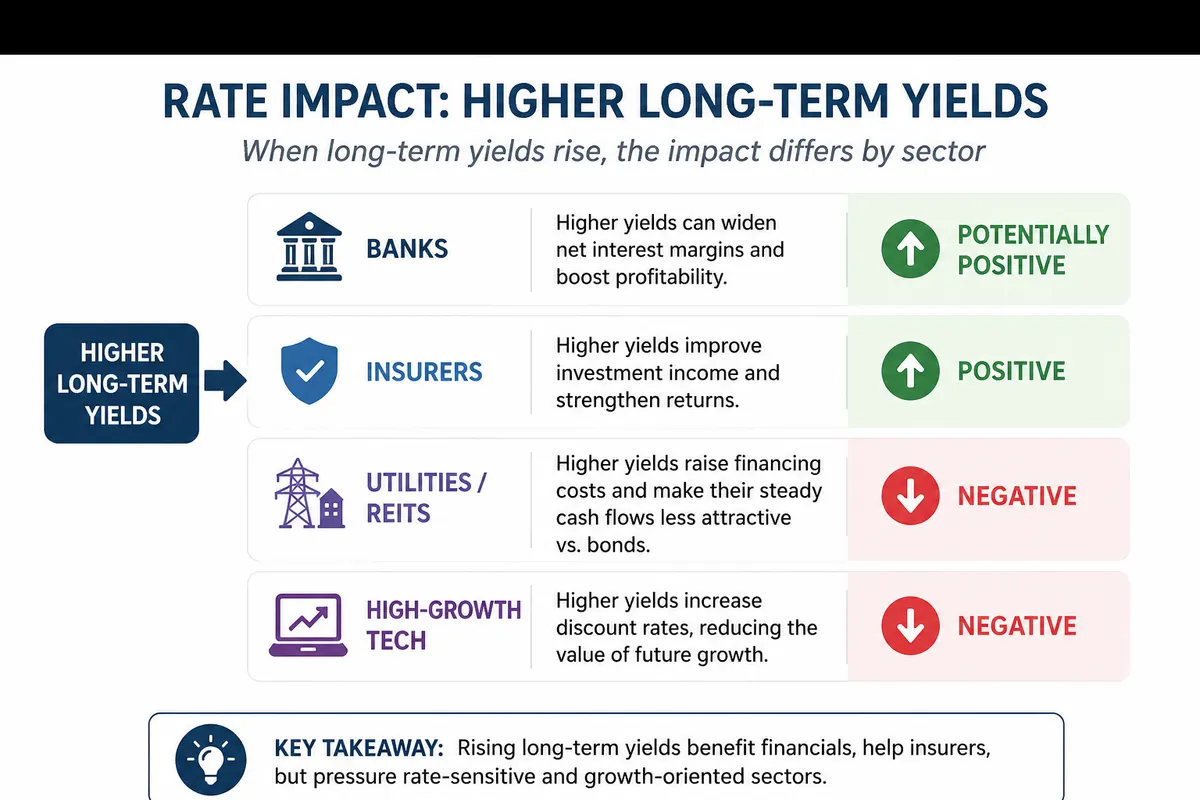
Banks generally benefit when longer-term lending yields rise faster than their funding costs. A steeper yield curve can improve net interest margins, but a broad increase in borrowing costs can eventually hurt loan demand and credit quality.
That means I would watch the yield curve rather than the 10-year yield alone.
Insurers may offer cleaner exposure. Companies such as Prudential Financial and Unum invest large pools of premiums in bonds and can reinvest that money at higher yields. Persistently elevated rates can therefore improve future investment income.
Expensive growth stocks remain vulnerable
Technology is on the opposite side of the trade.
Higher Treasury yields increase the discount rate investors apply to future earnings. That matters most for companies whose valuations depend heavily on profits expected many years from now.
It also comes as major technology companies are spending heavily on AI infrastructure, with part of that investment increasingly funded through debt.
I don't think higher yields invalidate the AI growth story. They do, however, make investors less willing to pay extreme multiples for it.
If the 10-year yield breaks decisively above the recent 4.7%-4.75% area, high-multiple software, semiconductor and other long-duration stocks should remain among the most exposed groups.
Traditional safe havens may not work this time
Utilities and REITs deserve particular caution.
Both are traditionally considered defensive, but both compete with bonds for investor capital. A Treasury yield approaching 5% makes dividend-paying utilities less attractive, while REITs also face higher refinancing costs.
That makes this rotation unusual: investors moving out of technology cannot automatically hide in conventional defensive sectors.
For next week, I would focus on the 10-year yield around 4.7%. If it falls meaningfully, pressure on growth stocks should ease. If it moves higher, the market is likely to keep rewarding energy and selected financials while punishing expensive growth, utilities and real estate.
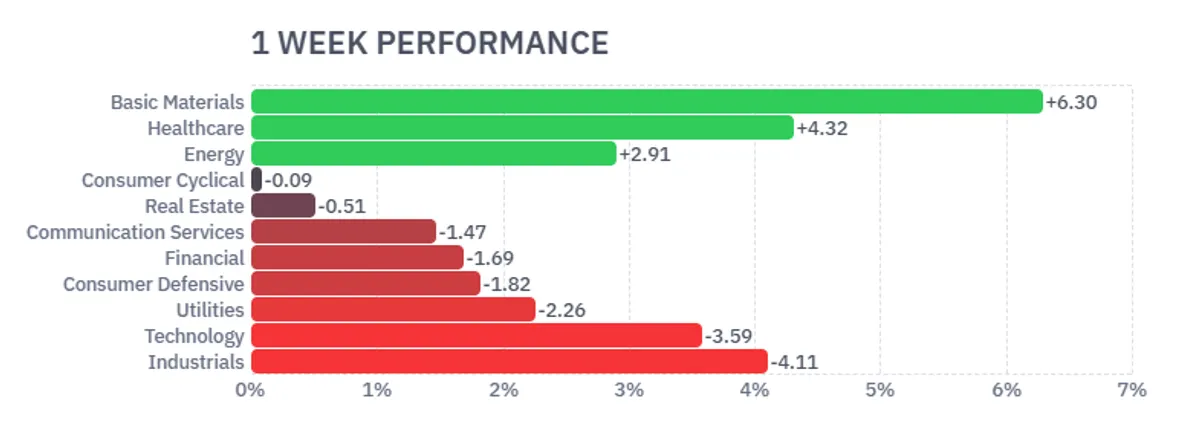
The latest rise in yields has favored energy and selected financial stocks, while technology, utilities and real estate remain more exposed to higher borrowing costs and bond competition.