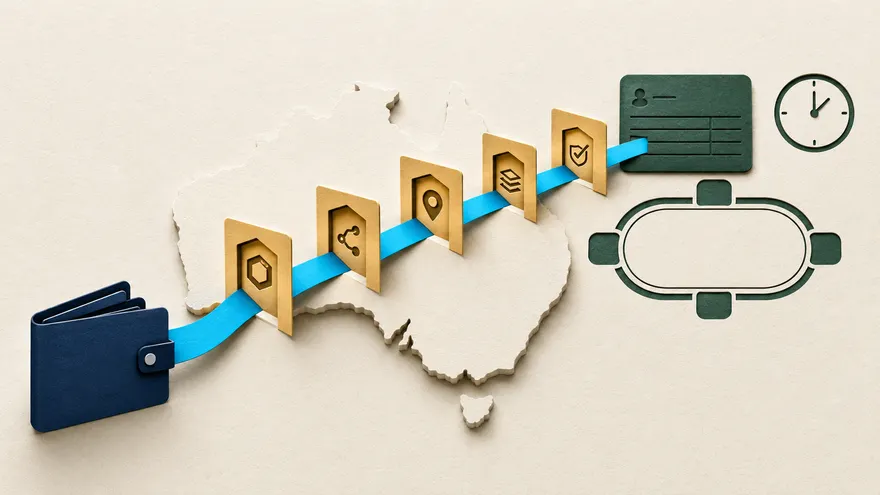
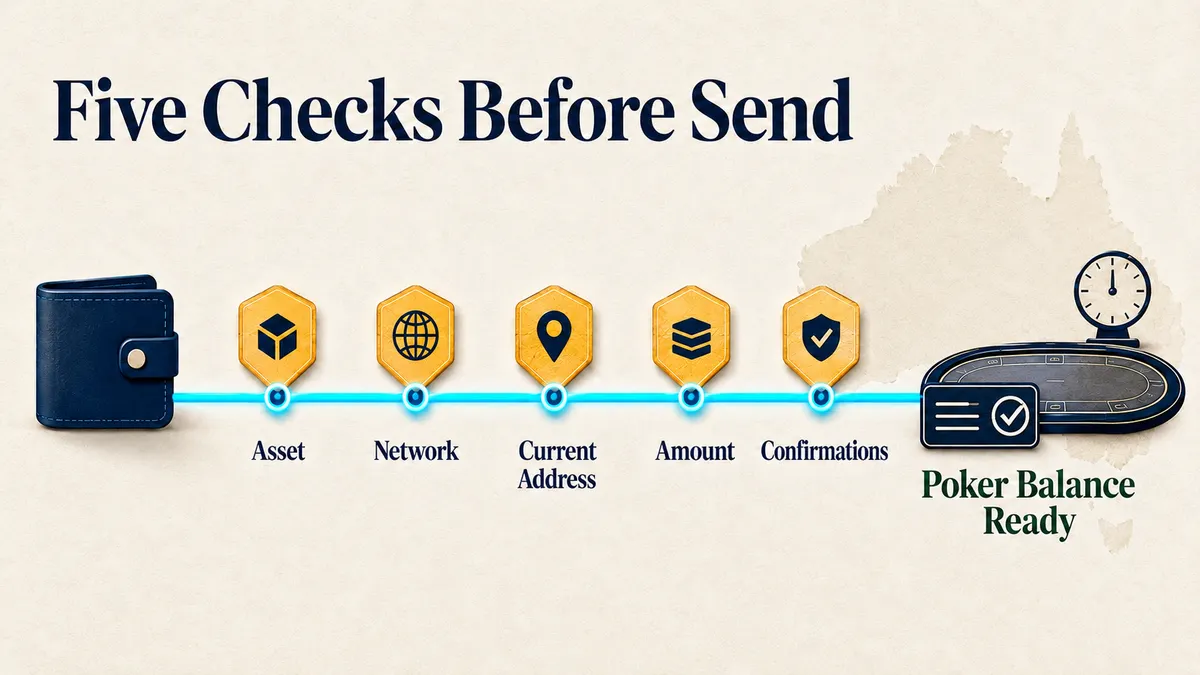
An Australian online poker deposit should pass five checks before the cryptocurrency leaves a wallet: asset, network, address, amount and confirmation expectations. Each catches a different failure. The correct coin sent through the wrong network may not reach the intended account, while a valid transfer below the destination’s minimum may not be credited. Even a correctly routed payment can take time to appear because blockchain confirmation and account crediting are separate stages. That timing deserves attention when a tournament registration window is already running.
The address needs more than a quick glance. This overview of crypto wallet addresses explains that separate cryptocurrencies require their own receiving addresses, and formats vary between networks. Copying and pasting reduces typing errors, but does not prove that the address belongs to the current deposit request. Compare the first and last characters on the wallet’s final confirmation screen, then check that the asset and network still match the receiving instructions. Any memo or tag displayed by the recipient forms part of the destination information.
Match the Transfer to the Poker Schedule
Funding an online poker account introduces a timing decision that an ordinary wallet-to-wallet transfer does not. A cash-game seat requires an available account balance, while a tournament has a defined registration period.
Australian players also need to check the displayed tournament time, since Australia spans several time zones and daylight-saving changes are not uniform across the country. Someone preparing to enter a scheduled event through Ignition Australia should complete the deposit before registration becomes time-sensitive. The blockchain records the movement of cryptocurrency to the destination address. The poker balance appears only after the receiving system recognizes and credits that payment. Tournament registration, the buy-in deduction, table activity, and the resulting hand history then belong to the poker platform’s internal records. A confirmed transfer therefore does not reserve a tournament place or create a playable balance by itself, even when the destination address and amount are correct.
The same sequence applies to a cash game. A wallet may label a payment as sent as soon as it broadcasts the transaction, yet the network may still show it as pending. After inclusion in a block, the recipient can wait for its required number of confirmations before updating the account. None of those intermediate states means that the player has a usable poker balance. Sending a second transfer to solve an apparent delay can instead create two deposits, so the original transaction ID should be checked first.
Check the Asset Network and Current Address
The asset name comes first because similarly presented balances are not interchangeable. Bitcoin cannot be sent to a Litecoin deposit address, and a token available on several networks must travel over a network the destination supports. Some wallet interfaces choose a network automatically, but the receiving instructions remain the controlling reference. Match both labels before copying the address, then leave the deposit screen open while reviewing the wallet’s final send summary.
Use the address generated for the current request. Services may rotate deposit addresses or associate them with a particular account and asset, making an address saved in notes, screenshots, or browser history unreliable. Compare the complete destination where possible, not only the first and last characters. Those shorter checks detect many clipboard errors, but matching the whole string provides stronger assurance. If the recipient displays a memo, tag, or other identifier, copy it into the corresponding wallet field rather than a general transaction note.
Account for Minimum Fees and Confirmations
The amount entered in a wallet is not always the amount expected at the destination. A network fee may be added on top or deducted from the transfer, depending on the wallet’s design. Wallets and exchanges may also show an AUD estimate beside the crypto quantity. The network transfers the cryptocurrency amount, while the displayed dollar value can move with its market price. Check the final send screen and confirm that the destination will receive at least its current minimum. A tiny test payment can fail that requirement, so it should not be sent automatically. Minimums and supported assets can change, making the live deposit screen more reliable than an old screenshot or remembered figure.
Confirmation expectations determine when a valid transfer becomes eligible for account credit. Bitcoin’s payment-processing documentation describes confirmations as protection used before a payment is treated as accepted, but each recipient chooses its own threshold. Block production is variable, so a confirmation count is more useful than a promise based on minutes.
Diagnose a Delay Before Sending Again
If the poker balance has not appeared, search for the transaction ID on the appropriate block explorer. No result may indicate that the wallet has not broadcast the transfer or that the wrong network is being searched. A pending result calls for more block time. A confirmed result permits a comparison of the asset, destination, amount, and confirmation count with the deposit instructions. When all five details match and the account remains unchanged, provide those public details to the receiving service. Never share a private key or recovery phrase; neither is required to trace a payment or investigate an account credit.