
Key highlights:
- Fidelity Digital Assets says cryptocurrencies face glaring risks from heightened AI exposure
- Security risks are at the top of the pyramid while concerns remain over the long-term profitability of the industry despite agentic AI activity
- For benefits, Fidelity disclosed that AI lowers the cost of building public blockchains while saving a significant amount of time
Fidelity Digital Assets, the subsidiary of Fidelity Investments, has urged cryptocurrency investors to remain wary of risks posed by sector-wide artificial intelligence (AI) use. Analysts at Fidelity Digital Assets noted that AI offers a raft of benefits for the industry but a blind adoption could open a can of worms for the sector.
AI has several upsides for digital assets, says Fidelity
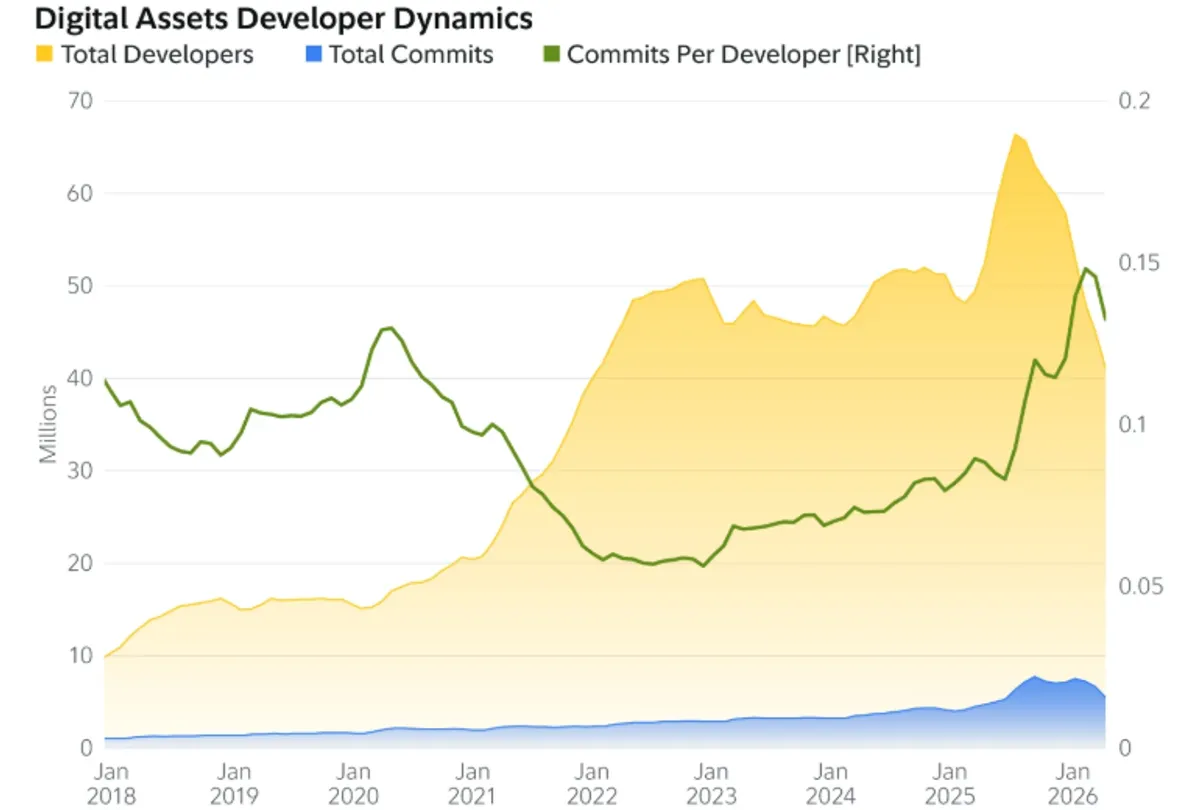
Fidelity Digital Assets conceded that AI offers cryptocurrency a range of benefits despite the looming risks. Right off the bat, the firm’s analysts disclosed that AI lowers the cost of building on public blockchains while shortening the time to roll out new products.
While AI increases blockchain developer productivity, Fidelity pointed out that successful new products will attract users and capital. The surge in capital incentivizes more developers, creating a positive loop for cryptocurrencies in the long run.
Source: Fidelity Digital Assets
In its staff note, Fidelity Digital Assets argued that AI will expand the market for programmable financial infrastructure. Specifically, Fidelity says AI agents will fuel the growth, with several blockchain-based companies racing to build infrastructure to support the trend.
While traditional payment companies are pushing toward agentic payments, Fidelity Digital Assets tipped the cryptocurrency sector to win the race, citing their low fees and speed. Circle has made keen progress in the sector while Ripple is positioning XRPL for agentic AI payments.
“Scalable blockchains provide a low-cost, high-speed alternative to traditional payment rails, making them particularly well-suited for machine-to-machine and AI-driven payments,” read the post.
A raft of risks for digital assets
Despite the benefits, Fidelity reeled out several risks posed by the tango between AI and cryptocurrencies. For starters, the firm warned that more software stemming from AI use does not translate to more value for the sector.
“AI-driven development may accelerate the creation of applications, tools, and protocols, but a greater quantity of products may not necessarily lead to high quality or sustained user demand.”
Furthermore, the firm predicted that technical differentiation will be less durable in the future. According to Fidelity, features considered as competitive advantages of a blockchain will no longer matter as they are easily replaceable.
The firm also warned that agent activity may prefer closed systems over public blockchains, denting the bets of investors. Meanwhile, there are concerns that payments may generate activity without strong token value accrual.
Perhaps, security and software concerns are the most profound risks to cryptocurrencies from AI. Since the start of the year, AI has turbo-charged crypto hacks, making 2026 the worst year on record in terms of attack volume.
Fidelity analysts also noted that regulatory and compliance constraints are potential pitfalls endangering the cryptocurrency industry. However, the firm disclosed that systems that provide clear frameworks will be better positioned to support the institutional adoption of AI-driven financial workflows.