
Key highlights:
- VanEck said the market may be nearing, or already in, an accumulation phase
- All 12 capitulation indicators of the firm have flashed at some point in the past three months
- The asset manager also warned the historical pattern is not a guaranteed short-term buy signal
In a new research note from VanEck, analysts at the firm said Bitcoin may be closing in on the end of an 11-month slide.
The analysts said eight of the firm's 12 "capitulation check" indicators were flashing as of August 12. All 12 had dropped into the capitulation zone at different times in the past three months. This suggests the coin is in the later stages of its bearishness.
Bitcoin correction now in its tenth month
Bitcoin's peak of $126,300 was set in October 2025. The token has since fallen about 49% from that high. The researchers noted the size of that drop ranks only in the 35th percentile when compared with past corrections.
Based on how long BTC’s three previous bear markets took to bottom out, which is an average of about 12.7 months, VanEck projected that the next turning point could come between September and November if this cycle follows that pattern.
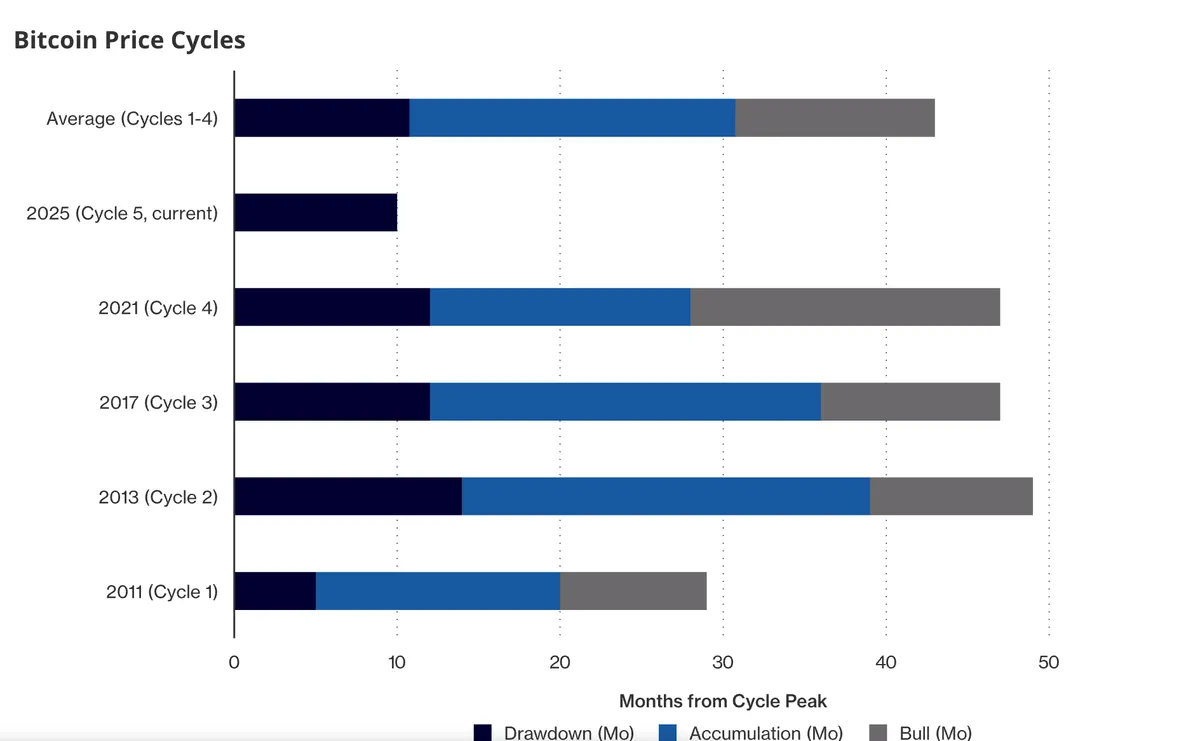
Source: VanEck
The firm said it expects a shallower low than past cycles. The analysts highlighted larger institutional ownership, demand for exchange-traded products, and the absence of major blowups like the collapses of FTX, Celsius, or Terra that intensified past market crashes.
Interestingly, VanEck is not the first institution to predict the end of the bear market. Bitwise CIO recently shared that BTC’s resilience to bad news suggests the coin had hit its bottom. Also, CryptoQuant analysts said whales are loading up on crypto assets, hinting at the beginning of the next leg of the crypto market.
Bitcoin has been trading around the $64,000 mark through the week as market demand for ETFs returns.
Fund flows turn choppy, then recover
Demand for U.S. spot funds has been uneven. VanEck's 30-day window showed about $663 million in net inflows, which is a positive change from the $2.4 billion in withdrawals seen in the previous month.
However, that was followed by another rough patch, with funds losing around $385 million over the week ending August 14.
Buying then picked up gain with inflows of $297.5 million and $189.3 million coming in on August 17 and 18, respectively. This offset most of the previous week's outflows.
A single-day inflow of about $300 million on Monday marked the strongest day for the funds since early May. It also recorded inflows worth $189 million on Tuesday, according to SoSoValue data.
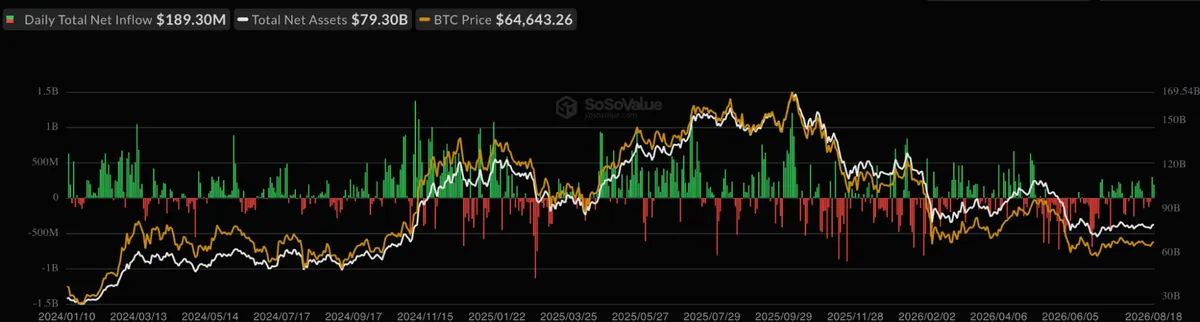
BTC ETF daily inflows. Source: SoSoValue
Long-term holder supply slips
Coins held for more than a year fell by about 356,000 over the past month. This brought that group's holdings down to 11.84 million, which is 59.1% of all coins in circulation.
Every age group among long-term holders shrank. Coins between one and two years old accounted for the biggest share of the drop, at about 156,000. Holdings older than a decade barely moved, falling by only about 4,000.
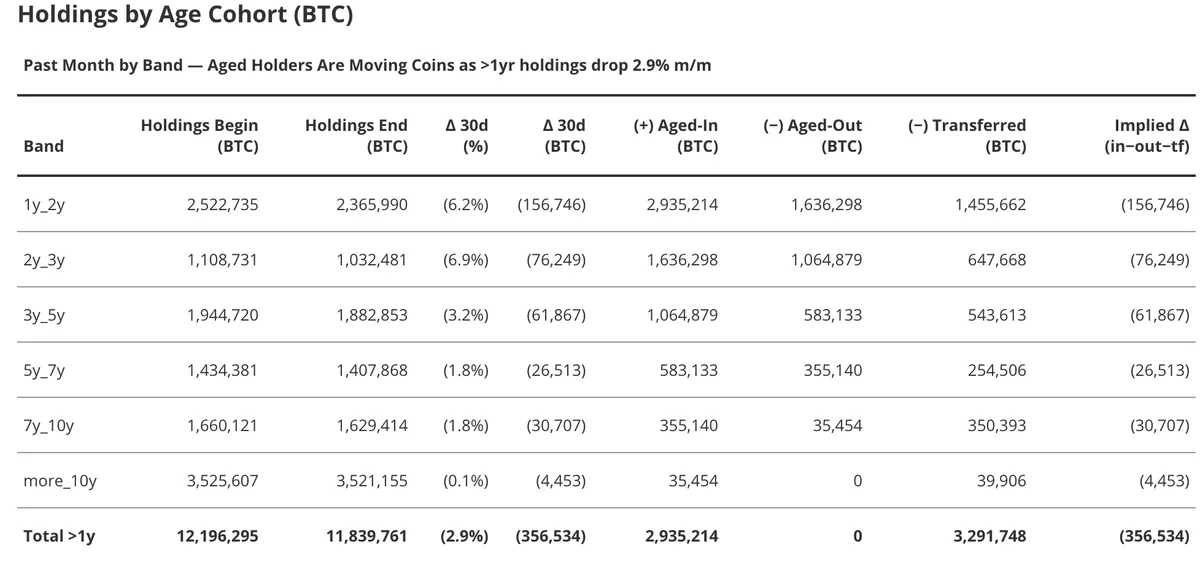
Bitcoin holdings by age. Source: VanEck
VanEck said some of this movement could be coins being shifted between wallets for security reasons rather than being sold. They highlighted the recent Coldcard hardware wallet hack that led to the theft of about $89 million. Even so, the firm added that the explanation is not certain given the scale of coins that were moved.
The asset manager was also careful not to call the historical pattern a short-term trading signal. Periods with eight to 12 indicators active have produced weaker-than-average returns in the following 90 and 180 days. Outperformance only shows about a full year later.