Key highlights:
- Gold extended its two-week rally on Monday thanks to the weaker U.S. retail sales data
- The metal jumped above its 100-day moving average for the first time since April
- Goldman Sachs said a September rate hike is now "very unlikely."
- Silver rose 1.3% to $65.54 an ounce, while platinum and palladium also advanced
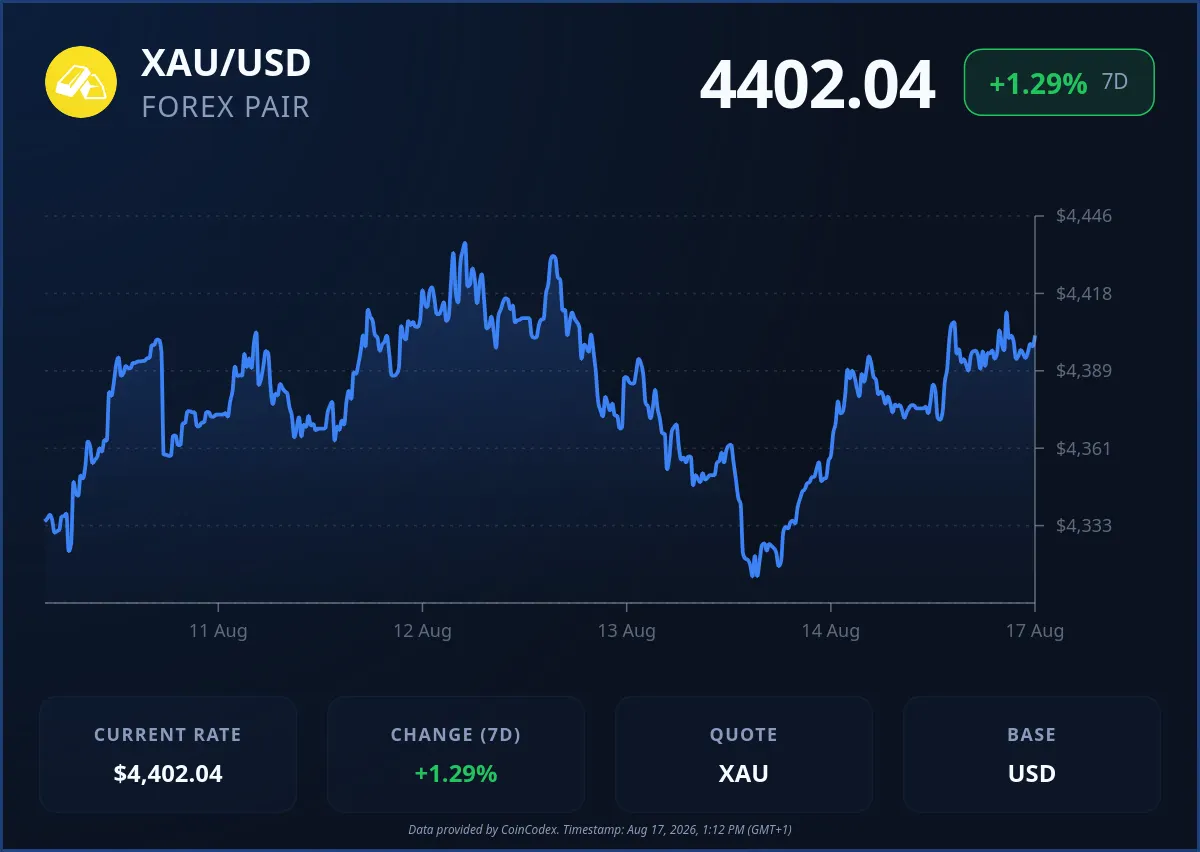
Gold continued its two-week climb in the early trading hours of Monday. The metal traded near $4,400 an ounce after weaker U.S. retail sales data weighed on the dollar, making it cheaper for buyers using other currencies.
This builds on an almost 1% gain the week before, with prices now at their highest levels in months.
Gold benefits from weaker U.S. data and central bank buying
The rally comes after U.S. retail sales data posted its largest decline in nine months, according to Reuters. This cooled expectations for a Fed rate increase and pulled the dollar lower. The metal usually benefits when rate-hike odds fade, since it pays no yield.
Gold also broke above its 100-day moving average last week for the first time since April. Justin Lin, an analyst at Global X ETFs, said a break above $4,400 would be needed to confirm the rally still has momentum.
“The recent bounce, while mostly driven by technicals, has also priced in most of the positive catalysts from the past week, so we may see gold trade relatively flat until the next clear catalyst,” he noted.
Spot gold stood at $4,401.29 an ounce as of press time, up 0.69% on the day. Silver rose 1.15% to $65.56 an ounce, while platinum and palladium also recorded gains.
The metal’s pump has also been supported by the steady central bank buying, with China among the top purchasers.
There is still volatility clouding the global energy supply, which still indicates risks. For context, attacks on the vessels in the Strait of Hormuz continued during last week, with the U.S. saying it is preparing new measures aimed at squeezing Iran's economy.
Some ships have reportedly passed through the strait with their satellite transponders switched off. This has so far helped limit spikes in global energy prices. Iran and Oman look to be moving closer to some form of agreement over managing the waterway, although the U.S. is not involved in those discussions.
Investors are now watching for the minutes from the Fed's July policy meeting, due Wednesday. This could offer clarity on how officials are looking at their next move.
Goldman Sachs says markets are overpricing rate hike risk
Goldman Sachs told its clients that bets on further Fed tightening have gone too far. Chief economist Jan Hatzius wrote in a note that a rate hike at the Fed's September meeting is "very unlikely."
"Under our baseline economic forecasts, the inflation news is more likely to improve further than to deteriorate anew as the year progresses," he wrote. "We still think market pricing for the funds rate is too hawkish."
Notably, traders started repricing the odds. Just last week, futures markets had fully priced in a quarter-point hike for December, according to data compiled by Bloomberg. That has since shifted to January. Goldman said there is still room for the market to unwind more.
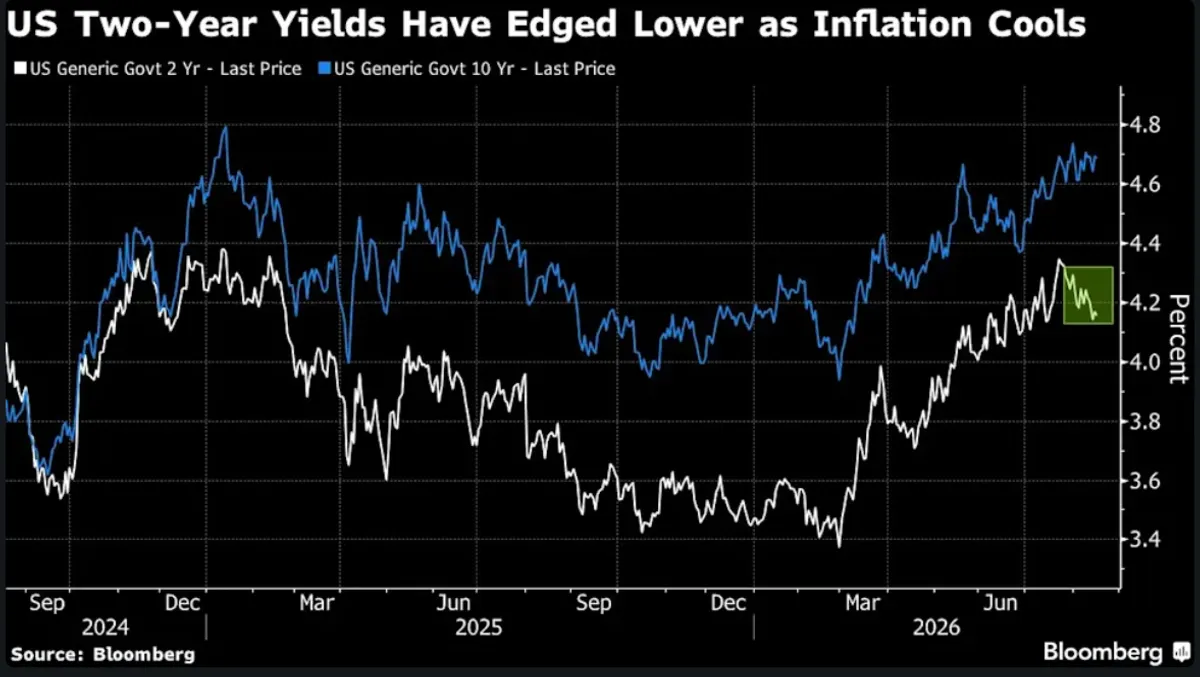
Fed bets are important for the global bond market as US policy tends to determine interest rates around the world. The Two-year Treasury yields, which move closely with Fed rate expectations, remain above 4%.
Source: Bloomberg
Goldman expects the yield curve to fall further as softer inflation data, fading hike bets, among others, all play out.
"After two months of materially softer jobs and inflation data, it's hard to see any of the doves shifting toward hikes," Hatzius added.