Key highlights:
- Kendrick set a $100 UNI target for 2030 in June.
- He now says data suggest it may be too low.
- UNI's annualized burn rate has doubled to $90 million.
Geoffrey Kendrick, Standard Chartered’s global head of digital assets research, said that his $100 price target for UNI by the end of 2030 might be too “too low”.
The shift comes as the protocol's UNI token burns have grown faster than expected, which is thanks to the trading activity on Robinhood Chain.
Robinhood Chain changed Uniswap's burn math
Kendrick made the original $100 call in June. However, since then, large wallets have been building positions in the coin. For context, UNI whale accumulation hit a five-year high this month. The token itself was trading near $3.24 on Thursday, down 1.3% over the last 24 hours.
Robinhood Chain went live on July 2, and Kendrick's revised note came exactly six weeks later. In that window, Uniswap is now one of the dominant liquidity sources on the new network.
It currently handles about 76% of all trading there, according to data from DefiLlama, with its pools moving as much as $409 million in a single day.
The trading volume generates fees, and the platform has collected $1.81 million of the chain's $2.28 million in daily fees.
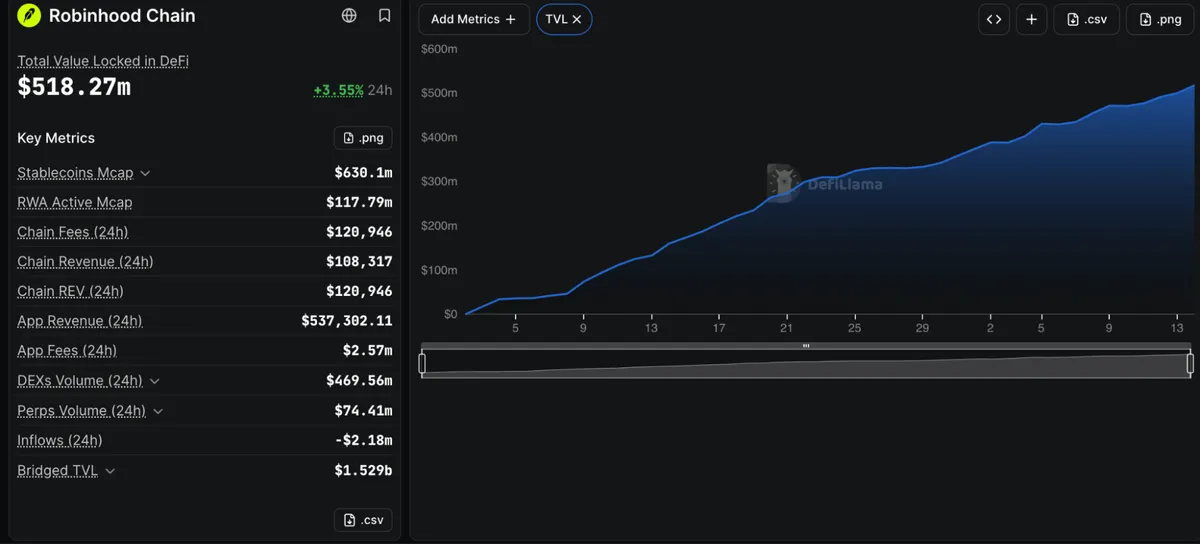
Source: DeFiLlama
The fees matter because of the change that was made in December 2025. At the time, the protocol began routing part of its revenue into buying back and burning UNI, which helped shrink the token's supply.
A second burn was also done on the Robinhood Chain on July 27. Since then, burns have doubled and are running at an annualized rate near $90 million.
At UNI's current price, that works out to about 25.7 million tokens burned per year. This is against a circulating supply of 624 million and a destruction rate of about 4.1% annually. The token has gone from an initial supply of 1 billion down by about 109 million tokens burned so far.
Kendrick called the current pace unsustainable at the current valuation. He noted that under his own short-term target of $6.50 for the end of 2026, the burn rate would still be about 2.2% of supply destroyed each year.
"I fear my 2030 UNI target of USD100 is too low!" he wrote in his latest note.
One number in the bullish case doesn't hold up
Not every figure in the note checked out though. Kendrick placed Robinhood Chain's TVL at under $1 billion, but data from DefiLlama shows $518.27 million. A broader measure counting everything bridged onto the chain was around $1.54 billion. His estimate landed between those two figures.
That difference matters because trading fees come from active trading activity instead of the parked capital sitting idle. Uniswap holds 16.3% of the chain's TVL, with lending vaults accounting for most of the rest. This is about four-fifths of all fees generated on the network.
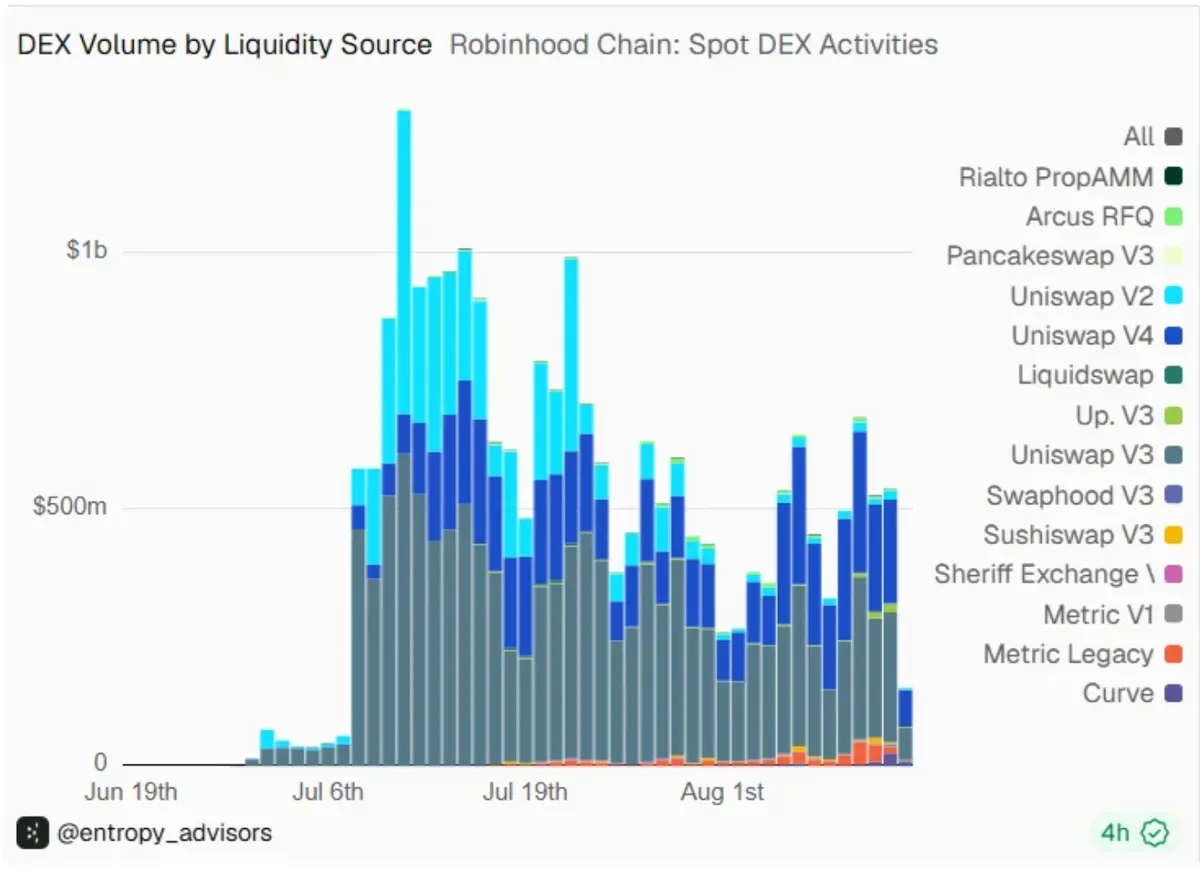
Source: Standard Chartered; Robinhood Chain’s liquidity sources
The same six-week window also saw competitive pressure. Uniswap launched a token-creation platform called Pools.trade on Robinhood Chain on August 5. This allows users to create a token and route it into its liquidity pools.
They can also choose either a four-hour bidding window or an instant launch. Fees would also be capped at 0.25% for liquidity providers compared with the 1% charged by rival platforms.