Key highlights:
- Grayscale says that both AI and blockchain technologies could grow together
- Research Head Pundl names Ethereum, Solana, Worldcoin, and Bittensor could benefit
- The three areas include agentic finance, digital identity, and decentralized AI
Grayscale Research remains optimistic about the critical role of blockchain technology in artificial intelligence (AI). As the AI space expands beyond chatbots and explores areas that require new financial and digital infrastructure, Grayscale believes blockchain could help meet these needs.
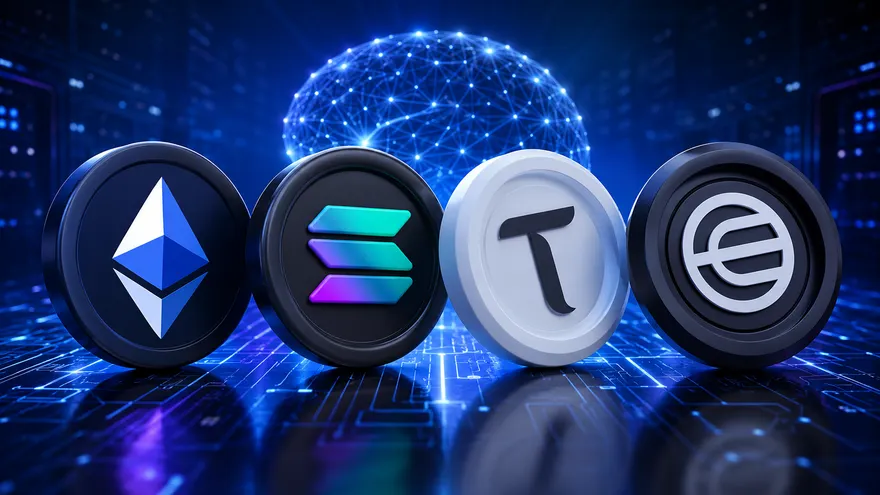
According to Grayscale Research, blockchain networks such as Ethereum, Solana, Worldcoin, and Bittensor are the potential beneficiaries of this trend. The firm linked them to three main areas where blockchain technology could become increasingly useful.
AI adoption will create demands that public blockchains are built for:
↳ Payments: @ethereum $ETH & @solana $SOL provide the settlement infrastructure for agentic finance.
↳ Identity: @worldnetwork $WLD can provide verifiable online identity to distinguish humans and agents.… pic.twitter.com/MZCC0FJb2R— Grayscale (@Grayscale) August 11, 2026
Grayscale explains blockchain uses in AI expansion
Grayscale Research Head Zach Pandl recently explained how artificial intelligence and public blockchains could complement each other. As the AI space continues to evolve, Pandl believes that blockchain technology could help the space grow more. The official statement read,
“Artificial intelligence and public blockchains are complementary. As AI creates demands that traditional systems were not designed to meet, public blockchains offer new solutions (Exhibit 1). We have identified three areas where we believe the adoption of AI will create the most demand for blockchain technology: agentic finance, record keeping for computation and reputation, and decentralized AI alternatives.”
Currently, the AI technology is expanding beyond chatbots, handling more complex areas. The space is now looking to include financial and digital infrastructure in its area, where blockchain could play a key role, according to the Grayscale Research Head.
Ethereum and Solana to benefit from AI-powered finance
The first area Grayscale identified is agentic finance, where AI agents could use blockchain networks to make payments, manage funds, and carry out financial transactions. With the help of blockchains, AI agents could eventually use programmable wallets to hold and move funds without relying on third parties.
Thus, AI could gradually become a key player in micropayments, cross-border transactions, automated trading, and other financial activities. Pundl added that this trend could benefit blockchain networks such as Ethereum and Solana. This is because both platforms support programmable transactions and on-chain financial activity.
How could Worldcoin and Bittensor benefit?
The second notable area is digital identity and verifiable records. Now, AI agents are more involved in AI activities. As a result, it has now become difficult to distinguish between humans and AI systems. So, there is an increasing need to verify sources, where blockchain networks could step in. Blockchain-based identity systems could help verify whether the source is human or AI-based. Pundl noted,
“Public blockchains—and applications built on them, such as Worldcoin’s identity service—can anchor these records in transparent, neutral infrastructure rather than place them under the control of a single corporation or government.”
The third area is decentralized AI. Here, Grayscale identifies Bittensor as a potential beneficiary, as it offers an open network. It helps users contribute to computing resources, models, and other AI-related services.
Altogether, Grayscale believes that AI and blockchain could grow alongside each other. As AI continues to grow, integrating with financial and digital activities, blockchain technology could become an inevitable part of this expansion.