Europe's biggest neobanks hold full banking licences, pay interest linked to the European Central Bank's rates, and fight hard on fees. Picking one just based on price is harder than it looks.
What separates them is who they're built for. Some are travel tools first, some are investment apps that grow a current account, and some are aimed specifically at freelancers and small businesses.
In this guide, I’ll rank the eight best neobanks in Europe for 2026 (plus one honorable mention), what each does well, where they fall short, and how to pick the right one for your needs.
8 best neobanks in Europe for 2026: quick overview
- Revolut – Best for travelers
- N26 – Best for simplicity and ease of use
- Trade Republic – Best for savers and investors
- Monzo – Best for budgeting and shared money
- bunq – Best for customization and multiple IBANs
- Starling Bank – Best for UK small businesses and side hustles
- Vivid – Best for freelancers and SMEs in the EU
- Paysera – Best for residents outside the EU and EEA
- Payoneer (honorable mention) – Best for getting paid from abroad anywhere in Europe
What is a neobank?
A neobank is a bank that exists only online. There are no branches: you open an account in an app, usually in a few minutes with a photo of your ID and a selfie, and manage everything from your phone.
But behind the app, a neobank does the same core jobs as a traditional bank, such as:
- Holding deposits
- Issuing debit cards
- Sending and receiving payments
- Offering savings, loans, and investing
The terms "neobank", "digital bank" and "challenger bank" are often used interchangeably. Strictly speaking, a challenger bank is any newer bank competing with established lenders, while a neobank is built from the ground up around a mobile app.
Some of the largest players on this list, such as Trade Republic, started as investment apps and grew into banks, which is why the line between neobanks and neobrokers keeps blurring.
How neobanks differ from traditional banks
| Neobank | Traditional bank | |
| Branches | None, app-only | Branch network |
| Account opening | Minutes, fully online | Often days, sometimes in person |
| Everyday fees | Free or low-cost base plans | Monthly account fees common |
| Spending abroad | Low or no FX markup on many plans | Card FX fees are typical |
| Tools | Real-time alerts, sub-accounts, budgeting, investing | Varies, often more basic |
| Support | Mostly in-app chat | Phone, branch and chat |
Without a branch network, neobanks run on lower costs, which is what lets them offer free accounts and cheaper foreign spending.
Are neobanks licensed?
Typically yes, but not all in the same way. Neobanks with a full banking licence, such as Revolut, N26, Trade Republic, Monzo, bunq and Starling, are covered by a national deposit guarantee scheme. If the bank fails, a government-backed scheme pays you back up to €100,000 per person in the EU or £120,000 in the UK, usually within days.
Neobanks with an e-money licence, such as Vivid and Paysera, don't take deposits in that sense. Instead, they must safeguard your money, which means they keep it separate from the company's own funds, so its creditors can't touch it if the firm goes bust.
The catch is that no government scheme guarantees a payout. Getting your money back depends on the firm having safeguarded it properly, and it comes back through an insolvency process that can take weeks or months. E-money accounts are fine for everyday spending, but large savings are better kept with a fully licensed bank.
How I picked the best neobanks in Europe
Here’s what I looked at:
- Licence type and deposit protection
- Fees across plans, including spending and withdrawals abroad
- Interest on cash balances
- App quality, budgeting tools and investing features
- Availability across European countries
- Customer support and regulatory track record
8 Best Neobanks in Europe for 2026
1. Revolut
Best for: travelers
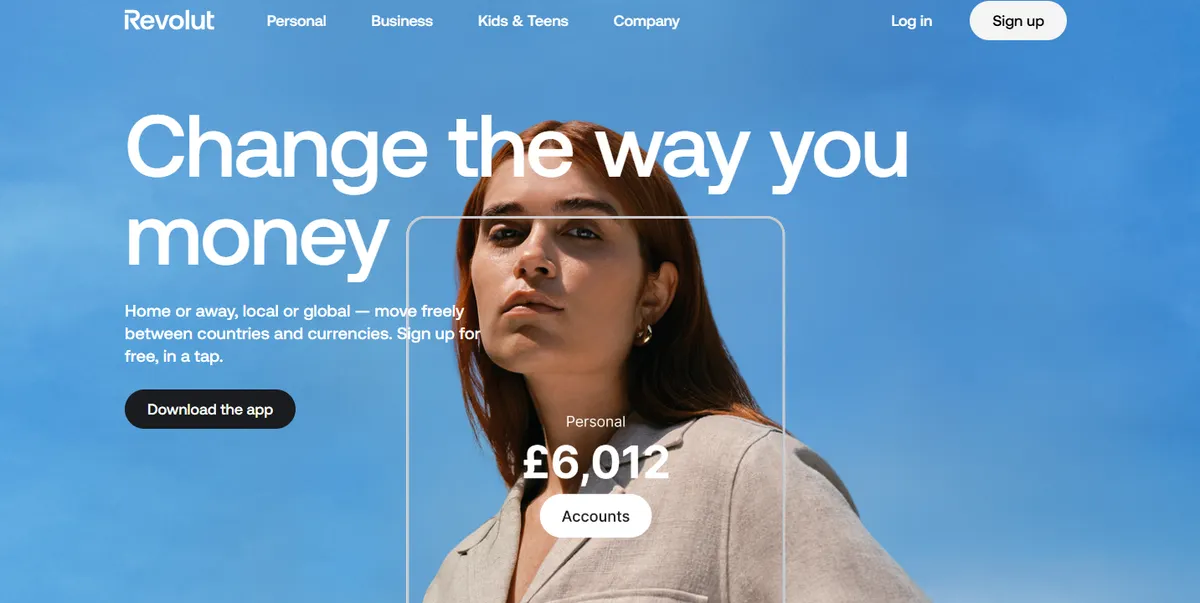
Revolut is Europe's largest neobank by a wide margin, with more than 80 million customers worldwide and about 13 million in the UK.
It operates as a licensed bank across the EEA through its Lithuanian licence, and in March 2026 it received a full UK banking licence, which puts UK deposits under the Financial Services Compensation Scheme up to £120,000. In January 2026 it launched full banking in Mexico, its first bank outside Europe. It's also one of the best online business bank accounts to have.
Revolut’s main appeal (arguably) is multi-currency spending. You can:
- Hold and exchange more than 30 currencies
- Send money abroad cheaply
- Use the same app for stocks, ETFs, crypto, savings and budgeting
A crypto card lets you spend your crypto balance anywhere Visa or Mastercard is accepted, with Revolut converting it at checkout and no exchange fees, though fair-usage fees can apply.
Paid plans add perks such as airport lounge access and travel insurance, while junior accounts and shared spending tools make it work for families.
Revolut fits frequent travelers, digital nomads and power users who want spending, saving and investing in one place.
Pros:
- Full banking licences in the EEA and the UK
- Strong multi-currency accounts and international transfers
- Investing, savings and budgeting in one app
- Junior accounts and shared spending for families
Cons:
- The free Standard plan caps fee-free currency exchange, at €1,000 a month in many EU countries
- The best travel perks sit behind paid plans
Bottom line: A powerhouse all-in-one app that rewards heavy use.
2. N26
Best for: simplicity and ease of use
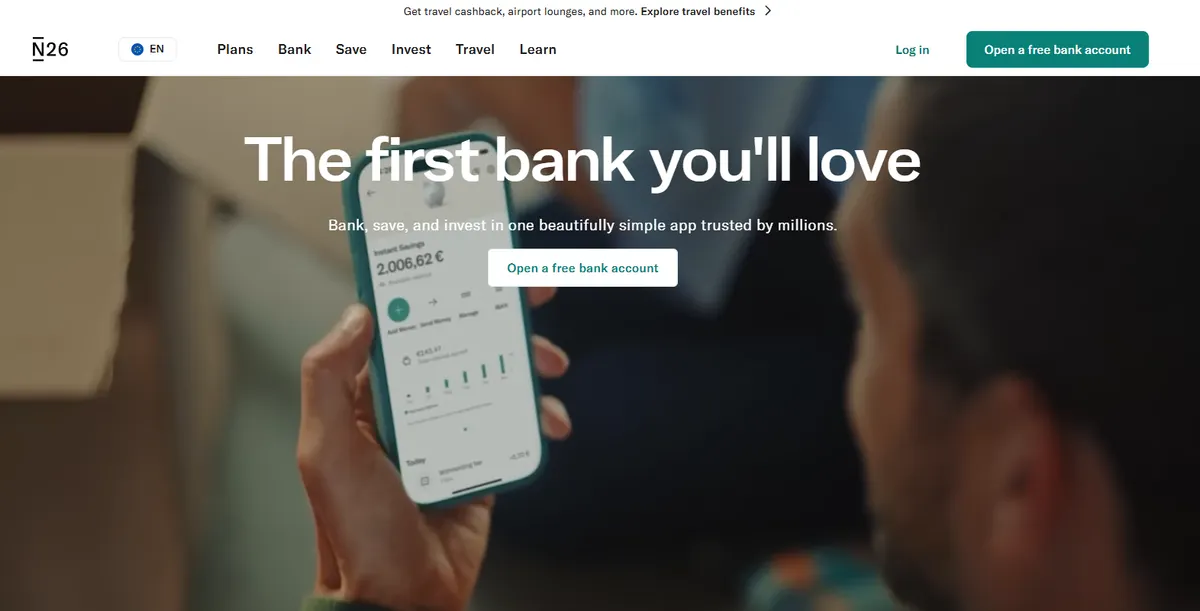
Berlin-based N26 holds a full German banking licence from BaFin, operates in 24 European countries and counts around 5 million customers. Deposits are covered by German deposit insurance up to €100,000. It’s not available in the UK.
N26's main strength is a clean, fast app. Real-time notifications, instant transfers and "Spaces" sub-accounts for savings goals cover everyday banking well. Plus, international card payments come with transparent fees.
Paid plans add travel and lifestyle insurance, and stock and ETF trading inside the app has been commission-free for all customers since January 2025. It's also one of the most crypto-friendly neobanks in Europe.
The bank is working through regulatory pressure. In December 2025, BaFin ordered N26 to hold extra capital, barred new mortgage lending in the Netherlands and appointed a special monitor over compliance shortcomings. Former UBS executive Mike Dargan took over as CEO in April 2026.
Pros:
- Simple pricing and a polished, easy app
- Full German banking licence with €100,000 deposit protection
- Spaces make goal-based saving easy
- Commission-free stock and ETF trading built in
Cons:
- Under heightened BaFin supervision
- Not available in the UK and various other European countries
- Some travel perks sit in paid plans
Bottom line: A balanced choice for straightforward European banking.
3. Trade Republic
Best for: savers and investors
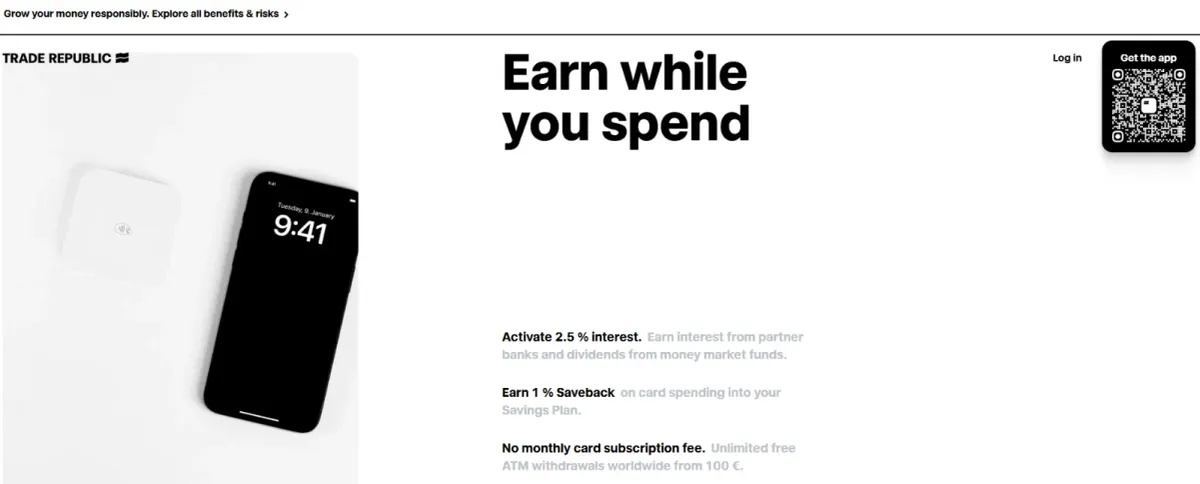
Trade Republic is a German bank supervised by BaFin and the Bundesbank, with more than 10 million customers across 18 European markets and about €150 billion in assets on the platform. It started as a broker and now offers a free current account with a local IBAN in several countries, covered by German deposit insurance up to €100,000.
Its main feature is interest on uninvested cash. As of late September 2026, it pays 2.5% a year on unlimited balances in Germany, in line with the ECB deposit rate, while several other EU country pages advertise 3% for new customers on balances up to €50,000.
The free Trade Republic card adds 1% Saveback on card payments, invested automatically into a savings plan, with no FX surcharge abroad. Investing covers stocks, ETFs, bonds, crypto, and fractional savings plans from €1, and private-market funds are available through partnerships with Apollo and EQT.
It’s great for savers who want their cash to earn interest and anyone who wants banking and long-term investing in one app.
Pros:
- Interest on cash that tracks the ECB rate
- 1% Saveback on card payments
- Free current account and card with a local IBAN
- Low-cost investing from €1
- Full German banking licence
Cons:
- Interest rates vary by country and fall when the ECB cuts
- Fewer budgeting tools than spending-first neobanks
Bottom line: The strongest option for putting idle cash and spare change to work.
4. Monzo: Best for budgeting and shared money
Best for: budgeting and shared money
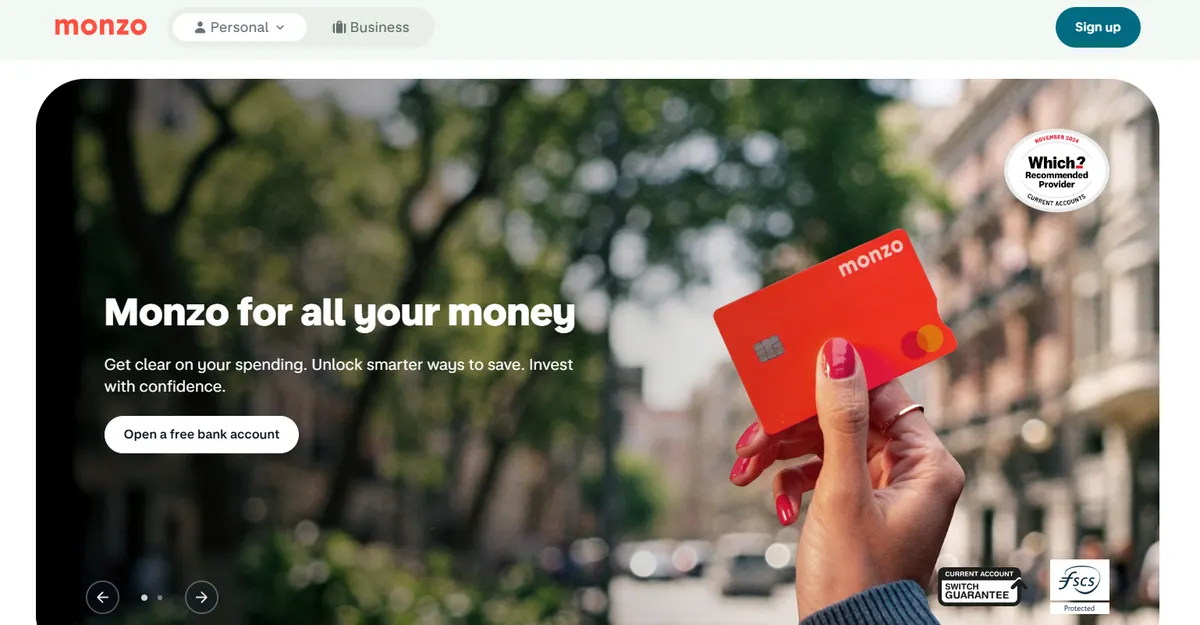
Monzo has more than 15 million customers and held £25.7 billion in customer deposits at the end of March 2026. In December 2025 it became the first digital bank to receive a full European banking licence through the Central Bank of Ireland and the ECB.
It launched in Ireland in April 2026 with personal, joint, business, children's and savings accounts on Irish IBANs, and has since opened in Spain, its first market in continental Europe.
Monzo's reputation rests on budgeting. "Pots" separate money for bills, savings and shared costs, spending analytics break down where money goes, and joint accounts make it easy for couples and housemates to split household bills. In the UK, it adds early salary access, a range of savings products and a mortgage service through its acquisition of broker Habito.
It suits families, roommates and anyone who wants detailed budgeting with responsive support.
Pros:
- Some of the best budgeting tools in the market
- Easy joint accounts and shared Pots
- Full banking licences in the UK and the EU
- Strong customer support reputation
Cons:
- EU availability limited to Ireland and Spain so far
- Fewer investing features than rivals
Bottom line: Budgeting and support stand out, especially for shared finances.
5. bunq: Best for customization and multiple IBANs
Best for: customization and multiple IBANs
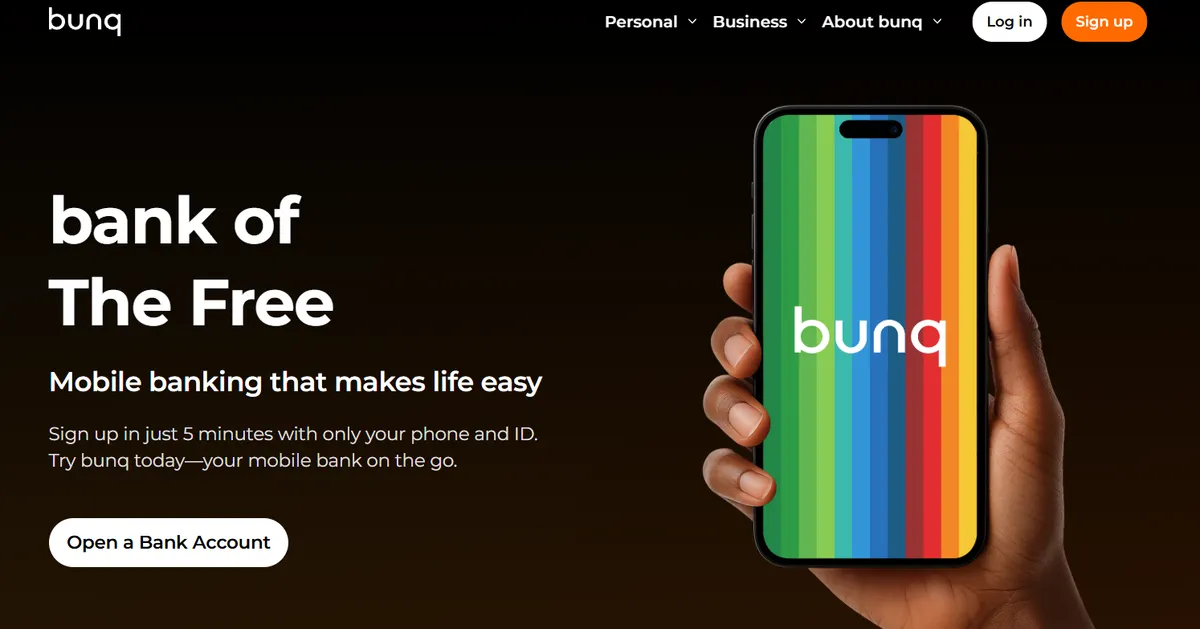
Amsterdam-based bunq holds a Dutch banking licence, which covers deposits up to €100,000 under the Dutch deposit guarantee scheme, and reported 22+ million users. It’s available across the EEA and is popular with expats and freelancers who move between countries.
bunq gives you a lot of control. You can create dozens of sub-accounts, each with its own IBAN on higher plans, and set automation rules that split income, sweep savings or pay bills on schedule. Savings accounts pay interest that depends on your plan, multi-currency features sit on the mid-tier plan, and the top tier plants a tree for every €100 you spend.
The trade-off is cost. bunq's personal accounts run on paid subscriptions, and it raised prices in January 2026, with the top plan now costing €18.99 a month.
Pros:
- Highly customizable sub-accounts and automation rules
- Multiple IBANs, useful for expats
- Full Dutch banking licence
- Interest on savings and green features on top plans
Cons:
- Paid plans only for most personal users
- Multi-currency support limited to higher plans
- Prices rose in January 2026
Bottom line: Flexible and green, with smart controls for organized finances.
6. Starling Bank: Best for UK small businesses and side hustles
Best for: UK small businesses and side hustles
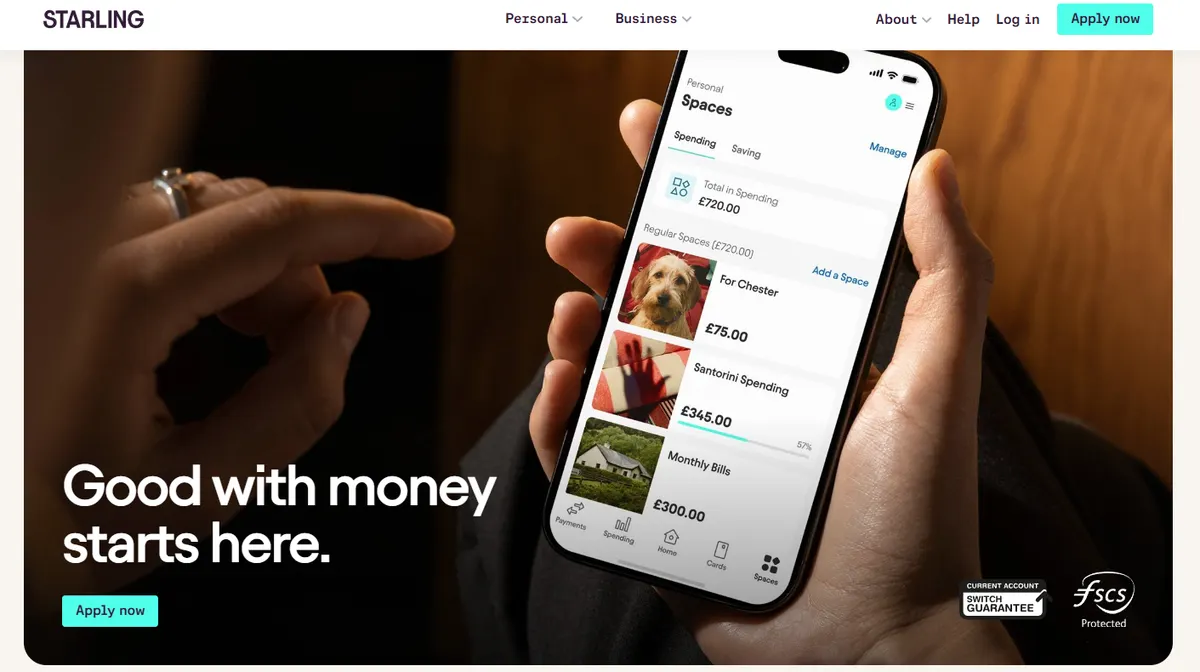
Starling is a fully licensed UK bank serving around five million personal and business customers, with deposits protected by the FSCS up to £120,000. It reported a £217 million pre-tax profit for the year to March 2026, its fifth straight profitable year. Its accounts are for UK residents; its push into Europe runs through Engine, the banking software it licenses to other banks.
Starling combines personal, joint and business accounts in one app, with overdrafts, savings Spaces, instant card controls and fee-free card spending abroad. Its Marketplace connects to accounting and business tools, and 56% of its SME customers use Starling as their main bank. Scam-prevention features, such as indicators showing whether a call is genuinely from the bank, add a layer of protection.
Starling suits UK freelancers, sole traders and small companies who want business banking that just works.
Pros:
- Excellent business accounts with accounting integrations
- Fee-free card spending abroad
- Consistently profitable, fully licensed UK bank
- Strong fraud and scam protection features
Cons:
- Accounts available to UK residents only
- Fewer investing options than peers
Bottom line: A top pick for UK business banking with solid personal features.
7. Vivid: Best for freelancers and SMEs in the EU
Best for: freelancers and SMEs in the EU
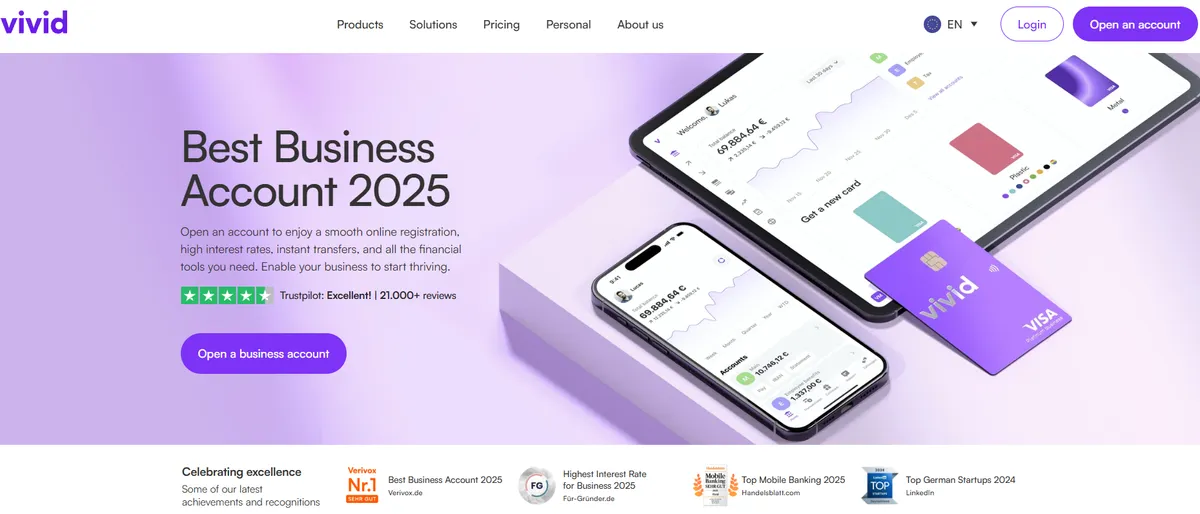
Berlin-founded Vivid is one of Europe's fastest-growing business accounts. It serves more than 500,000 customers, including over 100,000 small and medium-sized businesses, and holds a 4.7 Trustpilot rating from more than 30,000 reviews.
Vivid is not a bank. It operates under an e-money licence from Luxembourg's CSSF and an investment licence from the Dutch AFM, so funds are safeguarded rather than covered by deposit insurance.
Vivid offers unlimited free sub-accounts with their own IBANs, multi-currency interest accounts invested in money market funds, cashback on Visa cards, and stock, ETF and crypto investing under a MiCAR licence. Business plans add tools such as AI assistants for bookkeeping tasks, card acceptance with instant payouts, and treasury options for spare cash.
Vivid suits freelancers and small companies across the EU who want banking, interest and investing in one app.
Pros:
- Free sub-accounts with individual IBANs
- Interest accounts in EUR, USD and GBP
- Investing and regulated crypto in the same app
- Highly rated support and app
Cons:
- E-money institution, not a bank, so no deposit guarantee
- Product focus is mostly on business customers
Bottom line: A rewards-and-interest powerhouse for small businesses.
8. Paysera
Best for: residents outside the EU and EEA
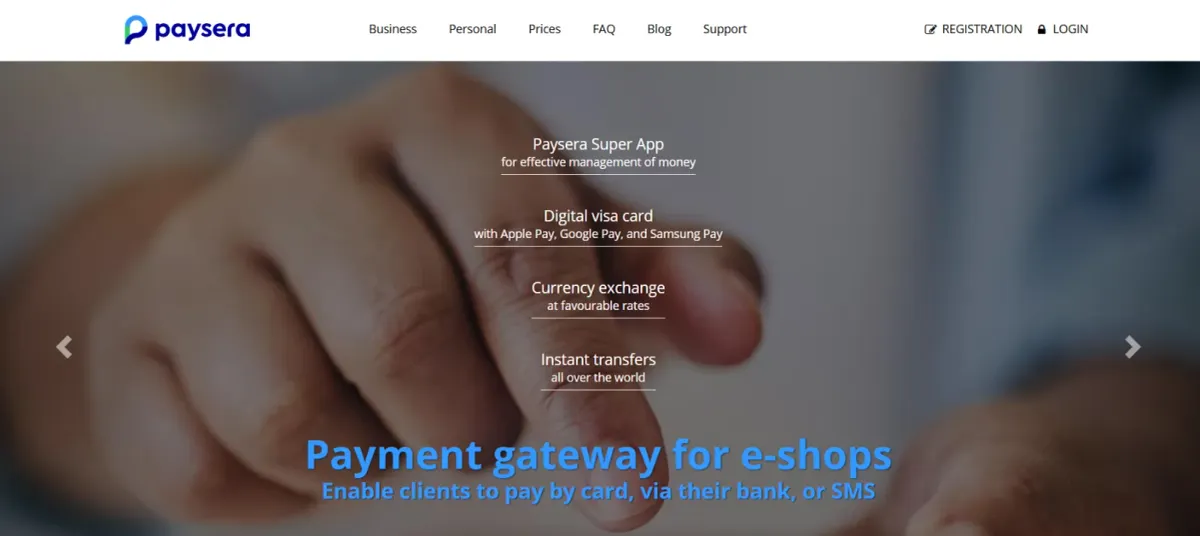
None of the entries above accept residents of countries such as Albania, Serbia, Ukraine or Moldova. Paysera does. It’s a Lithuanian electronic money institution supervised by the Bank of Lithuania, with licensed sister companies in Albania and Kosovo, Paysera Bank Georgia, and operations in Ukraine and North Macedonia. Residents of Serbia and Moldova can also open an account with an IBAN, though there it is limited to EUR and comes without a payment card.
Where the full service is available, Paysera offers:
- A free personal account
- Balances in up to 30 currencies
- Instant free transfers to other Paysera users
- Currency exchange
- Visa card
Business accounts and an online payment gateway sit on the same platform, which makes it popular with freelancers and small shops in the region. Serbian and Moldovan residents who need cards and more currencies can look at Genome, a Lithuanian e-money institution that accepts them for €20 a month.
As an e-money institution, Paysera keeps client funds safeguarded at EU credit institutions, but they are not covered by a deposit guarantee scheme. Its terms also prohibit using accounts for crypto trading.
Pros:
- Available in several European countries outside the EU and EEA
- Free personal account
- Multi-currency balances and currency exchange
- Free instant transfers between Paysera users
Cons:
- E-money institution, so no deposit guarantee
- EUR-only accounts with no card in Serbia and Moldova
- Crypto trading is not allowed
Bottom line: The most practical European neobank-style account if you live outside the EU and EEA.
Honorable mention: Payoneer
Best for: getting paid from abroad anywhere in Europe
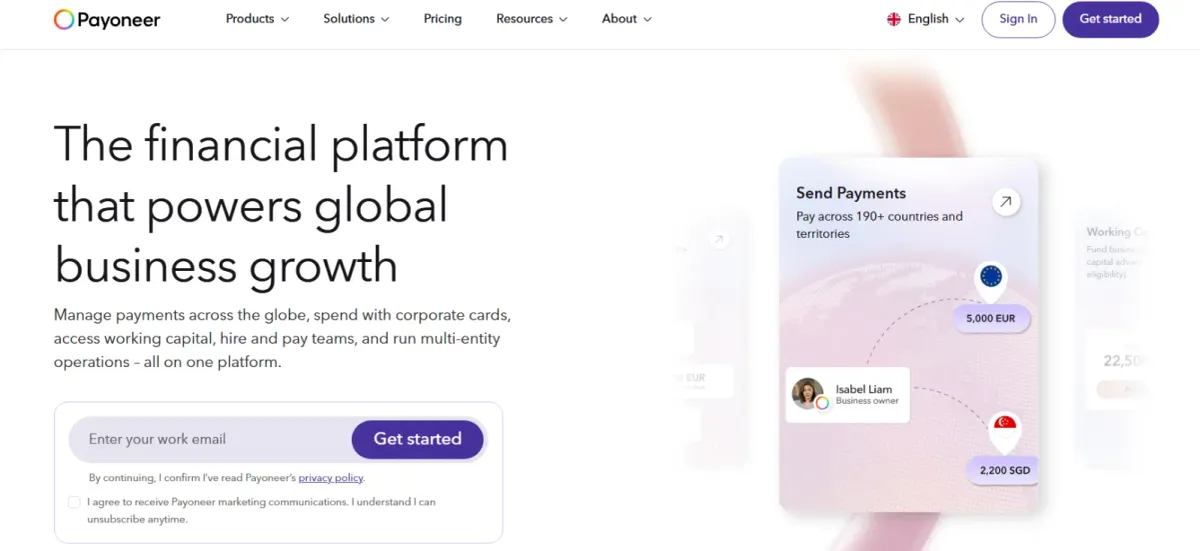
Payoneer isn't technically a neobank. It's a cross-border payments platform built for freelancers, marketplace sellers and small businesses who get paid from abroad.
But I put it on this list for its reach: Payoneer operates in more than 190 countries and territories, including every European country except Russia and Belarus.
Payoneer gives you local receiving account details in USD, EUR, GBP and other currencies, so a client in the U.S. or UK can pay you by domestic transfer. Upwork, Fiverr, Amazon and other marketplaces pay out to it directly, and you can send payment requests, pay suppliers abroad and withdraw to a local bank account.
A Payoneer Mastercard becomes available once you've received at least $100 in the previous six months, though it isn't issued in every country.
The account is free to open. Payoneer charges an annual fee of about $29.95, waived if you receive more than $6,000 in 12 months, a 1% fee on payments from some marketplaces, and currency conversion costs.
It’s not a deposit account, so it works best alongside a regular bank account rather than as a replacement for one.
Pros:
- Available in almost every European country, including outside the EU and EEA
- Local receiving accounts in major currencies
- Direct payouts from Upwork, Fiverr, Amazon and more
- Free to open
Cons:
- Not an everyday bank account
- Fees on some incoming payments and currency conversion
- Card access depends on your country and payment history
Bottom line: Not a neobank, but the most widely available way to get paid from abroad anywhere in Europe.
How to choose the right neobank for you
The best neobank is the one that matches how you use money. Use the table below to narrow it down.
| If you want… | Pick | Why |
| Cheap spending and transfers abroad | Revolut | Multi-currency accounts and full licences in the EEA and UK |
| A simple, no-fuss everyday account | N26 | Clean app, Spaces and German deposit protection |
| Interest on your cash and easy investing | Trade Republic | ECB-linked interest, 1% Saveback and investing from €1 |
| Detailed budgeting and shared bills | Monzo | Pots, joint accounts and strong support |
| Lots of sub-accounts and IBANs | bunq | Custom automation and multiple IBANs across the EEA |
| UK business banking | Starling Bank | Accounting integrations and fee-free spending abroad |
| An EU business account with interest | Vivid | Free IBAN sub-accounts and multi-currency interest accounts |
| An account if you live outside the EU and EEA | Paysera | Available in Albania, Kosovo, Georgia, Ukraine and more |
Risks to keep in mind
- Check the licence. Banks such as Revolut, N26, Trade Republic, Monzo, bunq and Starling carry deposit protection. E-money firms such as Vivid and Paysera safeguard funds, but they don’t offer statutory payout
- Compliance reviews can freeze accounts. Identity and source-of-funds checks are common at fast-growing neobanks and can lock you out for days
- Regulators are watching. N26 operates under a BaFin special monitor, and Starling paid a £29 million FCA fine in 2024 over onboarding high-risk customers
- Rates and prices change. Interest on cash follows the ECB, and subscription prices can rise, as bunq's did in January 2026
Tips for switching to a neobank
- Open the new account and complete identity checks before moving money.
- Run your salary through it only after a full test month.
- Move direct debits in batches and confirm each payment date.
- Keep your old account open for 30 to 60 days to catch stragglers.
- Export statements for taxes and loans before closing the old account.
- Test spending and ATM withdrawals abroad with small amounts first.
The bottom line
Europe has a strong neobank for almost every need.
Revolut is the travel all-rounder, N26 keeps everyday banking simple, and Trade Republic is the best home for idle cash and long-term investing. Monzo leads on budgeting, bunq on customization, Starling on UK business banking, Vivid on EU business accounts with interest, and Paysera (and Payoneer) on accounts for residents outside the EU and EEA.
Pick based on where you live, how you spend and whether you want investing or business tools built in. Start with a free or entry-level plan, test the features you care about, and upgrade only if the perks pay for themselves.
Next, feel free to check out our guide on the best private banks in the world.