Some of the biggest names in American banking spent 2026 paying record penalties, settling lawsuits, or freezing customers out of their own money. Some did all three while posting some of the lowest customer ratings anywhere online.
If you're wondering what the worst bank in America is, or which ones to think twice about before opening an account, this guide is for you. And the specific answer depends on whether you care most about service, fees, or how a bank treats the rules.
List of worst banks in America: quick overview
The table below lines up the top 9 worst banks by Trustpilot score with the main red flag behind each ranking.
| Bank | Trustpilot rating | Main red flag |
| Bank of America | 1.4/5 | Record $750 million OCC penalty for AML failures |
| Wells Fargo | 1.2/5 | 90% of reviews are 1-star, deposit holds and account closures |
| Citibank | 1.1/5 | Two open 2020 consent orders |
| TD Bank | 1.5/5 | Guilty plea, $3 billion in penalties, $434 billion asset cap |
| Capital One | 1.2/5 | $425 million 360 Savings settlement |
| Chase Bank | 1.2/5 | Account freezes, closures and a debanking lawsuit |
| U.S. Bank | 1.3/5 | Fraud dispute and payment complaints |
| PNC Bank | 1.4/5 | 1.07/5 BBB customer reviews, poor support access |
| Credit One Bank | 3.6/5 | $10.2 million debt collection settlement, BBB alert |
How we chose the worst banks in the U.S.
This list of the worst banks in America weighs two main things:
- How customers rate each bank on review platforms such as Trustpilot and ConsumerAffairs
- The regulatory penalties, consent orders and lawsuits each bank faces right now
Online reviews skew negative, since unhappy customers post far more often than satisfied ones, so a low score is most important when it lines up with a real enforcement record.
None of these banks is unsafe for deposits, which remain FDIC-insured up to $250,000 per depositor, per bank, per ownership category. They are simply the worst banks to bank with if service, fees or a clean regulatory record matter to you.
That gap is one reason U.S. neobanks and online-only banks keep growing, and J.D. Power’s 2026 Direct Banking Satisfaction Study found online-only providers continue to win customers away from traditional banks.
1. Bank of America
Worst for: anyone who wants a bank with a clean compliance record
Trustpilot rating: 1.4/5 (about 3,700 reviews)
On October 13, 2026, the Office of the Comptroller of the Currency (OCC) fined Bank of America $750 million, the largest civil money penalty in the agency's history.
It was part of a wider Treasury action in which FinCEN assessed a $1.2 billion penalty that credits the OCC fine, and the Office of Foreign Assets Control added an $11.6 million settlement over 475 apparent sanctions violations. Together, the penalties come to roughly $1.21 billion, the third-largest enforcement penalty in Treasury history.
Regulators said the bank failed to report more than $5 billion in suspicious transactions on time, including over $1 billion tied to national security risks such as Chinese money laundering networks and illicit activity along the southwest border.
Bank of America admitted to willfully violating the Bank Secrecy Act, remains under a December 2024 cease-and-desist order, and must bring in an independent third party to review transactions it missed. The penalty comes out of the bank's revenue rather than customer accounts.
Pros:
- Roughly 3,500 branches and 15,000 ATMs nationwide
- Deposits remain FDIC-insured
Cons:
- Record OCC penalty for a deficient anti-money laundering program
- Still under a 2024 cease-and-desist order
- Low 1.4/5 Trustpilot score
- Long track record of regulatory penalties
2. Wells Fargo
Worst for: customers who need fast access to their money and responsive support

Trustpilot rating: 1.2/5 (about 1,600 reviews)
Even among the worst banks for customer service, Wells Fargo stands out. 90% of its Trustpilot reviews are 1-star, and on ConsumerAffairs it scores 1.3 out of 5 across 3,796 reviews, 91% of them 1-star.
Recent reviewers describe multi-day holds on routine deposits, accounts frozen or closed with no explanation, long phone queues and surprise monthly service fees.
On the regulatory side, Wells Fargo has no public consent orders outstanding. The Federal Reserve terminated the last one, tied to the fake-accounts scandal, on March 5, 2026, after lifting the bank's asset cap in June 2025. That leaves service as the main reason it ranks this high.
Pros:
- Free online banking, mobile app and transfers
- Wide selection of financial products
- No open public consent orders
Cons:
- 90% of Trustpilot reviews are 1-star
- Frequent complaints about deposit holds and sudden account closures
- Long wait times to reach a representative
- Monthly service fees that catch customers off guard
3. Citibank
Worst for: customers who want a bank with its regulatory house in order
Trustpilot rating: 1.1/5 (about 240 reviews)
Citibank holds the lowest Trustpilot score among the major banks on this list. Reviewers point to blocked cards, slow dispute resolution and offshore customer service that struggles with basic requests.
The bank is still operating under two October 2020 consent orders from the Federal Reserve and the OCC, which require it to fix long-running weaknesses in risk management, data governance and internal controls.
When regulators judged its progress inadequate in July 2024, they fined Citi a combined $135.6 million on top of the $400 million it paid in 2020. In May 2026, Reuters reported that the Fed had sent the bank new notices demanding urgent action. The OCC lifted the 2024 amendment to its order in December 2025, but the original orders remain in force.
Pros:
- Citi users on WalletHub rate it 3.6/5 across more than 35,000 reviews
- Well-rated Citi Mobile app
Cons:
- Lowest Trustpilot score of any major bank on the list
- Two open consent orders from 2020
- Fresh Fed criticism in 2026 over slow remediation
4. TD Bank
Worst for: East Coast customers who want a bank free of growth restrictions and federal oversight
Trustpilot rating: 1.5/5 (about 290 reviews)
TD Bank pleaded guilty in October 2024 to failing to maintain an adequate anti-money laundering program, agreeing to pay roughly $3.09 billion, the largest combined penalty U.S. authorities have imposed on a bank for violating anti-money laundering laws. Prosecutors said three money laundering networks moved more than $670 million through its accounts.
The consequences are still affecting how the bank operates:
- The OCC capped the assets of TD's two U.S. banking subsidiaries at $434 billion
- An independent monitor oversees its compliance program
- TD has been shrinking parts of its roughly $382 billion U.S. operation to stay under the cap
Executives say most of the remediation work is complete, with internal audits of the fixes running through 2026. On Trustpilot, customers complain about payments held at random, accounts closed without notice and seemingly without reason, and fraud claims that drag on.
Pros:
- About 1,100 branches from Maine to Florida
- Bank reports the majority of its AML remediation is done
Cons:
- Criminal guilty plea and $3 billion in penalties
- Asset cap limits new branches and acquisitions
- Under an independent compliance monitor
- 1.5/5 Trustpilot score
5. Capital One
Worst for: savers who expect their bank to keep their interest rate competitive
Trustpilot rating: 1.2/5 (about 4,000 reviews)
In 2026, a federal judge approved a $425 million settlement resolving claims that Capital One kept rates on its 360 Savings accounts low while paying far more on a nearly identical product, 360 Performance Savings.
A bipartisan group of 18 states, including New York, sued in May 2025, alleging the bank froze 360 Savings at 0.3% while offering new customers more than 4%. The CFPB had separately said the Performance account at one point paid more than 14 times the 360 Savings rate.
Anyone who held a 360 Savings account between September 18, 2019, and June 16, 2025, was covered, with payments scheduled to go out around July 21, 2026. Capital One denied wrongdoing. Its Trustpilot reviews are among the worst on this list by volume, with roughly 4,000 reviews averaging 1.2.
Pros:
- Ranks among the top banks in several regions in J.D. Power's 2026 satisfaction study
- Settlement payments are automatic, with no claim needed
Cons:
- $425 million settlement over misleading savings rates
- Accused by multiple states of hiding a better account from existing savers
- 1.2/5 Trustpilot score across thousands of reviews
6. Chase Bank
Worst for: customers who can't afford to have an account frozen without warning
Trustpilot rating: 1.2/5 (about 2,900 reviews)
Chase is the country's largest bank, and that scale shows up in its reviews. A recurring theme is accounts suspended or closed with little or no explanation, which leaves customers unable to reach their money for days or weeks.
Account closures have also become a legal and political issue for the bank. In December 2025, an OCC review found that the nine largest U.S. banks had restricted services to some industries, a practice known as debanking.
In January 2026, President Trump filed a $5 billion lawsuit accusing JPMorgan of closing his accounts for political reasons, and in February the bank acknowledged in court that it closed them in 2021 while maintaining the suit has no merit.
Separately, a federal judge ruled in February 2026 that customers can pursue part of a class action claiming Chase paid near-zero interest on idle brokerage cash.
Pros:
- Ranked highest for customer satisfaction in California and Florida in J.D. Power's 2026 study
- Largest U.S. bank, with a broad product lineup
Cons:
- Frequent complaints about sudden account freezes and closures
- Facing a high-profile debanking lawsuit
- 1.2/5 Trustpilot score
7. U.S. Bank
Worst for: credit card and fraud-dispute customers who need quick answers
Trustpilot rating: 1.3/5 (about 1,500 reviews)
Roughly nine in ten Trustpilot reviews of U.S. Bank are 1-star. The most common complaints involve fraudulent transactions the bank won't reverse, an unresponsive fraud department, card payments that fail to process, and fees that customers say they did nothing to trigger.
The bank's regulatory record includes a 2022 settlement with the CFPB, which found that U.S. Bank opened credit cards, lines of credit and checking and savings accounts without customers' permission, in some cases after illegally accessing their credit reports. The bank paid a $37.5 million penalty.
In February 2026, a Minnesota federal judge permanently dismissed a separate class action over its brokerage cash-sweep rates.
Pros:
- Wide range of credit cards and loan products
- Large branch footprint across the Midwest and West
Cons:
- About 9 in 10 Trustpilot reviews are 1-star
- Persistent complaints about fraud claims and failed payments
- Past CFPB penalty for opening accounts without consent
8. PNC Bank
Worst for: mortgage and home equity customers who need responsive servicing
Trustpilot rating: 1.4/5 (about 1,900 reviews)
PNC Bank customers most often complain that its support is hard to reach, with mortgage borrowers singling out escrow changes and PMI removal as especially painful. Unexpected charges and disputed fees are the other recurring theme.
The bank's customer reviews on the Better Business Bureau average just 1.07 out of 5, even though it holds an A+ BBB letter grade.
PNC also faces litigation over how it handles customer money. In February 2026, a Maryland federal judge ruled that a customer has standing to challenge PNC's practice of pulling money from his checking account to cover a home equity line of credit, and asked for more briefing on whether the case can proceed as a class action.
Pros:
- Mobile app rated 4.8 on the App Store across more than 2 million reviews
- A+ BBB letter grade
Cons:
- 1.07/5 average in BBB customer reviews
- Hard-to-reach customer support
- Ongoing lawsuit over withdrawals to cover home equity lines
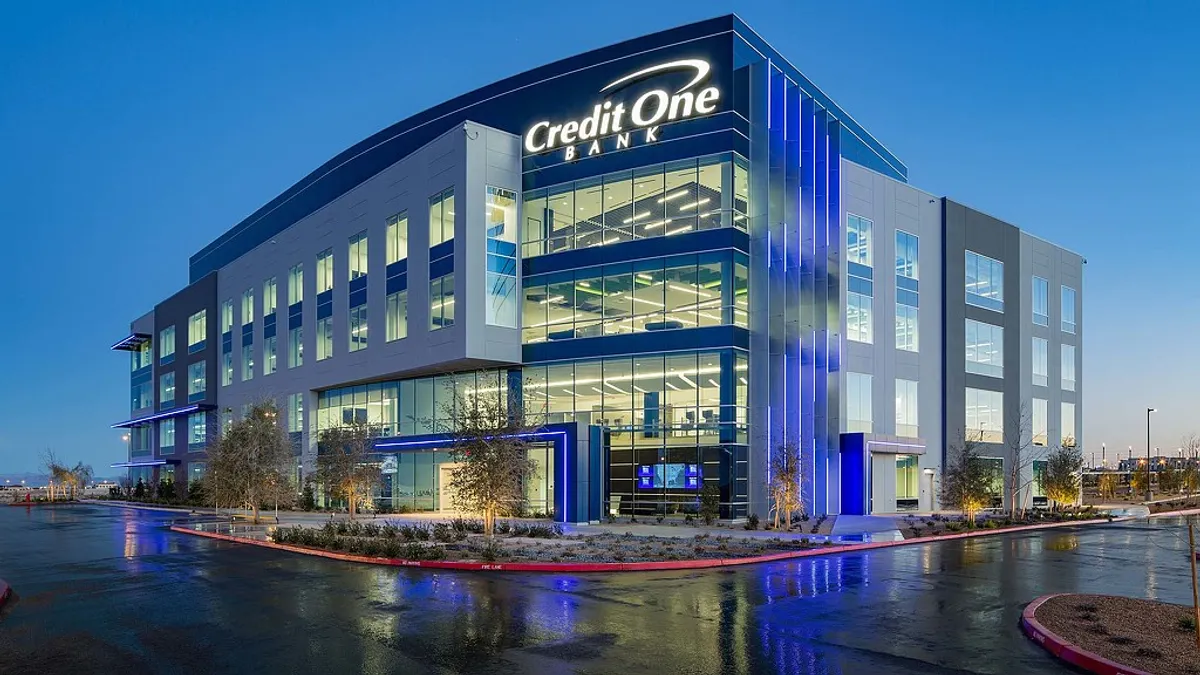
9. Credit One Bank
Worst for: people rebuilding credit who want transparent billing
Trustpilot rating: 3.6/5 (about 1,200 reviews)
Credit One Bank issues credit cards to more than 7 million cardholders, many of them people with limited or damaged credit. Its Trustpilot score is higher than the big banks on this list, but its complaint record is abysmal. The Better Business Bureau keeps an active alert on its profile over a pattern of complaints about billing and collections.
In February 2026, Credit One agreed to pay $10.2 million to settle a lawsuit brought by a group of California district attorneys, who alleged it inundated consumers with excessive debt collection calls.
Reviewers also describe declined purchases on new cards, payment holds while the bank verifies account ownership, and annual fees that rise unexpectedly.
Pros:
- Approves applicants with limited or poor credit
- Free monthly credit score tracking
- Better Trustpilot score than the large banks
Cons:
- $10.2 million settlement over debt collection calls
- BBB alert for a pattern of billing and collection complaints
- Annual fees and payment holds draw frequent complaints
- Targets borrowers with few alternatives
Which banks are in trouble in 2026?
At least six U.S. banks have failed so far in 2026, after only two failures each in 2024 and 2025. All of them were small community institutions:
- Metropolitan Capital Bank & Trust (Chicago) closed on January 30, at an estimated cost of $19.6 million to the FDIC's Deposit Insurance Fund
- Community Bank and Trust – West Georgia (LaGrange, Georgia) closed on May 1, at an estimated cost of about $97 million
- Kentland Federal Savings and Loan Association (Kentland, Indiana) closed in early July
- Small Business Bank (Lenexa, Kansas) closed on July 17
- Tioga-Franklin Savings Bank (Philadelphia) closed on August 21, ending 153 years in business
- Nano Banc (Irvine, California) closed on September 25, the costliest failure of the year at about $114 million
None of the banks on this list is in that category. The pressure on the big names comes from regulators instead:
- TD Bank can't grow past its asset cap
- Citi is still working through its 2020 orders
- Bank of America remains under a cease-and-desist order while it overhauls its anti-money laundering controls
The bottom line: what's the worst bank?
There's no single universal answer to this question, but Bank of America's record penalty and Wells Fargo's customer reviews put them at the top of the list of the worst banks in the US for 2026.
Every bank here can still handle everyday checking and savings for most people, and deposits stay FDIC-insured. If you're choosing a new bank, check its current reviews and enforcement history before you open an account, and keep backup access to funds elsewhere in case an account gets frozen.
If you're a cryptocurrency investor looking to use your coins via banking institutions, make sure to check out our list of the best crypto-friendly banks.